General articles are free for 24 hours after publish.
Filipinos Rally Against Corruption and Rights Abuses on Martial Law Anniversary
Thousands of Filipinos took to the streets on the 54th anniversary of the Martial Law declaration, demanding accountability for corruption and abuses of power. Protests renewed allegations surrounding multibillion-peso flood control projects.
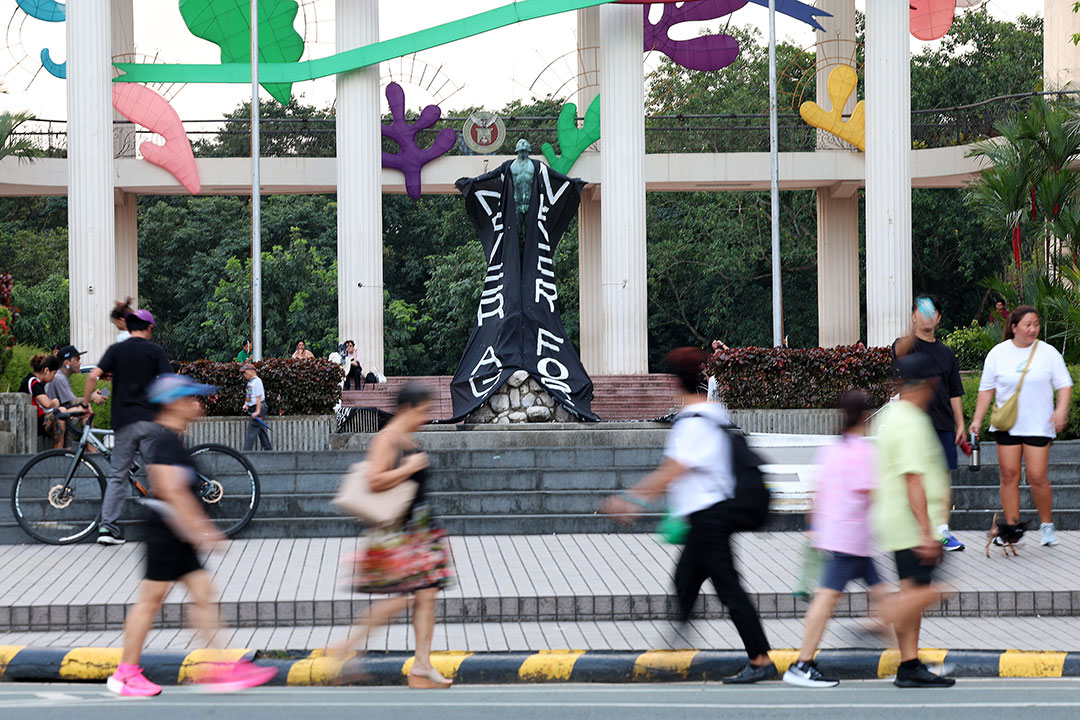
THOUSANDS of Filipinos returned to the streets of Manila on Monday, a year after the “Trillion Peso March,” demanding accountability for corruption and questionable flood control projects as the country marked the 54th anniversary of the declaration of Martial Law. Protesters from labor, youth, religious and civil society groups gathered at Liwasang Bonifacio, renewing calls against corruption while seeking higher wages, stronger protection of civil liberties and accountability for abuses of power. Grundy Constantino of Seniors Kontra Kurakot said older Filipinos continued joining demonstrations because they did not want future generations to inherit a country burdened by corruption and oppression. “We do not want to leave our families and future generations a country filled with corruption and oppression,” she added. The Manila City Disaster Risk Reduction and Management Department estimated the crowd at Liwasang Bonifacio at about 5,800 as of Monday afternoon, with no untoward incidents reported. The demonstration came a year after thousands gathered in Manila on Sept. 21, 2025 for protests that became known as the Trillion Peso March, fueled by allegations of corruption involving multibillion-peso government flood control projects. Monday’s protesters again cited persistent flooding and demanded accountability for irregularities in flood control spending. The commemorative rally, led by Bagong Alyansang Makabayan and joined by the Kilusang Bayan Kontra Kurakot and other groups, was expected to end at the Mendiola Peace Arch near Malacañan Palace. Police barricades, including barbed wire, blocked protesters from proceeding farther toward the Palace complex. More than 17,000 cops were deployed for Monday’s activities, including 8,553 from the National Capital Region Police Office and reinforcements from neighboring regions and the Philippine Coast Guard. Philippine National Police (PNP) chief General Jose Melencio C. Nartatez, Jr. directed officers to observe maximum tolerance and respect the rights to freedom of speech and peaceful assembly. “If protesters remain peaceful, they can expect maximum tolerance and professionalism from our police officers,” he said in a statement. Police said violence, destruction of public property and attacks on officers could prompt intervention. Officers were also required to use body cameras during security operations. The PNP earlier said no group had applied for a protest permit in Metro Manila, although demonstrations could proceed without permits in designated freedom parks such as Liwasang Bonifacio. Police reported no arrests after several people were briefly restrained during a tense incident earlier in the day and subsequently released. Malacañang restricted access to the Palace complex as part of heightened security measures. The New Executive Building, which houses several Palace offices, was closed to the public, while access to roads and gates leading to the complex was restricted. The Presidential Action Center also temporarily adjusted its physical operations. The Palace earlier said President Ferdinand R. Marcos, Jr. respects the public’s right to express grievances and hold peaceful assemblies, while urging protesters to avoid violence. The demonstrations coincided with the 54th anniversary of the declaration of Martial Law under Mr. Marcos’ father, the late President Ferdinand E. Marcos, Sr. The period under the elder Mr. Marcos was marked by documented arbitrary arrests, detention, torture, disappearances and restrictions on civil and political liberties. The Commission on Human Rights called on Filipinos to remember abuses committed during Martial Law and guard against their recurrence. “Remembering is not merely looking back at the past,” it said in a statement in Filipino. “It is a commitment to ensure that the abuses we have experienced are not repeated in the present.” The protests began with a Mass at San Agustin Church in Intramuros before participants marched to Liwasang Bonifacio and later toward Mendiola. — Erika Mae P. Sinaking and MJMS
Original source
BusinessWorld Nation