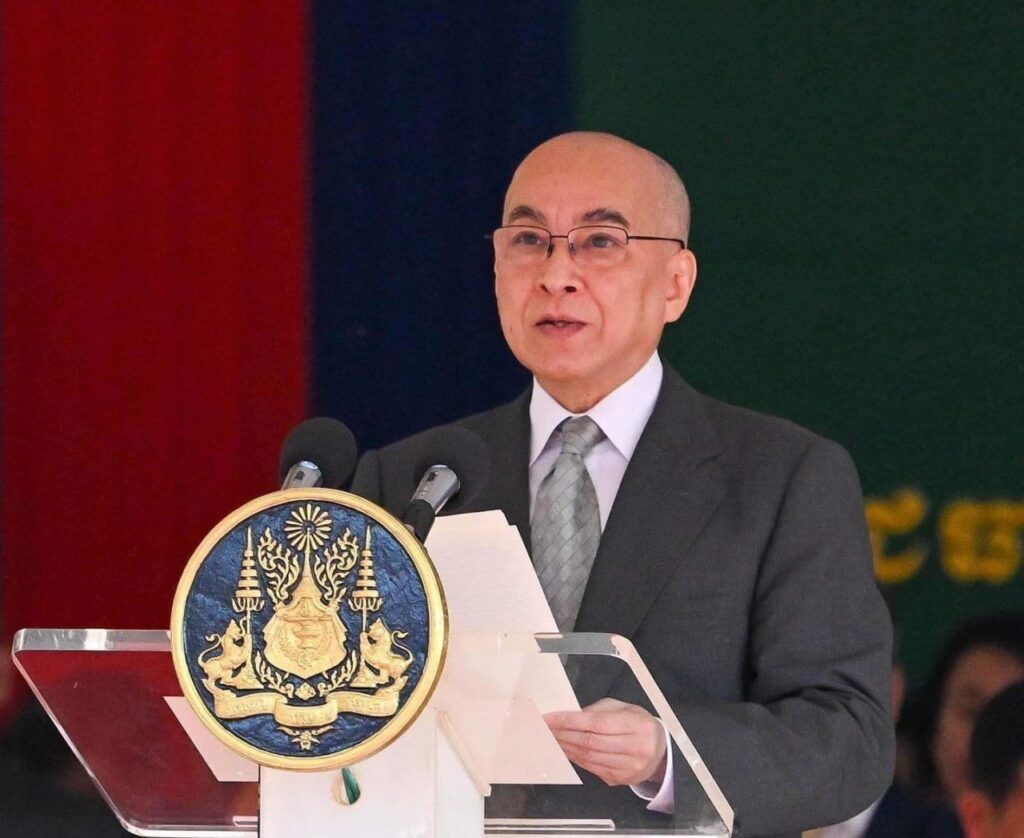
Cambodian King: Military Conscription Law and UNCLOS Ratification are Key Foundations for Strengthening National Defense
Diplomacy
2026年7月1日
5
Kampuchea Thmey Local
Relations
🇰🇭Cambodia🇹🇭Thailand🇻🇳Vietnam🌐United Nations / ASEAN

Cambodian King: Military Conscription Law and UNCLOS Ratification are Key Foundations for Strengthening National Defense

AI サマリー

King Norodom Sihamoni of Cambodia stated that the recently ratified Military Conscription Law and the United Nations Convention on the Law of the Sea (UNCLOS) are crucial for strengthening national defense, sovereignty, and territorial integrity. He emphasized their importance in managing maritime resources and fostering patriotism among youth, urging citizens to support the government in peaceful, international law-based border dispute resolution.

In a royal message delivered at the opening of the 6th session of the 7th Legislature of the National Assembly on July 1, 2026, His Majesty King Norodom Sihamoni stated that the recently ratified Military Conscription Law and the United Nations Convention on the Law of the Sea (UNCLOS) are appropriate and crucial measures for strengthening national defense, sovereignty, and territorial integrity. These actions also contribute to enhancing the management and use of maritime domains and resources, as well as fostering patriotism among the younger generation. The King urged all Cambodian citizens, both domestically and abroad, to unite as one great Khmer family, driven by patriotism, loyalty, and confidence in the government, to defend sovereignty and territorial integrity, resolve border issues peacefully based on international law, and continue to build the nation towards greater prosperity. He encouraged Cambodian citizens, especially the youth, to participate in implementing the Military Conscription Law to jointly protect and build the motherland into a stronger and more formidable nation. His Majesty also expressed his delight with the significant achievements made by the leadership and members of the National Assembly during the inter-session period, viewing them as reflections of the Assembly's core role and accountability in accordance with the Constitution, internal rules, and existing laws. The royal message also commended the Royal Government, led by Prime Minister Hun Manet, for its numerous achievements, particularly in maintaining peace, political stability, social security, and macroeconomic stability. These conditions are fundamental to promoting socio-economic development, attracting investment, creating jobs, enhancing production capacity, and boosting the consumption of domestic products. The message further highlighted the active engagement of National Assembly members with citizens across the country to understand their well-being, concerns, and needs, and to contribute to solving various challenges. Simultaneously, National Assembly members have promoted national solidarity by supporting defense forces and refugees in border provinces, demonstrating a commitment to responding to invasions from neighboring countries through peaceful means and international law. The King deemed this as a reflection of the solidarity of the Khmer nation, which loves peace, abhors war, and respects international law. It is reported that the Military Conscription Law, comprising 8 chapters and 20 articles, was officially promulgated on May 23, 2026. This law applies to all Cambodian citizens aged 18 to 25, who are required to undergo military training, while women are subject to voluntary participation. The law was expedited due to tensions along the Cambodia-Thailand border and the country's need for additional troops to protect its territorial integrity. Source: Kampuchea Thmey Local

多角的分析

経済的影響

徴兵義務法の制定とUNCLOS批准は、直接的な経済効果というよりは、国家の安全保障と長期的な経済発展の基盤強化を目的としている。国防力の増強は、外国からの直接投資(FDI)にとって重要な安定要因となり得る。特に、UNCLOS批准は、カンボジアが排他的経済水域(EEZ)内の天然資源(石油、天然ガス、漁業資源など)に対する権利を国際的に主張し、その開発・管理を可能にする。これは将来的な経済成長の潜在力となる。徴兵義務は、短期的に若年層の労働力供給に影響を与える可能性があるが、軍事訓練を通じて規律や技術を習得する機会ともなり得る。しかし、その経済的影響は、徴兵期間、動員規模、および訓練内容によって大きく変動する。

投資家心理

投資家にとって、カンボジア国王が国防強化と国際法遵守の重要性を強調したことは、国家の安定性に対する肯定的なシグナルと受け取られる可能性がある。特にUNCLOS批准は、海洋資源開発への関心を持つ投資家にとって、法的な枠組みが整備されたことを意味する。しかし、徴兵義務法は、若年層の労働力確保や、徴兵による潜在的な人的資源の流出が、一部の産業(特に労働集約型産業)に一時的な影響を与える可能性を懸念させるかもしれない。投資判断においては、これらの法整備がもたらす長期的な安定性と、短期的な労働市場への影響のバランスを慎重に見極める必要がある。

社会的影響

徴兵義務法は、18歳から25歳までの男性国民に兵役を課すものであり、対象となる若者とその家族にとって、生活設計やキャリア形成に直接的な影響を与える。特に、志願制ではない義務であるため、兵役期間中の生計維持や、復帰後の社会適応といった課題が生じうる。国王が若者の愛国心を育むと述べた一方で、徴兵が一部の若者にとっては負担となり、社会的な議論を呼ぶ可能性もある。また、国境地域での国防部隊や難民への支援に言及されたことは、国民統合と安全保障への意識を高める一方で、隣国との関係悪化が地域社会に与える潜在的な影響への懸念も示唆している。

市民の声

カンボジア国民、特に徴兵対象となる若者とその家族は、この法律によって直接的な影響を受ける。兵役期間中の生活、学業や仕事の中断、そして復帰後のキャリアパスなどが懸念事項となる。国王が愛国心を強調する一方で、徴兵が負担と感じる国民もいるだろう。また、国境地域に住む人々は、近隣諸国との緊張関係が地域社会に与える影響を注視している。UNCLOS批准は、海洋資源開発による将来的な恩恵への期待感をもたらすかもしれないが、その恩恵が国民全体にどのように還元されるか、という点も重要となる。

背景・歴史的文脈

カンボジアにおける徴兵義務法制定の動きは、長年にわたる国境問題、特にタイとの国境紛争の歴史的文脈と関連している。1990年代以降、両国間では国境画定を巡る緊張が度々発生しており、領土保全の必要性が国家安全保障上の重要な課題として認識されてきた。2000年代初頭には、プレア・ビヒア寺院周辺での国境紛争が国際的な注目を集めた。また、UNCLOS批准は、カンボジアが広大な海洋権益を有するベトナムやタイといった近隣諸国との間で、海洋境界画定や資源開発に関する国際的な法的枠組みを整備する上で不可欠なステップである。カンボジアは、2012年にUNCLOSに批准したが、その国内法整備は段階的に進められてきた。今回の徴兵義務法とUNCLOS批准の同時強調は、国家主権の確固たる維持と、国際法に基づく海洋権益の確保という、二つの重要な国家目標を同時に推進する姿勢を示している。

原文ソース

Kampuchea Thmey Local

原文を読む