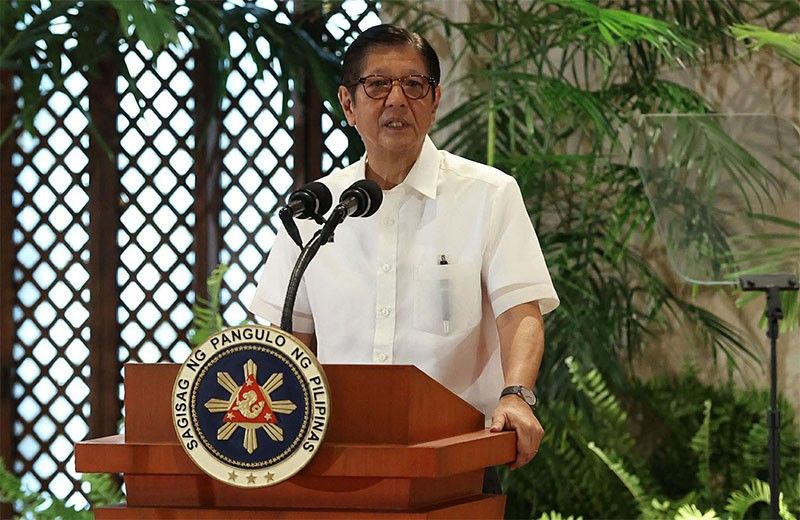
Marcos announces P2,000 cash aid for low-income Filipinos amid Middle East tensions
Philippine President Marcos announced a P2,000 cash aid for 7.5 million low-income households to cushion the impact of rising commodity prices due to escalating Middle East tensions, aiming to alleviate economic burdens.
MANILA, Philippines — President Marcos yesterday announced fresh aid packages for 7.5 million low-income households as commodity prices rise due to the continuing tensions in the Middle East. Some 3.5 million beneficiaries of the government’s Pantawid Pamilyang Pilipino Program and Walang Gutom Program will each get a one-time assistance worth P2,000. The administration will also provide P2,000 monthly aid beginning this month until December to 2.5 million poor and near-poor households identified by the 2024 Community-Based Monitoring System. About 1.5 million households of workers categorized as low-income by the Social Security System will also receive the monthly cash aid. The 7.5 million beneficiary-households comprise 37.5 million individuals. The government has released P12.375 billion to finance the UPLIFT program, which was formed to soften the impact of the Middle East conflict on vulnerable sectors. The UPLIFT strategy, which stands for Unified Package for Livelihoods, Industry, Food and Transport, was adopted last March 24 through Executive Order No. 110, placing the country under a state of national energy emergency. “We continue to feel the effect of the tension in the Middle East, which poses a threat to the global oil supply. It affects our economy and the prices of goods. If costs increase, the burden of every Filipino striving to provide for their needs becomes heavier,” Marcos said in a video statement. “The UPLIFT assistance aims to protect the capacity of Filipino families to provide for their daily needs. We also expanded the scope of the assistance so that more Filipinos will benefit from the program,” he added. Marcos gave assurance that the aid would be distributed in an orderly and timely way through digital platforms. On Wednesday, Palace press officer Undersecretary Claire Castro said the administration is studying proposed fare hikes and subsidies to help sectors affected by the fallout from the war between the US and Iran. A Filipino seafarers advocacy group, meanwhile, is pushing for swift government help for some 2,500 Filipino seamen stranded in the Middle East due to the US-Iran war. “The Philippine government must act immediately to rescue our stranded seafarers. The government should not rely primarily on the assistance provided by shipowners. It must devise and implement an immediate plan to assist and evacuate seafarers stranded in the midst of the war,” the International Seafarers Action Center said. In a statement, ISAC said the Department of Migrant Workers and Department of Foreign Affairs must immediately embark on a rescue and evacuation mission. “The government’s earlier claim of having an agreement with the government of Iran to allow free passage of Filipino seafarers in the Hormuz Strait must be asserted and implemented immediately,” it said. The US embassy in Manila, it added, must be put to task to demand that the US military avoid move that could harm Filipino civilians in the war zones. ISAC said the Marcos administration must step up its efforts to create more jobs in the country and implement a living wage of P1,200 per day to stem the migration of Filipinos to other countries due to poverty and lack of stable jobs. “No Filipino migrant worker, sea based or land based, should ever be suffered to work overseas in war zones at the risk of losing life and limb,” the group added. — Rhodina Villanueva
多角的分析
中東情勢の緊迫化は、原油価格の上昇を通じてフィリピン経済に直接的な影響を与えている。これは輸入コストの増加、インフレ圧力の高まり、そして最終的には国民の購買力の低下につながる。政府の現金給付は、短期的なインフレの影響を緩和し、低所得者層の消費を支えるための措置であるが、根本的な物価高騰の原因に対処するものではない。長期的な経済安定のためには、エネルギー源の多様化や国内生産能力の強化が不可欠となる。
今回の現金給付は、短期的には消費を下支えする効果が期待できるが、投資家にとっては、中東情勢の不確実性が継続することによるエネルギー価格変動リスクと、それによるインフレ懸念が主要な関心事となる。フィリピン政府の財政健全性への影響も注視されるべき点である。海外就労者への支援強化や国内雇用創出への言及は、労働市場の安定化への期待を示唆するが、具体的な効果は今後の政策実行にかかっている。
中東情勢の悪化が、フィリピン国内の低所得者層の生活に直接的な打撃を与えている。物価上昇は、食料品や燃料などの必需品の購入を困難にし、多くの家庭で家計を圧迫している。現金給付は一時的な救済となるが、根本的な生活水準の向上には繋がりにくい。また、中東で働くフィリピン人船員が直面する危険は、海外労働者への支援体制の強化と、国内での安定した雇用機会の創出という、より広範な社会課題を浮き彫りにしている。特に、紛争地域での労働リスクは、フィリピン国民の安全確保という喫緊の課題となっている。
今回の現金給付は、物価高で苦しむ多くのフィリピン国民、特に低所得者層にとって一時的な安堵をもたらすだろう。しかし、毎月2,000ペソの給付が、日々の生活費の増加をどこまでカバーできるかは疑問である。中東で働く船員たちの安全に対する懸念は、海外で働く家族を持つ人々にとって深刻な問題だ。国内での雇用創出や生活賃金の引き上げへの期待は大きいが、それが実現されるまでの間、多くの国民は依然として経済的な不安を抱え続けることになるだろう。
背景・歴史的文脈
フィリピンは、エネルギー資源の多くを輸入に依存しており、中東情勢の変動は原油価格に直接影響を与える。これは、国内のインフレ率を押し上げ、特に低所得者層の生活を圧迫する構造的な問題である。過去にも、湾岸戦争やイラク戦争の際には、原油価格の高騰とそれに伴う物価上昇がフィリピン経済に打撃を与えた。また、フィリピンは世界有数の海外労働者(OFW)派遣国であり、中東地域は多くのフィリピン人が働く重要な地域である。そのため、中東情勢の不安定化は、経済的影響だけでなく、現地で働く国民の安全にも直接的な脅威となる。政府はこれまでも、OFWの保護と支援に力を入れてきたが、紛争地域でのリスクは増大している。
原文ソース
Philstar Nation