General articles are free for 24 hours after publish.
Fuel Prices to Roll Back on August 4 After Weeks of Hikes
Fuel prices in the Philippines are set to decrease starting August 4, offering relief after consecutive weeks of steep hikes. The rollback follows global price surges driven by Middle East tensions and a weaker peso.
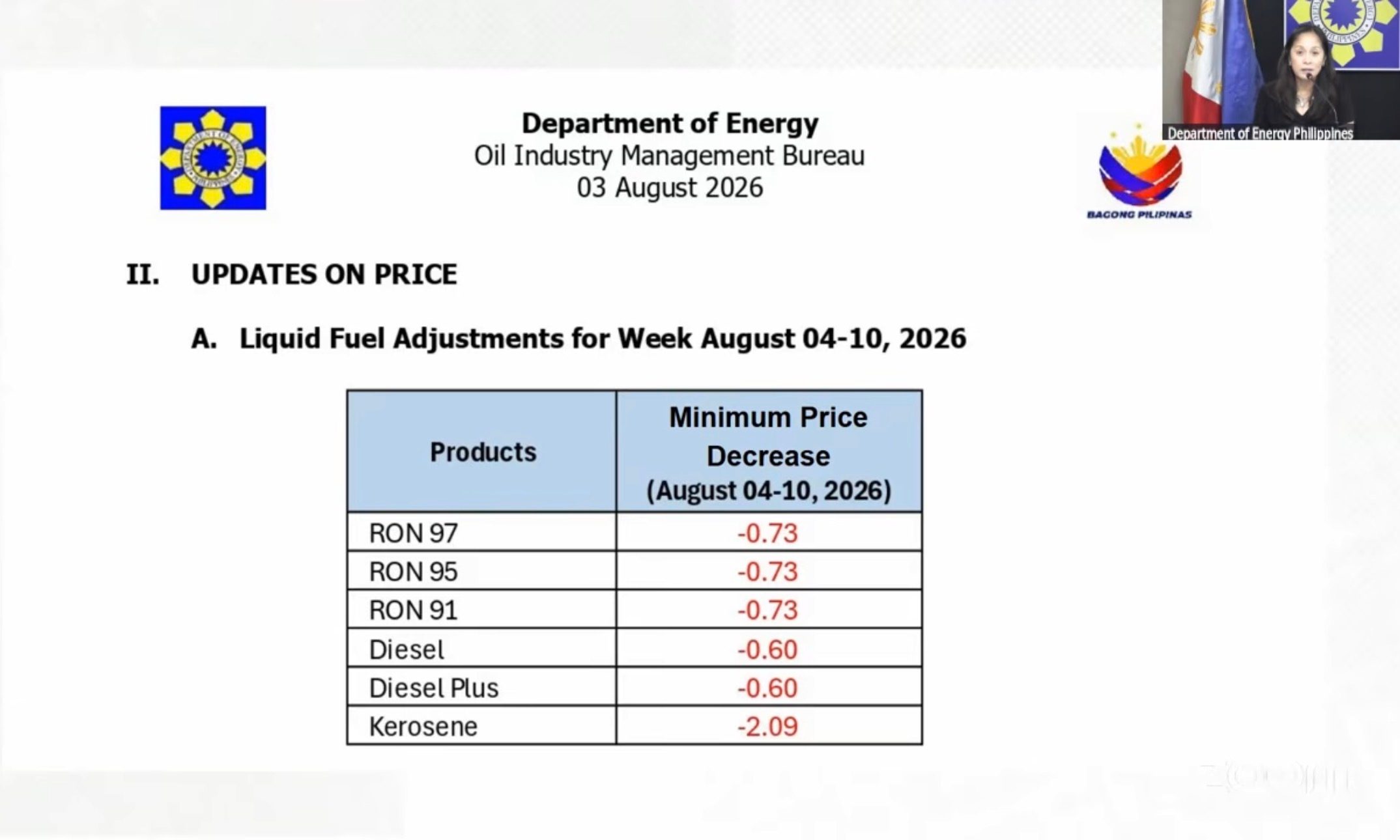
MANILA, Philippines – Fuel prices are going down starting Tuesday, August 4, giving motorists some relief after back-to-back weeks of steep fuel price hikes. In a press conference on Monday, August 3, Energy Secretary Sharon Garin announced the following fuel price adjustments for the week of August 4 to 10: Gasoline – rollback of P0.73 per liter Diesel – rollback of P0.60 per liter Kerosene – rollback of P2.09 per liter The adjustments will take effect on Tuesday, August 4. The rollback follows last week’s fuel price hike, when pump prices increased by P6.80 per liter for gasoline, P7.32 per liter for diesel, and P4.22 per liter for kerosene. That also came after another big jump on July 21, when gasoline rose by P3.65 per liter, diesel by P10.68 per liter, and kerosene by P11.77 per liter. The latest rollback suggests some easing after global oil and refined fuel prices surged in late July due to renewed geopolitical tensions in the Middle East. But the relief may be limited, with global fuel markets still vulnerable to any disruption in key shipping routes. The Department of Energy (DOE) oil monitor, as of July 28, showed that Dubai crude prices rose by around $10.30 per barrel during the July 20 to 24 trading period. International prices of gasoline, kerosene, and diesel also increased by around $14 per barrel, $10 per barrel, and $15 per barrel, respectively. The DOE said the increases were driven by escalating geopolitical tensions in the Middle East, renewed Houthi attacks on commercial vessels in the Red Sea, limited tanker movements through the Strait of Hormuz, Ukrainian drone attacks on Russian refineries, and production cuts in Kazakhstan. The Philippine peso also depreciated against the US dollar during the same period, adding pressure on local pump prices. The Strait of Hormuz, the narrow waterway between Iran and Oman, remains one of the world’s most important oil shipping routes. Any disruption to tanker traffic can quickly affect global crude and refined product prices. That matters for the Philippines because the country imports much of its fuel as finished petroleum products, including diesel and gasoline. This means local pump prices are more directly influenced by regional traded prices of finished fuels, especially the Mean of Platts Singapore or MOPS rather than Dubai crude alone. Despite the latest rollback, local pump prices remain well above levels before the United States and Israel waged war on Iran on February 28. In the last full week before the conflict, DOE data showed common retail prices in Metro Manila at P56 per liter for gasoline RON95, P54.70 per liter for gasoline RON91, P55 per liter for diesel, and P83.47 per liter for kerosene. The Philippines is a net importer of petroleum products, making local pump prices vulnerable to global oil price swings, foreign exchange movements, regional refined fuel prices, and disruptions in international supply routes. – Rappler.com
Original source
Rappler Business