Vietnam Enhances DNA Testing to Identify Fallen Soldiers' Remains, Fulfilling National Aspirations
Security
2026年7月7日
5
Nhan Dan
Relations
🇻🇳Vietnam🇰🇭Cambodia🇱🇦Laos

Vietnam Enhances DNA Testing to Identify Fallen Soldiers' Remains, Fulfilling National Aspirations

AI サマリー

Central Vietnam's Nghe An province is conducting a large-scale campaign to enhance DNA testing for the identification of remains of soldiers fallen during the independence wars. This initiative aims to fulfill the long-cherished wishes of aging families and honor lost soldiers, preserving the nation's historical memory.

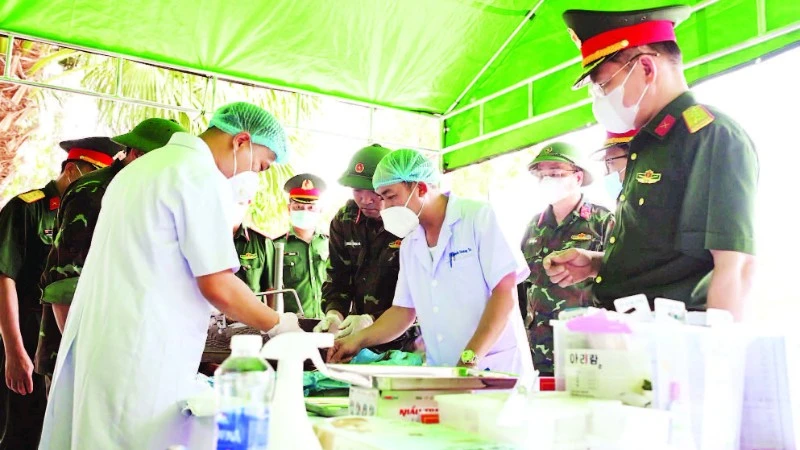
Nghe An province in central Vietnam is intensifying efforts to identify the remains of soldiers who sacrificed their lives during the wars for national independence and reunification. With over 45,000 fallen soldiers from the province alone, a large-scale campaign, dubbed the "500 Days and Nights Operation," is underway to search, collect, and identify these remains. As part of this initiative, from June 25 to July 1, the Nghe An Provincial Police, in coordination with relevant agencies, conducted a special operation to collect DNA samples from over 22,200 relatives of fallen soldiers across all 130 xã and phường (administrative units). To facilitate the process for grieving families, seven sample collection points were established in Trường Vinh, Đại Đồng, Diễn Châu, Đô Lương, Tương Dương, Tân Mai, and Quỳ Hợp. To manage the immense workload within a short timeframe, nearly 400 police officers have been mobilized. Public awareness campaigns highlighting the significance of DNA sample collection are also being conducted concurrently. Recognizing that many relatives are elderly, have limited mobility, or live far from their hometowns, the police have collaborated with local authorities to select convenient and accessible locations for sample collection. At the collection point in Diễn Châu xã, 81-year-old Trần Thị Hường, along with her sister, visited to provide a DNA sample in the hope of identifying her brother, Trần Quốc Hùng liệt sĩ, who died in Laos in 1972. This collection point is expected to gather samples from 4,326 relatives of fallen soldiers from the former Yên Thành and Diễn Châu districts. Similarly, 89-year-old Hoàng Thị Dần, whose brother Hoàng Văn Hợi liệt sĩ (born 1933) perished in the Battle of Điện Biên Phủ in 1954, also came to fulfill her mother's dying wish to bring her brother's remains back home. In addition to collecting remains and DNA samples from relatives, Nghe An province is also collecting DNA samples from unidentified remains buried in 32 war cemeteries across the province. Sample collection has been completed at 4 out of the 32 cemeteries, with 2,333 graves being targeted. The province aims to complete sample collection from all cemeteries by October, contributing to the identification of missing soldiers. The Nghe An Provincial Military Command is also actively involved in collecting the remains of Vietnamese military personnel and experts who died while on international missions in Laos. To date, 12,897 sets of remains have been recovered, with 1,680 identified by name and origin. Of these, 937 have been handed over to local authorities and families for reburial in their hometowns. Despite challenges such as harsh climates, difficult terrain, unexploded ordnance, a dwindling number of war witnesses, and fading memories, Nghe An province prioritizes the identification of fallen soldiers and is accelerating its efforts. Source: Nhan Dan

多角的分析

経済的影響

このDNA鑑定強化キャンペーンは、直接的な経済効果をもたらすものではないが、国家の歴史的記憶の維持と国民統合という社会的な側面が強い。しかし、長期的に見れば、戦没者への敬意を示すことは社会の安定に寄与し、それが間接的に経済活動の基盤となる。また、ラオスなど近隣諸国との協力関係の維持・強化にも繋がり、地域経済の安定にも貢献する可能性がある。

投資家心理

投資家にとって、このニュースは直接的な投資機会を示すものではない。しかし、ベトナム政府が国民の感情や歴史的記憶を重視し、社会的な課題に真摯に取り組む姿勢は、国家の安定性を示す指標となり得る。これは、長期的な視点を持つ投資家にとって、ベトナム市場への信頼を高める要因となる可能性がある。ただし、遺骨特定作業自体が直接的な経済活動に結びつくわけではないため、投資判断に与える影響は限定的である。

社会的影響

ゲアン省で展開されているDNA鑑定強化キャンペーンは、独立戦争で犠牲となった戦没者の遺族にとって、長年の悲願達成への希望となる。特に、高齢化が進む遺族にとって、亡き家族の身元を特定し、故郷に迎えることは、精神的な支えとなる。Diễn Châu xãでサンプル採取に訪れた81歳のTrần Thị Hườngさんのように、家族の犠牲を悼み、その名誉を回復したいという強い願いが、この活動を支えている。また、身元不明の遺骨が特定されることは、国家全体の歴史的記憶の継承と国民統合に貢献する。

市民の声

ベトナム国民、特にゲアン省の戦没者遺族にとって、このDNA鑑定強化キャンペーンは、長年の悲願を叶えるための重要な一歩である。Diễn Châu xãでサンプル採取を待つ81歳のTrần Thị Hườngさんや、89歳のHoàng Thị Dầnさんのように、亡くなった家族の遺骨を特定し、故郷に迎えることは、深い精神的な充足感をもたらす。これは、国家が国民一人ひとりの犠牲を記憶し、尊重していることの証であり、国民の愛国心や団結心を一層強めるだろう。一方で、作業の遅延や困難さは、遺族の悲しみを長引かせる可能性もある。

背景・歴史的文脈

ベトナムは、長年にわたる対仏植民地支配、ベトナム戦争、そしてカンボジアとの国境紛争など、数多くの戦争と紛争を経験してきた。これらの戦いでは、膨大な数の兵士が犠牲となり、多くの遺骨が未特定、あるいは異国の地に取り残されたままであった。特に、独立戦争やベトナム戦争で国外(ラオス、カンボジアなど)で戦死した兵士の遺骨収集は、国家的な課題として長年取り組まれてきた。1975年のベトナム統一後、政府は戦没者の名誉回復と遺族の悲願達成のため、遺骨収集・特定作業を継続的に推進している。DNA鑑定技術の進歩は、この困難な作業を加速させる重要な要素となっている。

原文ソース

Nhan Dan

原文を読む