General articles are free for 24 hours after publish.
Rupiah Weakens Amid Middle East Tensions and Import Demand; BI Intervenes
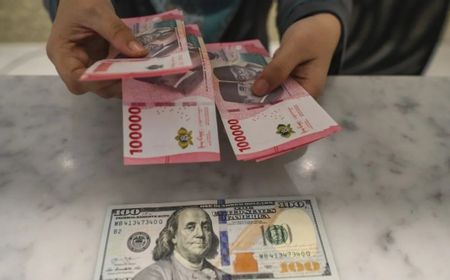
The Indonesian Rupiah has weakened due to rising oil prices from Middle East conflicts and increased import demand. Bank Indonesia (BI) is intervening in the market and implementing stabilization measures, while noting the Rupiah remains relatively stable compared to regional currencies.
The Indonesian Rupiah is facing depreciation pressure, primarily influenced by geopolitical tensions in the Middle East, which are keeping oil prices above $100 per barrel. Bank Indonesia (BI) has indicated that this situation heightens global inflation risks and impacts the fiscal outlook. Erwin Gunawan Hutapea, Head of the Monetary and Asset Management Department at BI Securities, stated that the pressure on the Rupiah is also exacerbated by foreign exchange needs from importers and capital outflows from domestic portfolio assets. He assured that BI remains committed to intervening in the market to ensure its mechanisms function smoothly and the Rupiah's exchange rate aligns with its fundamentals. BI's strategy involves managing the interest rate structure in the money market through a strengthened market-oriented monetary operations strategy. The central bank is also focusing on exchange rate stabilization and ensuring adequate liquidity. This includes transactions with underlying assets to hedge foreign exchange. Interventions will continue through non-deliverable forward (NDF) transactions in foreign markets, spot transactions, and domestic non-deliverable forward (DNDF) in the domestic market. BI is also purchasing State Securities (SBN) in the secondary market. NDF and DNDF are instruments used for foreign exchange forward transactions, among other purposes, to manage exchange rate risks. DNDF is conducted within the domestic market. Hutapea further mentioned that BI is intensifying coordination and communication with corporations and market players. This includes efforts to encourage foreign capital inflows by optimizing existing incentives and diversifying foreign exchange demand through the Local Currency Transaction (LCT) scheme. The LCT allows cross-border transactions using local currencies, thereby reducing the need for specific foreign currencies. Despite these pressures, BI noted that the Rupiah's movement remains in line with regional currencies. Quarter-to-date, the Rupiah has strengthened by 0.37 percent. Indonesia's foreign exchange reserves increased to $146.5 billion at the end of August. On Monday afternoon, the Jakarta Interbank Spot Dollar Rate (JISDOR) stood at Rp17,813 per US dollar, marking a 0.38 percent weakening from Rp17,745 per US dollar on Friday, September 18. Source: VOI English
Original source
VOI English