General articles are free for 24 hours after publish.
Cambodia, Thailand Begin Compulsory Conciliation in Maritime Boundary Dispute
Cambodia and Thailand have commenced compulsory conciliation proceedings in Singapore to resolve a long-standing maritime boundary dispute in the Gulf of Thailand. Under the UN Convention on the Law of the Sea, both nations presented their claims, aiming for a peaceful resolution that could unlock potential energy resource development.
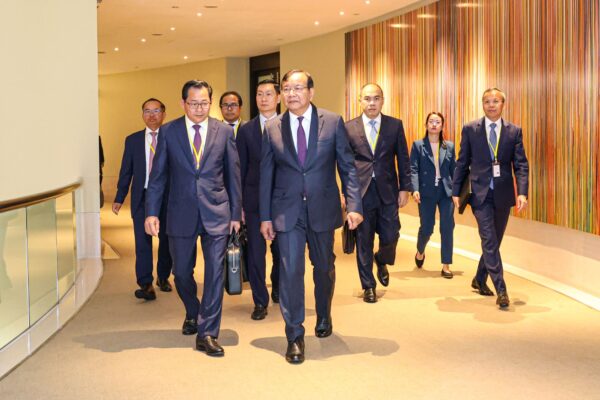
Cambodia and Thailand have initiated compulsory conciliation proceedings in Singapore, marking a significant step towards resolving their long-standing maritime boundary dispute in the Gulf of Thailand. The three-day session formally opens a process under the U.N. Convention on the Law of the Sea (UNCLOS) aimed at settling the overlapping claims. Following a closed-door session chaired by Katrina Cooper, head of the Conciliation Commission, both Cambodian Foreign Minister Prak Sokhonn and his Thai counterpart, Sihasak Phuangketkaew, delivered opening statements. Minister Sokhonn articulated Cambodia's objective as achieving a resolution that benefits both nations and fosters regional peace, cooperation, and shared prosperity. "A peaceful resolution is in the shared interests of both countries and will contribute to peace and stability in the region," he stated, highlighting potential benefits such as protecting sovereignty, strengthening confidence, unlocking energy resources, supporting development, and creating future job opportunities. Thailand's Foreign Minister Sihasak Phuangketkaew affirmed Thailand's good faith engagement with the process, mindful of UNCLOS provisions, and expressed readiness for constructive participation to reach a negotiated and equitable solution with the Commission's assistance. However, he also voiced criticism, accusing Cambodia of taking refuge behind international law and engaging in "false narratives, distortion of facts, and unfounded accusations." Sihasak explained Thailand's unilateral cancellation of a 2001 Memorandum of Understanding (MoU) governing joint offshore energy exploration and boundary demarcation was due to a lack of progress, aiming to give negotiations a fresh start. The dispute centers on a 26,000-square-kilometer area in the Gulf of Thailand known as the Overlapping Claims Area (OCA), estimated to hold substantial oil and natural gas reserves. Maritime tensions have escalated alongside recent armed clashes on the land border, which occurred twice last year, resulting in casualties and displacement. Cambodia initiated the UNCLOS process in June, shortly after the Thai government, under Prime Minister Anutin Charnvirakul, cancelled the 2001 MoU. Minister Sokhonn emphasized that Cambodia chose compulsory conciliation as a "peaceful pathway forward in accordance with international law" and viewed it as a means to "rebuild trust, not as a form of escalation." Thai nationalist concerns over Koh Kut island have historically complicated maritime boundary negotiations and contributed to border tensions. According to Annex V of UNCLOS, compulsory conciliation involves an independent panel of experts assisting states in reaching an amicable settlement, with non-binding findings. This mechanism was previously used in a maritime dispute between Timor-Leste and Australia in 2016. The maritime dispute stems from differing interpretations of a 1907 land border treaty. While maritime resolution is theoretically simpler than the land border issues, which involve complex colonial cartography and culturally significant sites, last year's clashes have significantly poisoned bilateral relations. Any agreement, even one facilitating resource exploitation, will be challenging to "sell" to publics sensitive about sovereignty, particularly in Thailand, where nationalist sentiment is a significant factor. Information source: The Diplomat Cambodia
Original source
The Diplomat Cambodia