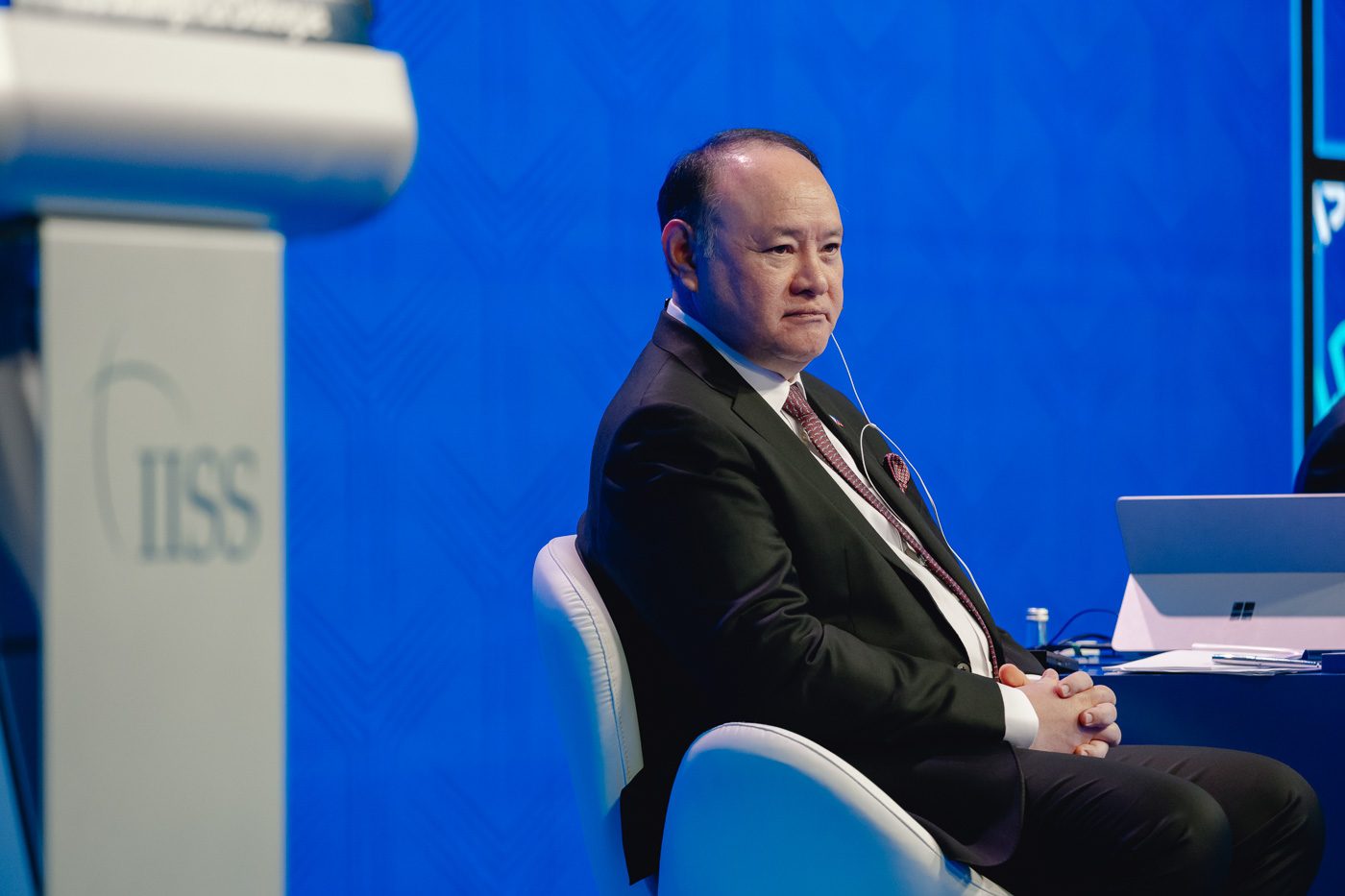
Philippines recalls defense attaché to Beijing
The Philippines has recalled its defense attaché to Beijing along with his staff. Defense Secretary Gilberto Teodoro Jr. stated the move is part of a "process of re-establishing and readjusting" postings under a "new engagement framework." This comes weeks after China imposed sanctions on Teodoro and his family.
MANILA, Philippines — The Philippines has recalled its defense attaché to Beijing, Rappler learned from military sources who said the attaché and his staff arrived in Manila last week. Asked to confirm, Defense Secretary Gilberto Teodoro Jr. told Rappler on Tuesday, July 7, that Manila’s Defense and Armed Forces Attaché (DAFA), alongside his staff, were recalled to Manila for “consultations.” He explained this was part of a “process of re-establishing and readjusting” postings under a “new engagement framework” of his department. “This is part of our consultation to review what the way forward is for a DAFA posting in Beijing,” Teodoro told Rappler on the sidelines of the military’s first semester command conference with President Ferdinand Marcos Jr. at Camp Aguinaldo in Quezon City. The move came weeks after Beijing imposed sanctions on Teodoro and members of his family. He and his family are barred from entering mainland China, Hong Kong, and Macau. People in China are also not allowed to transact with the Teodoros. Must Read China sanctions defense chief Gibo Teodoro Navy Captain Arnold Fortin was assigned to Beijing in 2024. In December that year, Fortin and his police counterpart were introduced by Philippine Ambassador to China Jaime FlorCruz to Beijing’s security sector, according to a post from the Philippine embassy. Defense attachés or DAFAs are military officers who are assigned to the Philippines’ different diplomatic posts — embassies or consulates — around the world. While they report to the Philippine ambassador or the head of post where they are assigned, they continue to be personnel of the military and the Department of National Defense. A July 2024 press release from the Philippine Navy about Fortin and other DAFAs’ call to the Flag-Officer-in-Command said DAFAs are “links for more cooperation on strategic defense matters and contribute significantly to the Armed Forces of the Philippines’ mission to strengthen ties and enhance defense cooperation with other countries.” “Our defense and military attaches abroad, we have found the need to establish new ones, augment existing ones because some I have only one or two…. And we also have been reviewing the posts where we do not necessarily need any, together with the defense cooperation agreements those that are stagnant, those that are not applicable at this time, and those in the future,” said Teodoro. The defense chief is among the most vocal critics of Beijing in the Philippine government, particularly over China’s actions both at sea and on land. Speaking to media on July 7, Teodoro called out China’s “lack of respect for our territorial integrity,” as well as its apparent interference efforts — from espionage to industry. President Ferdinand Marcos Jr. had previously said Beijing’s sanctions were “unhelpful” because they raise “the level of tension rather than lessens” it. Marcos has said that he wants a “reset” of ties with its northern neighbor. Teodoro said that “carefully controlled communications” with China “are necessary.” But he drew the line at “negotiations and other activities.” “[Those] are not possible unfortunately because of the lack of good faith on their part and a lack of respect for our territorial integrity,” he added. Defense attachés can also be centers of controversy. In 2024, the Senate probed an apparent January 2024 phone call between China’s then-defense attaché to Manila Senior Colonel Li Jianzhong and then–Western Command chief Alberto Carlos. Beijing threatened to leak the call in May 2024, claiming it was proof of a supposed agreement covering Ayungin (Second Thomas) Shoal in the West Philippine Sea. – Rappler.com
多角的分析
駐中国防衛駐在官の召還は、直接的な経済的影響は限定的とみられる。しかし、これはフィリピンと中国間の外交的緊張の高まりを示唆しており、貿易や投資、特に中国からの直接投資に影響を与える可能性がある。フィリピン政府は、中国の経済的影響力への依存度を減らすため、多角化を進めているが、このような外交的摩擦は、その取り組みを複雑化させる要因となりうる。
今回の召還は、フィリピンと中国間の地政学的なリスクを浮き彫りにする。投資家は、南シナ海情勢の悪化や、両国間の対立がエスカレートする可能性を注視する必要がある。特に、中国からの投資や、中国市場との関連性が高いフィリピン企業への影響が懸念される。安全保障上の懸念が高まると、投資家心理が悪化し、資本流出を招くリスクも否定できない。
防衛駐在官の召還は、フィリピン国民、特に海外で働くフィリピン人(OFW)や、中国との関係に敏感な層に不安を与える可能性がある。国防長官への制裁は、個人の安全や家族への影響という形で、国民生活に直接的な懸念をもたらす。また、南シナ海における領土問題への関心が高い層にとっては、国家主権への挑戦と受け止められ、国民感情を刺激する可能性がある。
今回の召還は、国民の安全保障への関心を高めるだろう。特に、中国による南シナ海での活動や、フィリピンの領土保全に対する懸念は、多くの国民が共有する問題である。国防長官とその家族への制裁は、国民一人ひとりが国家間の対立の影響を受けうることを示唆しており、政府の対応に対する注視が高まることが予想される。
背景・歴史的文脈
フィリピンと中国間の緊張は、南シナ海における領有権問題に根差している。中国は、国際法に反して広範な海域を自国の領土と主張し、フィリピンの排他的経済水域(EEZ)内での活動を妨害している。2024年のアユンギン礁(セカンド・トーマス・ショー)を巡る攻防や、中国海警局によるフィリピン船舶への妨害行為は、両国関係を悪化させる一因となった。今回の防衛駐在官召還は、こうした長年の対立と、フィリピン政府による中国の行動への強い懸念を背景にしている。
原文ソース
Rappler Philippines