Vietnam's Revised Petroleum Law Aims to Delegate Authority and Unlock Resources
Business
2026年8月8日
4
Nhan Dan

General articles are free for 24 hours after publish.

Vietnam's Revised Petroleum Law Aims to Delegate Authority and Unlock Resources

Share
AI Summary

Vietnam's National Assembly discussed a revised Petroleum Law aimed at enhancing delegation of authority, clarifying risk management, and adapting to new sectors like Carbon Capture and Storage (CCS) and offshore energy. The revisions are expected to boost resource development and protect national interests.

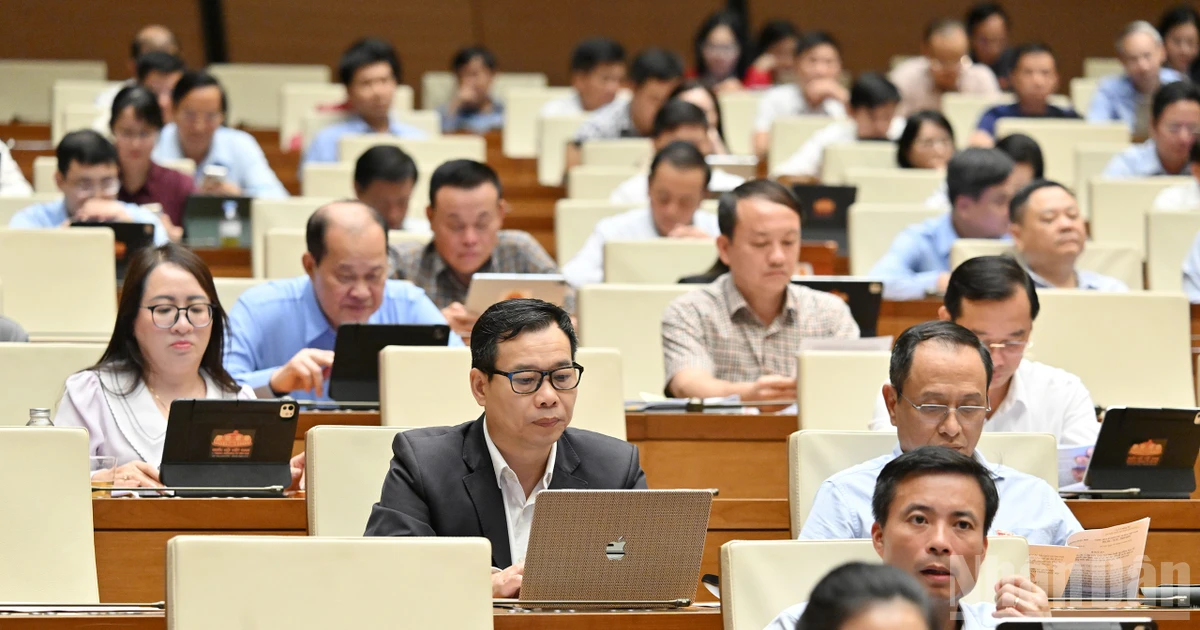
The National Assembly of Vietnam has engaged in a vigorous discussion regarding the draft revised Petroleum Law during its first extraordinary session. Delegates highlighted that the proposed amendments are expected to bring about substantial changes in the management of the oil and gas sector, promoting delegation of authority, clarifying responsibilities, balancing risk acceptance with control, and facilitating investment while protecting national resources and interests. Delegate Trịnh Xuân An (from Đồng Nai) noted that the draft law not only revises regulations for traditional oil and gas activities but also opens up new development spaces for the industry through provisions on Carbon Capture and Storage (CCS) technology, offshore energy, and high-tech oil and gas technical services. This signifies a shift in thinking from managing oil and gas operations to "creating" the development of the industry in a new era. Regarding the role of the Vietnam Oil and Gas Group (PetroVietnam), the delegate agreed with the move to enhance delegation of authority. However, he expressed concern that the legal status of PetroVietnam when exercising "host country" rights is not yet clearly defined in the draft. He emphasized the need to distinguish between PetroVietnam as a state-owned enterprise directly involved in investment, production, and business, and its role as an entity entrusted by the state to perform host country rights and obligations, each with different objectives, responsibilities, and control mechanisms. Delegate Nguyễn Thị Sửu (from Huế City) stated that granting greater authority to PetroVietnam necessitates commensurate control mechanisms. She pointed out the potential conflict of interest where PetroVietnam acts as both an investing and business enterprise and is also tasked with auditing, appraising, approving, and settling contractor costs. She proposed that amendments to relevant articles be made based on the principle of delegating authority without relinquishing control, clearly separating the exercise of host country rights and obligations from the investment and business activities of PetroVietnam and its subsidiaries. Furthermore, delegate Nguyễn Ngọc Sơn (from Hải Phòng City) argued that due to the high geological risks in oil and gas exploration, responsibilities should be assessed based on information and recognizable risks at the time of decision-making, not solely on the final outcome. This distinction between erroneous decisions due to legal violations or negligence and inherent objective risks in oil and gas exploration and exploitation would make delegation of authority more substantive, enabling those entrusted with power to make decisions proactively and bear responsibility. In response, Minister of Industry and Trade Lê Mạnh Hùng emphasized that the overarching spirit of the draft law is to enhance delegation of authority, simplify procedures, and unlock resources in line with the Party's directives and international oil and gas industry practices, while strengthening supervision and control. The Minister assured that the government will detail the organization of inspection and supervision, with state management agencies monitoring and conducting risk-oriented audits based on data reported by PetroVietnam and oil and gas contractors. The draft law also includes preferential policies to encourage the development of marginal small fields in deep-water and offshore areas. The Minister affirmed that all responsible and dedicated opinions from the National Assembly delegates will be fully considered to further refine the draft law for submission to the government and subsequent approval by the National Assembly. Source: Nhan Dan

0

Original source

Nhan Dan

原文を読む