General articles are free for 24 hours after publish.
Vietnam Government Assesses July Economic Performance, Discusses Investment and Growth Promotion Measures
The Vietnamese government assessed the socio-economic situation in July and discussed measures to maintain macroeconomic stability and promote growth. Public investment disbursement and foreign direct investment (FDI) attraction showed positive trends, with significant increases in import-export turnover. However, further policy strengthening is needed to address global economic uncertainties.
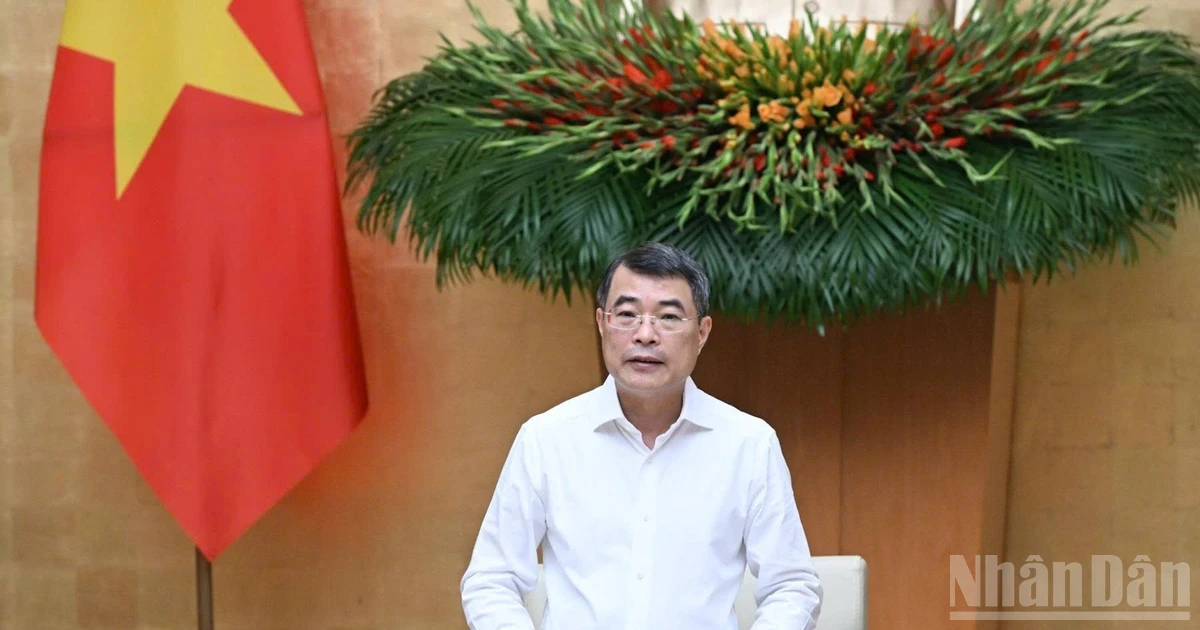
On August 3, the Vietnamese government held its regular monthly meeting, chaired by Prime Minister Le Minh Hung, to assess the socio-economic situation in July and discuss key future tasks. The meeting confirmed a generally stable macroeconomic environment. In July, the Consumer Price Index (CPI) is projected to decrease by 0.12% compared to the previous month, with the average increase for the first seven months estimated at 4.39%. State budget revenue is estimated to exceed 1,830 trillion VND (approximately 108.3 billion USD), reaching 72.5% of the target. Public investment disbursement reached 425.3 trillion VND (approximately 25.3 billion USD) by the end of July, accounting for 41.9% of the plan. This represents an increase of 86.8 trillion VND in absolute terms and about 3.6% in proportion compared to the same period last year. Foreign Direct Investment (FDI) continued to be a bright spot, with new registered capital reaching 38.06 billion USD, an increase of 58%, and disbursed FDI reaching 15.2 billion USD, up 11.8%. The total import-export turnover for the first seven months reached 659.6 billion USD, a 28.1% increase year-on-year. Manufacturing sectors maintained a positive trend. In July, fruit and vegetable exports reached 1.12 billion USD, surpassing the 1 billion USD monthly mark for the first time. The Industrial Production Index (IPI) in July increased by 14.5% compared to the same period last year, and for the first seven months, it rose by over 11.4%, the highest since 2019, with processing and manufacturing industries up 12%. The total retail sales of goods and consumer service revenue increased by 13.1%. International tourist arrivals reached over 13.9 million, the highest ever, up 13.8%. Cultural, social, and environmental sectors continued to receive attention, while national defense, security, and social order were maintained, and foreign affairs and international integration were strengthened. However, Prime Minister Le Minh Hung emphasized that Vietnam will continue to face complex and unpredictable global situations, citing the Middle East conflict, projected slower growth in the global economy and major economies, rising inflation pressures, and policy adjustments by many partners, along with domestic risks from the peak rainy and storm season. The Prime Minister urged ministries, agencies, and localities to regularly update and assess their ability to achieve growth targets to implement effective promotion measures while maintaining macroeconomic stability. Particular emphasis was placed on institutional reform. Ministries were directed to focus on developing and submitting 24 draft laws and resolutions to the National Assembly in the first extraordinary session and approximately 40 draft laws and resolutions in the October session, along with accompanying guiding documents. The inclusion of individual and household businesses in the scope of the draft Law on Small and Medium-sized Enterprise Development was also suggested to encourage their transition into enterprises, especially one-person enterprises. Strengthening discipline in law enforcement, accelerating the development and issuance of detailed regulations, preventing legal loopholes, and reviewing legal normative documents set to expire before March 1, 2027, were also instructed. Regarding planning, many national, regional, and provincial master plans have been approved, with Ho Chi Minh City's special plan expected to be completed by year-end. The Prime Minister called on ministries to complete the formulation and adjustment of 22 sector-specific plans within their purview in a manner consistent with growth targets by the third quarter of 2026. To promote growth and maintain macroeconomic stability, the acceleration of public investment disbursement was stressed, particularly for ministries and provinces with low disbursement rates, aiming for 100% execution of planned capital. The Ministry of Finance will pilot a scoring system for ministries, agencies, and localities on public investment disbursement. The State Bank of Vietnam was instructed to focus on stabilizing interest rates, ensuring liquidity, reducing lending rates and economic costs, and stabilizing the monetary and foreign exchange markets, while strictly handling unhealthy interest rate competition. Source: Nhan Dan
Original source
Nhan Dan