General articles are free for 24 hours after publish.
Philippines Eyes Next Growth Phase with New Economic Corridor, AI and Semiconductor Initiatives
The Philippines aims to create new jobs and economic opportunities, following the BPO boom, through the Luzon Economic Corridor (LEC) and the Pax Silica alliance. These initiatives are expected to elevate the country's position in the AI and semiconductor supply chain, driving a transition to next-generation industrial structures.
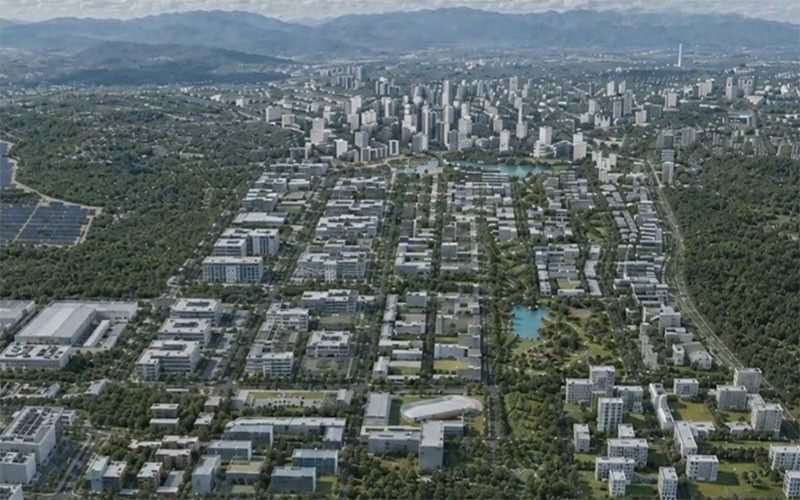
The Luzon Economic Corridor (LEC) and the Pax Silica alliance are set to be the Philippines’ next big thing in terms of job and economic opportunities after the country’s business process outsourcing (BPO) boom. Rick Santos, chairman and CEO of integrated real estate services company Santos Knight Frank, called the Luzon Economic Corridor and Pax Silica “the most exciting initiatives to date, following the BPO era.” “We see it as a good opportunity to create more jobs and open up more opportunities to improve the market overall,” Santos said. “The concept of LEC and Pax Silica will, indeed, position the Philippines as a serious player in the region’s AI and semiconductor supply chain, opening up next-generation opportunities, higher-paying jobs and attracting long-term institutional capital,” he said. Santos Knight Frank said that together, the LEC and Pax Silica mark a shift in the Philippines’ economic identity, away from an economy built on BPO, remittances and consumption. The two frameworks are expected to reposition Luzon, which already accounts for roughly half of the country’s gross domestic product, as one of Southeast Asia’s leading hubs for advanced manufacturing, semiconductors and artificial intelligence (AI)-driven infrastructure. “What we’re seeing now is the foundation for the next generation of Philippine economic growth, one that moves us beyond services and remittances into advanced manufacturing, technology and long-term institutional investment,” Santos said. He said that for real estate, particularly in the industrial sector, this represents a multi-decade opportunity. “The industrial sector remains a bright spot, with renewable energy, e-commerce, and digital infrastructure now joining manufacturing and logistics as key demand drivers,” Santos said. For his part, Presidential Communications Secretary Dave Gomez said the US-led project is expected to generate up to a million quality jobs and grow the economy by double digits. In an interview with ‘The Spokes’ on Bilyonaryo News Channel, Gomez said Pax Silica would be one of the landmark programs of the Marcos administration in the next two years. Gomez said the US is encouraging investments in what they call trusted partners. “We’re very fortunate that we are one of those trusted partners in Southeast Asia,” he said. The other country is Singapore. “It has the potential to grow our economy double digits. It has the potential to generate up to one million quality jobs. So imagine the impact on the economy and on ordinary citizens,” Gomez said. Announced in April 2024, the LEC is the first Partnership for Global Infrastructure and Investment corridor in the Indo-Pacific, aimed at strengthening connectivity across key Luzon growth centers. What started as a trilateral initiative of the US, Japan and the Philippines expanded to include Australia, Canada, Denmark, France, Italy, South Korea, Sweden and the United Kingdom. Santos Knight Frank said the LEC is now a multilateral vote of confidence in Philippine infrastructure, not just a bilateral development program. The corridor enhances connectivity between Subic Bay, Clark, Manila and Batangas, linking Luzon’s key ports, airports and economic zones into one investment spine, it said. Pax Silica, meanwhile, is designed to reduce dependence on vulnerable technology supply chains and strengthen cooperation among trusted partners. The Philippines became a member of the US-led coalition in April 2026. A 4,000-acre site in New Clark City has been proposed as the location of the first AI-native industrial acceleration hub under Pax Silica, situated within the Luzon Economic Corridor. Santos Knight Frank said the proposed development is expected to support investment in semiconductors and advanced electronics. It said the Pax Silica framework offers the Philippines its clearest opening in a generation to move up the value chain of global electronics manufacturing. “The Philippines brings distinct strengths to the table: reserves of nickel, copper, and gold – critical inputs for microchips, batteries, and advanced electronics – alongside an established base of technical talent and manufacturing infrastructure already serving the BPO and electronic sectors,” Santos Knight Frank said.
Original source
Philstar Business