General articles are free for 24 hours after publish.
Drought in Hulu Threatens Jabodetabek's Clean Water Supply
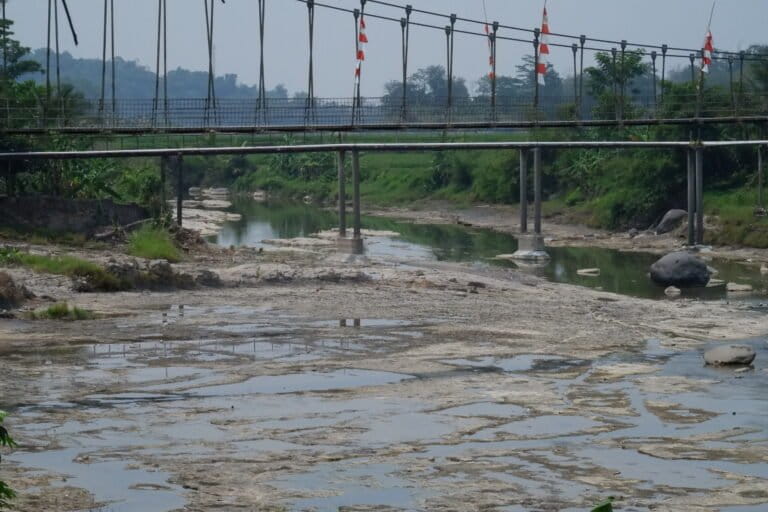
Shrinking river levels in the upstream Bogor region are severely threatening the clean water supply for the Greater Jakarta (Jabodetabek) area. Residents in Kampung Katulampa face significant inconvenience due to water scarcity.
Severe drought in the upstream Bogor region is creating a crisis for the clean water supply to the Greater Jakarta (Jabodetabek) area. Rivers in the Bogor vicinity, once flowing abundantly, have now significantly diminished in volume, with some disappearing entirely. This situation not only alters the landscape of the rivers but also threatens access to clean water for Jabodetabek residents. In Kampung Katulampa, Rosmiati is forced to bathe her two children in Kali Baru, an irrigation channel drawing water from the Ciliwung River. The water supply from her well has dwindled. She also carries water home in used gallon containers for washing clothes, cleaning household items, and sanitation needs. The Ciliwung River has been dry for over a month, and the water level at the Katulampa Dam has reached its lowest point, measuring zero centimeters. A decline in water discharge is also observed in Kampung Pulo Geulis, Bogor City. This condition affects the raw water availability for Perumda Tirta Pakuan. The Katulampa Water Treatment Plant typically produces 307.14 liters of water per second, serving 35,492 customers in Bogor Utara, Bogor Timur, and parts of Bogor Regency. Drought has also hit the Cipamingkis River, which originates in the Puncak 2 area of Sukamakmur. The flow of Curug Cipamingkis is prioritized to meet residents' needs, so the water gate leading to the river has been closed. Water is channeled into irrigation canals and reservoirs connected to residents' homes. The Ciherang River faces a similar fate, with its riverbed filled with rocks and no water flow, while the surrounding paddy fields show cracked soil and yellowing rice plants. While low rainfall and the El Niño phenomenon have indeed prolonged the dry period, climatic factors are not the sole cause. Wahyu Eka Styawan, Urban Campaigner for Justice at Walhi National, argues that the dry season merely exposes a long-standing ecological crisis in the upstream region. "We have treated rivers as if they stood alone for too long, when in fact the health of the river...", he stated. Source: Mongabay Indonesia
Original source
Mongabay Indonesia