General articles are free for 24 hours after publish.
Cambodia Exposes Thai Border Incursions on International Stage, Countering Thai Call for Bilateral Silence
Cambodia's Senate asserts that raising border issues with Thailand in international forums is a peaceful and transparent diplomatic mechanism, not an internationalization of the conflict. Despite Thailand's calls for bilateral resolution, Cambodia maintains its stance of informing the international community about its sovereignty and territorial integrity.
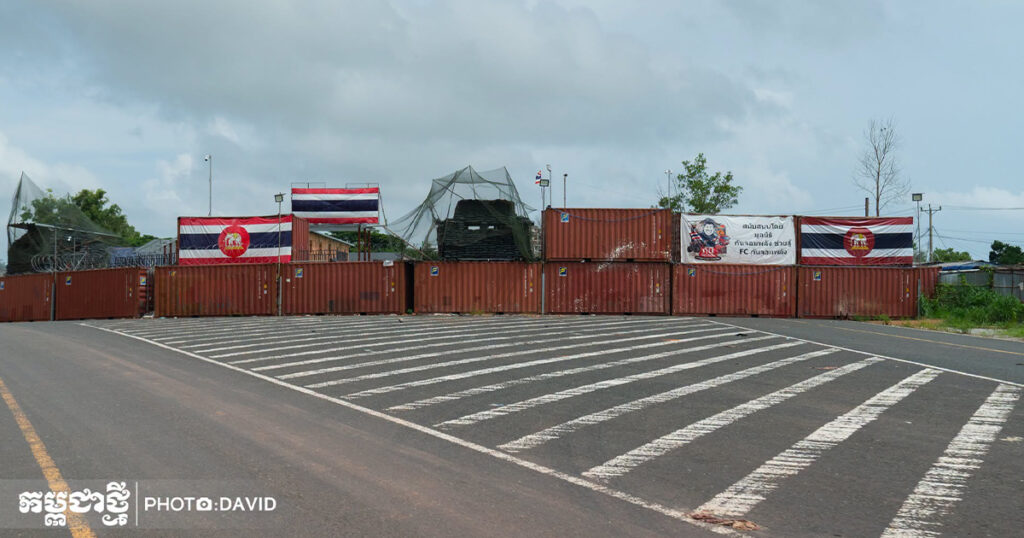
The Cambodian Senate has countered Thailand's request to keep border issues as a bilateral matter and refrain from raising them in international forums, stating that using international platforms to explain and present the realities of the Cambodia-Thailand border issue is a peaceful, transparent, and legal diplomatic mechanism, not an attempt to internationalize the conflict. In a statement released on September 5, Dr. Chi Yisang, Chairman of the Senate's Commission on Foreign Affairs, International Cooperation, and Information, clarified that the purpose of informing the international community is primarily to convey the actual situation on the ground and to present Cambodia's stance on peacefully resolving border issues. This statement was in response to Mr. Nophadol In-na, Chairman of the Senate's Advisory Commission on Foreign Affairs of Thailand, who raised concerns about the inappropriate use of the ceasefire agreement pretext to allow Thai troops to station in Cambodian territory. The Cambodian Senate asserted: "The continuous forward deployment of troops and repeated aerial incursions by Thailand constitute a direct violation of international law, the UN Charter, and existing bilateral protocols." Simultaneously, Cambodia unequivocally rejects baseless accusations and reaffirms its inviolable sovereignty over its territory, which is firmly established in law by historical international treaties. Regarding the protection of diplomatic parliamentary rights, which Thailand urges Cambodia to remain silent on and avoid "internationalizing" bilateral disputes, the Cambodian Senate explained: "Nevertheless, the utilization of parliamentary, regional, and international forums is a peaceful, transparent, and legal diplomatic mechanism. It is our duty to inform the international community about the actual realities on the ground." In August, Samdech Techo Hun Sen, President of the Senate, exposed Thai military plans to invade Cambodia during the 2nd Conference of Speakers of Parliaments of the IPU, hosted by Cambodia, with representatives from approximately 20 countries and international organizations attending. Addressing numerous foreign delegations, Samdech Techo severely condemned the invading war by the Thai military against Cambodia as a "colored war," aimed at defamation, profiting from online fraud crimes, and serving as a pretext to occupy Cambodian territory. Concurrently, the Senate statement emphasized Cambodia's continued deep commitment to peaceful conflict resolution and regional stability. However, it noted that diplomacy must be based on mutual trust, transparency, and absolute respect for existing treaties. Long-term peace can only be achieved if Thailand responds to Cambodia's calls for dialogue with absolute respect for international law and the historical borders established under the French-Siam Treaties of 1904 and 1907. It is reported that during border conflicts where Thai troops invaded Cambodian territory twice, in late 2025 and 2026, the Cambodian Prime Minister and senior leaders utilized international and regional forums, including the UN, to present the realities and inform the international community about the actions of the Thai military that violated Cambodia's territorial integrity and the right to live for Cambodian citizens.
Original source
Kampuchea Thmey Local