General articles are free for 24 hours after publish.
ADB Lowers Cambodia Growth Forecast to 3.9% for 2026 Amid Tourism Slump
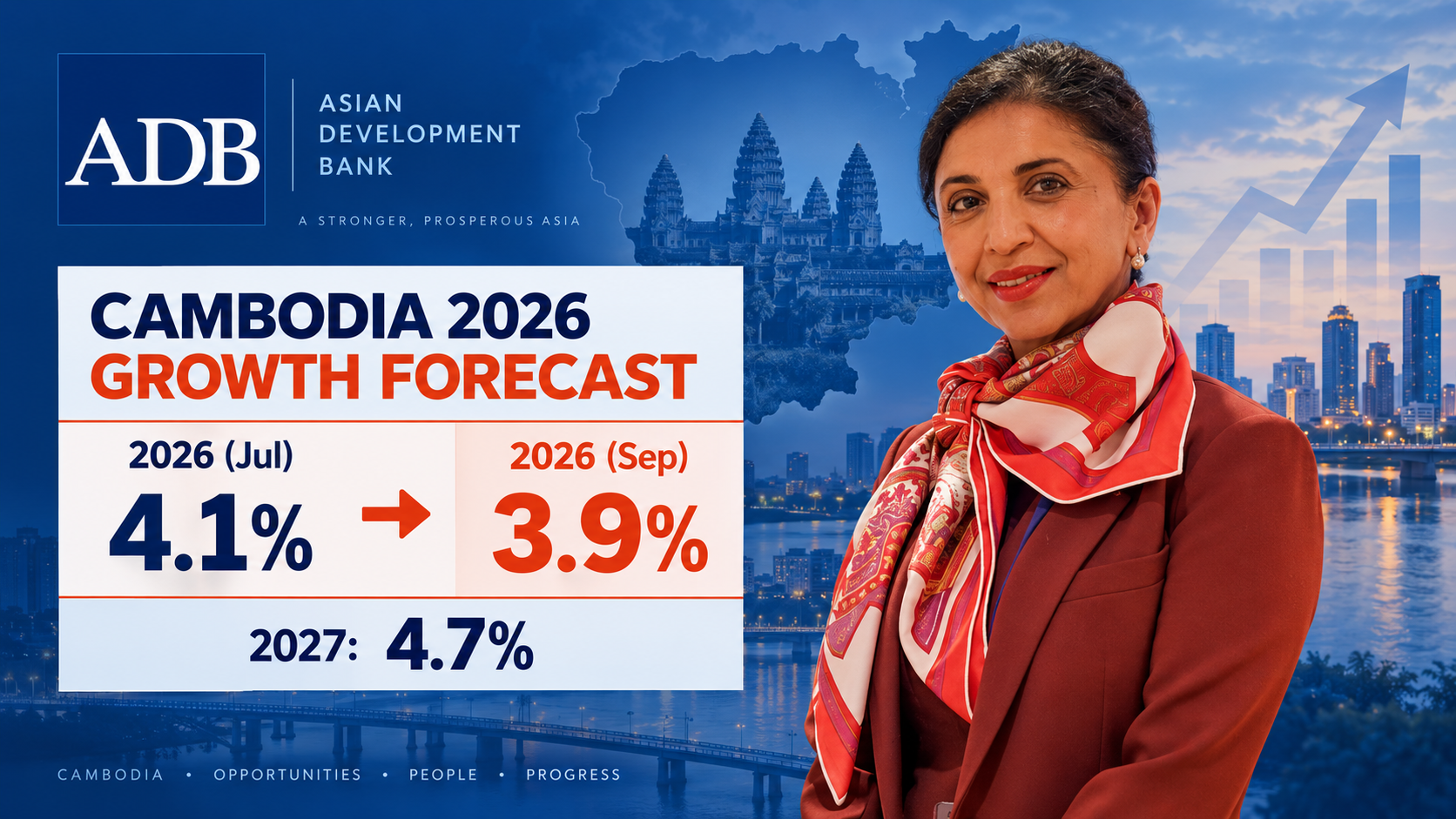
The Asian Development Bank (ADB) has lowered its economic growth forecast for Cambodia to 3.9% in 2026, citing a slowdown in tourism activity. While manufacturing exports offer support, inflation concerns are also rising.
The Asian Development Bank (ADB) has lowered its economic growth forecast for Cambodia to 3.9% in 2026, down from its previous projection of 4.1%, citing a significant slowdown in tourism activity that is weighing on the country’s services sector. Growth is expected to accelerate to 4.7% in 2027, supported by resilient manufacturing, export diversification, and continued foreign direct investment, according to the Asian Development Outlook September 2026. "Cambodia’s economy continues to demonstrate resilience," said ADB Country Director for Cambodia Yasmin Siddiqi. She noted that strong manufacturing exports and investment inflows are helping to offset challenges in tourism, while further economic diversification, competitiveness reforms, and support for vulnerable households are crucial for sustaining inclusive growth. Manufacturing remains Cambodia’s primary growth engine. Non-garment manufactured exports surged by 38.4% year-on-year in the first half of 2026, reflecting Cambodia's increasing diversification into higher-value products such as electrical components, vehicle parts, tires, and wooden goods. Garment exports, a major source of employment and foreign exchange, also increased by 6.3% to $8 billion over the same period. However, construction and real estate activity remained subdued, limiting the broader contribution of the industrial sector. International visitor arrivals have fallen sharply, decreasing by 47.9% year-on-year to 1.8 million during the first six months of 2026. This figure represents just over half of Cambodia’s pre-pandemic visitor levels. The ADB attributes this decline partly to ongoing geopolitical tensions and the closure of the Cambodia-Thailand land border. The drop in visitor numbers has impacted related industries, including hospitality, transport, retail, and cross-border trade, weakening the overall outlook for the services sector. The ADB has also raised its inflation forecast for Cambodia, anticipating an average of 4.7% in 2026, up from previous expectations. This revision is attributed to higher global oil prices and increasing import costs. Annual inflation had risen from 2.6% in February to 7.2% in May before moderating to 5.5% in July. While fuel tax relief measures and a stable Cambodian riel are expected to help contain price pressures, elevated energy and import costs could continue to affect households and businesses in the near term, given Cambodia's heavy reliance on imported fuel and essential goods. Fiscal policy is expected to remain supportive, with government investment in infrastructure, human capital, and social protection aimed at sustaining domestic economic activity. The ADB highlighted Cambodia’s Comprehensive Intervention Program as a key mechanism for directing support. The country's current account deficit is projected to widen in 2026 due to higher import costs and weaker tourism revenue, though continued foreign direct investment should support international reserves. Risks to Cambodia’s economic outlook remain tilted to the downside. In addition to tourism weakness and geopolitical uncertainty, potential El Niño-related weather disruptions in late 2026 and early 2027 could affect agricultural production and rural livelihoods. The latest forecast suggests Cambodia is entering a period of slower but increasingly diversified growth, with manufacturing and investment playing a larger role as tourism, construction, and real estate struggle to regain momentum.
Original source
Cambodia Investment Review