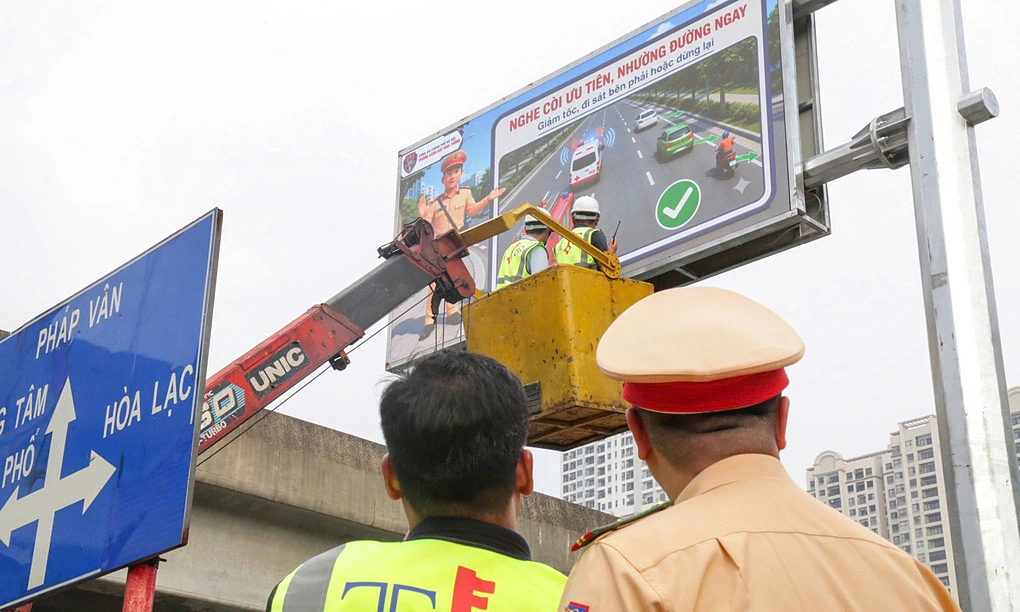
Hanoi Deploys 36 Electronic Boards for Real-Time Traffic Updates
Technology
2026年7月15日
6
VnExpress International
Relations
🇻🇳Vietnam🇹🇭Thailand

Hanoi Deploys 36 Electronic Boards for Real-Time Traffic Updates

AI サマリー

Hanoi has installed 36 electronic message boards across the city to provide real-time traffic updates on congestion, accidents, and flooding. This initiative, leveraging AI and big data, aims to enhance traffic management efficiency and public safety.

Hanoi has deployed 36 electronic message boards across the city to provide real-time traffic updates, aiming to enhance traffic management and road safety. These boards will display live information on congestion, accidents, flooding, diversions, and alternative routes. The system is part of Phase 2 of a project to upgrade Hanoi's traffic command and information center, integrating a camera-based monitoring and command system. The Hanoi Department of Public Security stated that this phase focuses on building a modern, integrated intelligent transport system using artificial intelligence (AI) and big data to meet new urban management requirements, aligning with the Politburo's Resolution No. 57 on science-technology development and national digital transformation. Despite a tight 120-day implementation schedule and a large workload, the project's key components have been completed on schedule and met technical requirements. Authorities have installed 2,460 AI-powered cameras, including 1,107 for detecting traffic violations, 960 for monitoring traffic volume, 112 panoramic cameras at major intersections, 251 pan-tilt-zoom (PTZ) cameras for public security surveillance, and 30 speed enforcement cameras. The project has also installed and configured 57 servers, 36 VMS boards, 100 intelligent traffic signal control cabinets and 930 camera poles while laying 475km of fiber-optic cable and 136km of power cable. The system has been deployed at 238 major intersections, gateway roads and inner-city areas. Once operational, the VMS network will provide road users with real-time information on congestion, accidents, flooding, traffic diversions, alternative routes and other warnings. The system is expected to help commuters choose more suitable routes, reduce travel time and support traffic police in regulating traffic more efficiently. Phase 2 also introduces technologies that automatically adjust traffic signal timing according to traffic flow, create "green waves" on selected roads, use AI to predict congestion risks and provide real-time traffic alerts. Its application has been expanded beyond traffic management to support public security and urban management. The AI-powered system can detect incidents such as fights, unauthorized entry into restricted areas, the use of weapons, fires, smoke and illegal dumping. The project is also laying the foundation for a concentrated traffic database, strengthening data sharing with specialized management systems and paving the way for the gradual automation of traffic violation processing and the development of Hanoi's smart transport ecosystem. Source: VnExpress International

多角的分析

経済的影響

このインテリジェント交通システムへの投資は、ハノイ市の経済活動の効率化に直接貢献する。交通渋滞の緩和は、物流コストの削減、通勤時間の短縮による生産性向上、ひいては消費者行動の活発化につながる。AIとビッグデータを活用したシステムは、将来的な交通インフラ投資の最適化や、都市計画におけるデータ駆動型の意思決定を可能にし、長期的には都市の競争力強化に寄与すると考えられる。ベトナム経済が製造業とサービス業の成長を牽引する中で、効率的な都市交通網は経済成長の基盤となる。

投資家心理

このプロジェクトは、スマートシティ技術やインフラ開発分野への投資機会を示唆している。AI、ビッグデータ、IoT(モノのインターネット)などの先端技術が活用されている点は、テクノロジー関連企業にとって魅力となりうる。また、交通管理システムは都市インフラの一部であり、長期的な安定収入が見込めるインフラ投資としての側面も持つ。ハノイのような急速に発展する大都市での成功事例は、他のベトナム国内都市や東南アジア諸国への展開の可能性を示唆し、関連技術を持つ国際的な投資家にとって関心の的となるだろう。

社会的影響

電子情報板の設置は、ハノイ市民の日常生活に直接的な恩恵をもたらす。特に、毎日の通勤や移動において、渋滞や迂回路の情報を事前に得ることで、ストレスの軽減と時間の節約につながる。また、AIシステムが火災や不法投棄などのインシデントを検知する能力は、市民の安全と生活環境の向上に寄与する。一方で、AIカメラの設置拡大は、プライバシーへの懸念を生む可能性もあり、データ管理と利用に関する透明性が求められる。

市民の声

ハノイ市民は、この新しい交通情報システムによって、日々の移動がよりスムーズになることを期待している。特に、慢性的な交通渋滞に悩まされている通勤者やドライバーにとっては、リアルタイムの情報は貴重だ。これにより、無駄な時間を減らし、より効率的に目的地に到着できるようになるだろう。しかし、システムが期待通りに機能するか、また、AIカメラによる監視がプライバシーに影響を与えないかといった点について、市民の間で関心が寄せられている。

背景・歴史的文脈

ベトナム政府は、急速な都市化と経済成長に伴う交通インフラの課題に対応するため、近年、スマートシティ技術への投資を加速させている。2021年に採択された政治局決議第57号は、科学技術開発、イノベーション、国家デジタル変革におけるブレークスルーを指示しており、本プロジェクトはその具体的な実践例である。ハノイ市は、交通渋滞、大気汚染、インフラ老朽化といった都市特有の問題に直面しており、AIやビッグデータを活用したインテリジェント交通システム(ITS)の導入は、これらの課題解決に向けた重要な一歩となる。過去には、交通信号の最適化や監視カメラの設置が進められてきたが、今回はAIによる予測・分析能力の強化と、情報提供のリアルタイム化に重点が置かれている。

原文ソース

VnExpress International

原文を読む