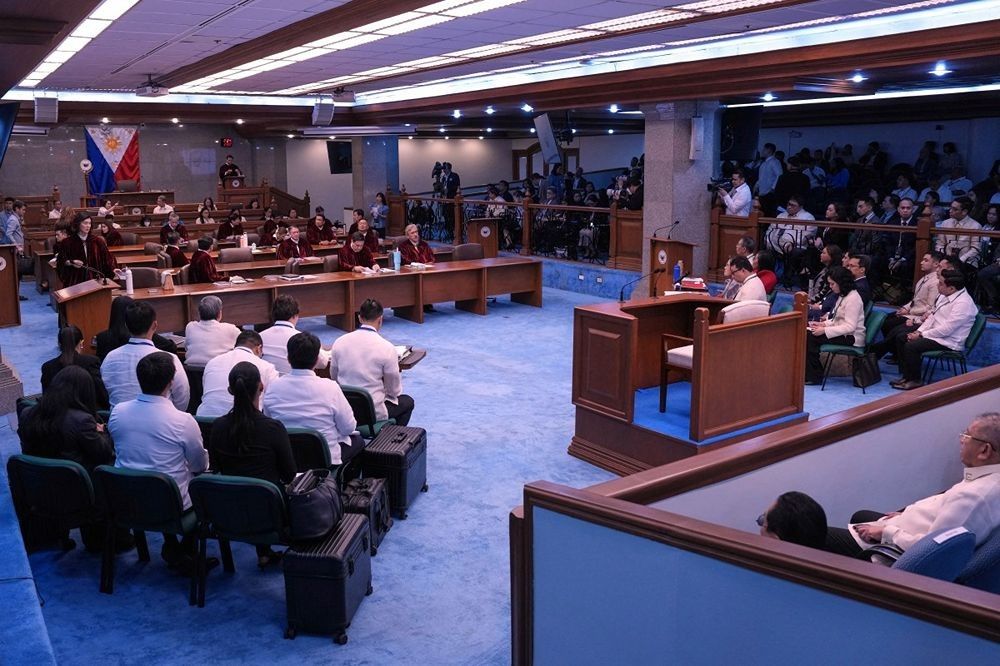
Senate opens impeachment court to public, but limits device use
The Philippine Senate opened its impeachment trial of the Vice President to the public, but imposed restrictions on electronic device use for observers and media, sparking debate on transparency versus information control.
The Senate impeachment court may have been opened to the public, but much of its first day had to be watched the old-fashioned way. During the first day of the impeachment proceedings against Vice President Sara Duterte on Monday, July 6, the public and the media were not allowed to use electronic devices inside the Senate plenary. The rule set the tone for a tightly controlled opening day: a public proceeding streamed on video in real time, but with broad limits for those watching from inside, including reporters, who were told to rely on pen and paper while the Senate kept control of photos and videos from the floor. Only 61 members of the general public were allowed to observe the trial, with people without Senate IDs required to register through the Senate's Visitor Management System managed by the Office of the Sergeant-at-Arms. Among them was Rizal Technological University student Jethro Padernos, a third-year political science student who said he registered through the system to personally witness the first day of what he described as a historic proceeding. "Mahalaga po na bilang kabataan makialam po kami, at isa po kami sa mga nakapanood... Kami pong mga kabataan, naniniwala kami sa accountability at transparency," Padernos told Philippine News Agency. (As young people, it is important for us to be involved, and we are among those who were able to watch. We, the youth, believe in accountability and transparency.) Personnel of the Senate Public Relations and Information Bureau told reporters that media personnel were only allowed pen and paper when covering the proceedings inside the Senate plenary. Guidelines earlier released by the Senate for the conduct of the impeachment proceedings instructed the public to switch off mobile phones and other electronic devices, or place them in silent mode, while inside the session hall. The guidelines also prohibited taking photos and videos inside the session hall, except for "authorized PRIB personnel and other duly cleared media personnel." Three PRIB photographers and two rotating press photographers were allowed inside the session hall. However, the guidelines were silent on senators' staff and the senator-judges themselves. Earlier, during arguments over the presiding officer of the trial, Sen. Robin Padilla was seen using his phone. He then delivered a manifestation in support of his minority bloc colleagues objecting to the election of a presiding chair for the trial, saying he had consulted Google. Sen. Pia Cayetano also ordered the staff of Sen. Alan Peter Cayetano to distribute a printed copy of the portion of the Constitution on their arguments against having a presiding officer. Despite the bloc's questions, Sen. Chiz Escudero was voted 12-8 to preside. The impeachment trial is expected to last up to 92 days, with the first part expected to discuss the grave threats allegedly made by Duterte in November 2024.
多角的分析
弾劾裁判の長期化は、副大統領の職務遂行能力への懸念を生み、政策決定の遅延や投資家の信頼低下を招く可能性がある。特に、経済政策に関する不確実性が高まれば、国内消費や外国直接投資に悪影響を与えることも考えられる。フィリピン経済は、海外からの送金やBPO産業に依存しているため、政治的安定性は極めて重要である。
今回の情報統制は、海外投資家にとって、裁判の公平性や透明性に対する懸念材料となり得る。政治的リスクの増加は、フィリピン資産への投資を躊躇させる要因となり、為替レートや株式市場に短期的な変動をもたらす可能性がある。長期的な視点では、政治的安定性の回復が投資環境改善の鍵となるだろう。
一般傍聴者やメディアに対する電子機器使用の制限は、市民の知る権利や情報アクセス権との間で摩擦を生じさせている。特に、政治学を学ぶ学生のように、透明性を重視し、説明責任を求める若者層からは、よりオープンな情報公開への期待がある。SNS時代において、このような情報統制は、市民の政治参加への意欲に影響を与える可能性がある。
弾劾裁判の傍聴が一般市民に開かれたことは、政治への関心を高める機会を提供する。しかし、電子機器の制限は、リアルタイムでの情報共有や、SNSを通じた議論を阻む可能性がある。市民は、裁判の進行を正確に把握し、自らの意見を形成するために、よりアクセスしやすい情報源を求めている。特に、地方や経済的に困難な状況にある人々は、オンラインでの情報提供が不可欠である。
背景・歴史的文脈
フィリピンにおける弾劾裁判は、過去にも大統領や最高裁判事などを対象に行われてきた。特に、2018年の最高裁判事弾劾は、政治的な対立を深め、司法の独立性に対する懸念を提起した。今回の副大統領弾劾は、現政権下での政治的権力闘争の一環と見られており、そのプロセスにおける情報管理は、過去の教訓を踏まえつつも、国民の知る権利との間で緊張関係を生んでいる。
原文ソース
Philstar Nation