General articles are free for 24 hours after publish.
Philippines Streamlines Solar Installation for Households
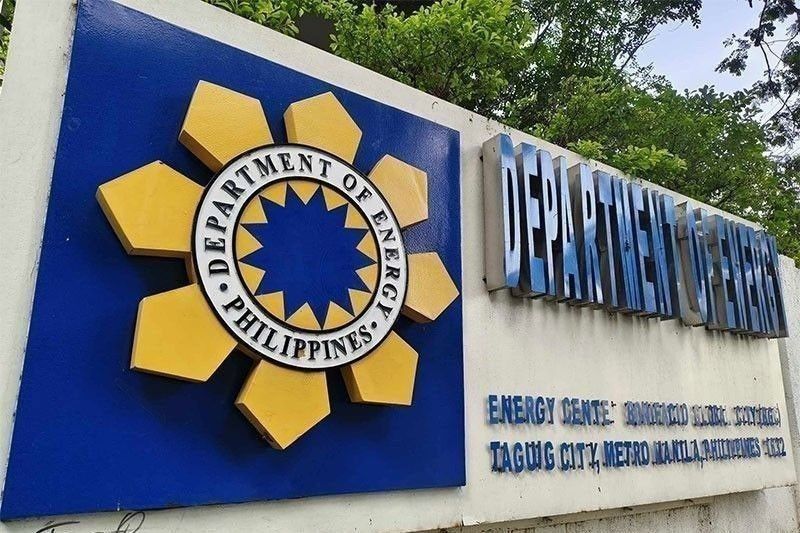
The Philippines' Department of Energy (DOE) has ordered distribution utilities to remove "administrative barriers" in the permitting process for household solar power facilities, aiming to accelerate the adoption of own-use solar power systems like zero-export solar systems (ZESS) and micro-solar systems (MSS).
MANILA, Philippines — Households may soon see faster deployment of own-use solar power facilities as the Department of Energy (DOE) streamlines the permitting process by removing administrative hurdles. The DOE has ordered distribution utilities to eliminate “administrative barriers” to putting up small-scale solar power generation systems, including pre-installation clearances, technical permits and inspection fees. The directive covers zero-export solar systems (ZESS) and micro-solar systems (MSS), which are designed to supply electricity for their own use without exporting excess power to the grid. “There is a need to issue a policy that supports the participation of small-scale end-users in the deployment of RE (renewable energy) technologies by providing a streamlined regulatory approach,” the DOE said in a department circular issued yesterday. For both connected and isolated ZESS, eligible end-users must secure a certificate of compliance (COC) from the Energy Regulatory Commission (ERC). The requirement, however, does not apply to facilities used by households, clinics, hospitals and other medical facilities, subject to the ERC’s authority to set applicable technical and commercial rules and requirements. MSS end-users, meanwhile, will no longer be required to obtain a building permit or a COC, without prejudice to compliance with other applicable laws, rules and regulations. ZESS refers to solar photovoltaic installations of any capacity intended solely for personal use. This may be fully off-grid or grid-connected, as long as it is equipped with control mechanisms that prevent any power from being exported to the grid. MSS, on the other hand, covers consumer-grade, plug-and-play solar generation systems designed for one’s own consumption. To meet the country’s RE targets, the DOE aims to maximize the inclusion, utilization and acceleration of renewables even at the consumer level, specifically through the rollout of self-generating facilities. Under the Philippine Energy Plan, the government seeks to increase the share of renewables in the power mix to 35 percent by 2030 and 50 percent by 2040 from the current 25 percent. Meanwhile, power giant Manila Electric Co. (Meralco) continues to ramp up its smart meter investments as part of a broader effort to modernize its electricity distribution network. Through its metering transformation initiatives, Meralco is deploying advanced technologies that enable remote meter reading, disconnection and reconnection while also strengthening the protection metering facilities for customers. The elevated metering transformation also allows early detection of potential irregularities and pilferage. “These improvements strengthen the integrity of the metering system and support Meralco’s continuing efforts to reduce avoidable non-technical losses while delivering reliable service to customers,” the company said. System loss refers to the electricity lost before it reaches consumers, with the cost currently recovered through a line item on power bills. In Metro Manila, system loss charges account for around five percent of consumers’ power bills. The burden can be even higher for consumers served by electric cooperatives. Source: Philstar Business
Original source
Philstar Business