General articles are free for 24 hours after publish.
Cambodia Hosts Online Scam Conference Amidst Unanswered Questions on Elite Accountability
Cambodia is hosting an international conference on combating online scams, but accountability for the political protection structures and elites that have supported large-scale scam operations for years remains unclear. The US Congress has called for an investigation into potential sanction targets, leaving the Cambodian government's response uncertain regarding international trust.
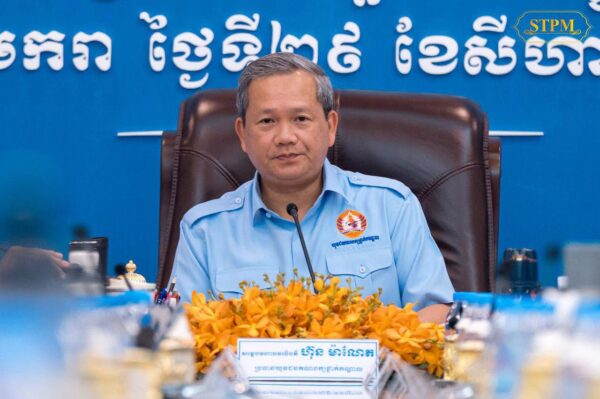
Read The Diplomat, Know The Asia-Pacific This week’s international anti-scam conference is an attempt to distract global attention from Phnom Penh’s abetment of criminality on an industrial scale. Cambodian Prime Minister Hun Manet, who will this week preside over the International Conference on Combating Online Scams in Phnom Penh on Sept. 23-24, 2026. On September 23 and 24, Cambodian Prime Minister Hun Manet will preside over an international conference on combating online scams in Phnom Penh that is co-sponsored by Interpol, the U.N. Office on Drugs and Crime, and China’s Lancang Mekong Cooperation mechanism. In the run-up to the conference, Cambodian leaders and state media have been unusually candid that its purpose is to help “restore the country’s international reputation.” The ruling Cambodian People’s Party (CPP) has spent years denying or minimizing a massive criminal economy operating in plain sight – and repressing those journalists and human rights groups that sought to expose the problem. Now that extraordinary outside pressure compelled it to empty the country’s massive online scamming compounds, the party-state is recasting itself as an anti-scam champion while the politically protected elites who abetted the industry remain largely untouched. Now comes the harder question: whether the political system that protected this industry will be held accountable – or allowed to write itself a clean bill of health with a global seal of approval. That question is at the center of a new letter from U.S. House Foreign Affairs Committee Chair Brian Mast and House China Select Committee Chair John Moolenaar. The chairs asked the Trump administration to investigate 26 individuals and two entities and determine within 180 days whether they meet the statutory criteria for sanctions under Global Magnitsky, cyber-related, transnational criminal organization, or other authorities. The letter pointed to what the lawmakers describe as the “financial networks, organizers, and political protection structures” that enabled the industry. Research I published last week, supported by the National Democratic Institute and Inca Digital, placed Mast and Moolenaar’s letter in its broader context. Our central claim is that Cambodia’s scam compounds were only the visible front end of a deeply entrenched political economy. The scam economy was not a sudden criminal intrusion into an otherwise normal state. Cambodia’s ruling coalition has spent decades converting successive illicit and predatory economies – from land and natural resources to casinos and online gambling – into private wealth and political power. The government’s crackdown, enacted due to external pressure, has reached foreign operators and physical compounds without meaningfully disturbing the domestic political arrangements that enabled the scam economy’s rise and significant durability. Notably, the chairs’ requested determinations include prominent spokespeople, Cabinet-level officials, personal advisers, and family members of the prime minister. Consider just one example: Hun To, nephew of former Prime Minister Hun Sen and cousin of Prime Minister Hun Manet. Hun To has acknowledged owning 30 percent of Huione Pay, a vital institution at the core of the Huione network that FinCEN formally deemed a “financial institution of primary money laundering concern” of the United States. Foreign authorities have moved aggressively against Huione-linked infrastructure and executives, while Hun To has faced no publicly verifiable accountability. At some point, treating relationships like his as cases of merely accidental proximity becomes less an exercise in due process than an excuse not to ask obvious questions. The Treasury and State departments should conduct the determinations Mast and Moolenaar requested, impose sanctions where the statutory criteria are met, and provide detailed explanations where they are not. That follow-through has an importance that goes beyond those people named by the U.S. Congress. For years, Cambodian journalists, trafficking responders, survivors, and civil society groups did the dangerous work of documenting compounds, tracing their ownership, and forcing illicit elite connections into public view. This transparency work is not just important in terms of normative values promotion. It directly helps minimize the harms flowing from modern mafia states. And, if the CPP government wants to clear its name? Washington and its partners should condition that desired reputational rehabilitation on a cessation of harassment of independent reporting and upon evidence that accountability has reached politically protected actors – not merely foreign operators and expendable front-line infrastructure. The harms of Cambodia’s political economy once fell disproportionately on Cambodians, in the form of predatory extraction, dispossession, and corruption. The scam economy demonstrates what happens when the same governing strategy acquires global digital reach. The victims are now international, the revenues vastly larger, and the security consequences harder to contain. The broader lesson extends beyond Cambodia. The international community has not eliminated the global narcotics trade, but it has imposed real diplomatic, financial, and legal costs on “narco states” that govern through the protection of large-scale drug trafficking. Cyber-scam economies now require similar treatment. States whose elites turn forced labor, mass fraud, and digital predation into political finance should not be allowed to launder their reputations through conferences, task forces, and scripted cooperation. Accountability is not about punishment for its own sake. It is about constraining the actors and systems that repeatedly convert illicit opportunity into elite wealth and political power – and protecting those who expose how authoritarian corruption works. The goal now is to make the next scam state harder to build by making political protection for cybercrime a liability instead of a viable governing model. Subscribe today and join thousands of diplomats, analysts, policy professionals and business readers who rely on The Diplomat for expert Asia-Pacific coverage. Get unlimited access to in-depth analysis you won't find anywhere else, from South China Sea tensions to ASEAN diplomacy to India-Pakistan relations. More than 5,000 articles a year. Already have an account? Log in. Jacob Sims is a columnist for The Diplomat, a Visiting Fellow at Harvard University’s Asia Center, and a leading expert voice on transnational crime and human rights in Southeast Asia. Get briefed on the story of the week, and developing stories to watch across the Asia-Pacific.
Original source
The Diplomat Indonesia