Cambodia Holds Inter-Ministerial Technical Meeting on Mid-Term UPR Report with OHCHR
Society
2026年7月9日
5
AKP Khmer
Relations
🇰🇭Cambodia🌐United Nations / ASEAN

Cambodia Holds Inter-Ministerial Technical Meeting on Mid-Term UPR Report with OHCHR

AI サマリー

The Cambodian Human Rights Committee (CCHR), in collaboration with the UN Office of the High Commissioner for Human Rights (OHCHR), hosted a technical meeting on the mid-term Universal Periodic Review (UPR) report. The meeting aimed to assess progress on human rights recommendations and facilitate future advancements.

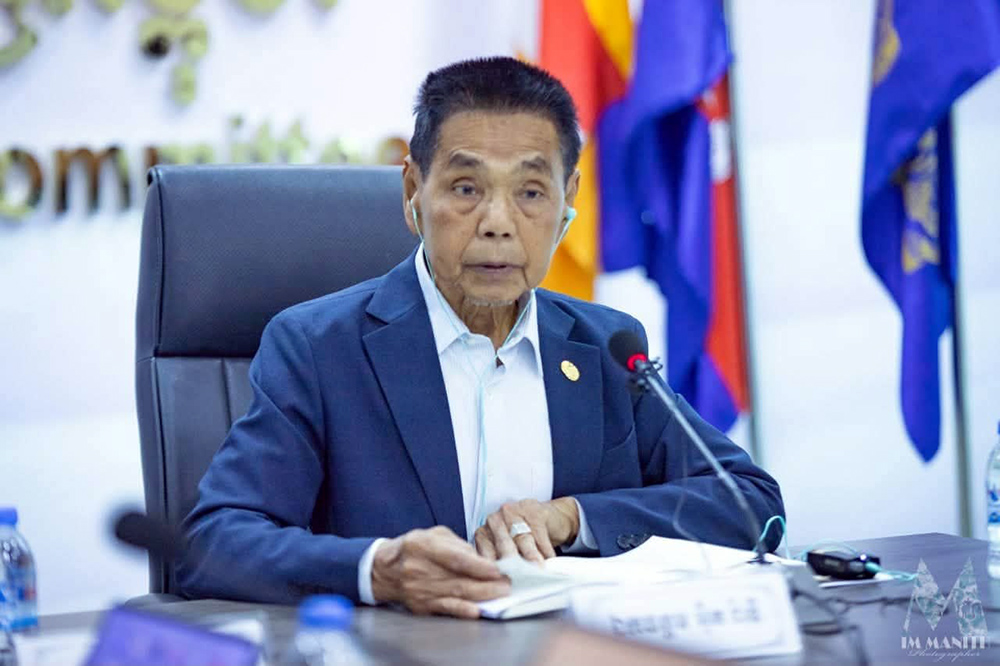
The Cambodian Human Rights Committee (CCHR), in collaboration with the UN Office of the High Commissioner for Human Rights (OHCHR) Cambodia, organized an inter-ministerial technical meeting on the mid-term Universal Periodic Review (UPR) report on July 9, 2026. The meeting was held at the CCHR meeting room under the high presidency of His Excellency Eit Rady, Vice Chairman of the CCHR, representing His Excellency Keo Remy, Chairman of the CCHR, and Mr. Anand Chand, Chief of Prevention Section at OHCHR. The meeting was organized with several key objectives: to strengthen understanding among relevant ministries and institutions regarding the requirements for implementing recommendations and Cambodia's participation in the UPR process; to promote inter-ministerial cooperation and ownership of the recommendation implementation process; and to support the government in preparing the mid-term UPR report. In his opening remarks, His Excellency Eit Rady stated that the presence of the meeting participants demonstrates the attention of all ministries and institutions of the Cambodian government towards promoting and protecting human rights in Cambodia. He emphasized that human rights obligations are the responsibility of all, requiring strengthened ownership in implementing recommendations according to their respective jurisdictions. The UPR is the only mechanism of the Human Rights Council that provides a platform for reviewing the human rights situation of all 193 UN member states every four and a half to five years. Cambodia has already participated in four rounds of the UPR: in 2009 (1st round), 2014 (2nd round), 2019 (3rd round), and 2024 (4th round). He added that for Cambodia's 4th review, 100 countries participated and provided a total of 275 recommendations. Cambodia decided to accept 232 recommendations and noted 43. The overwhelming voluntary acceptance of over 84% of recommendations for implementation demonstrates the Cambodian government's tangible commitment to further developing the human rights sector for the greater benefit of the general population. This acceptance has been welcomed and praised by all circles, both national and international. The preparation of the mid-term UPR report and subsequent reports aims to track the implementation of recommendations and serve as an opportunity to present the achievements resulting from the Cambodian government's efforts in the human rights sector to the national and international community. During the meeting, representatives from OHCHR and CCHR presented on the UPR process, best practices, and an overview of the UPR recommendations accepted by Cambodia, along with plans for preparing the mid-term UPR report. These presentations enhanced the participants' understanding of the process and the importance of submitting UPR reports to the United Nations. Furthermore, there was a dynamic and constructive discussion among the meeting participants, focusing on the implementation of recommendations by relevant ministries and institutions and methods for preparing effective and targeted reports in response to each recommendation. In closing the meeting, His Excellency Eit Rady expressed his gratitude to OHCHR for its excellent cooperation with CCHR in organizing this important meeting. He expressed his belief that both institutions will continue their strong collaboration to jointly promote and protect human rights in Cambodia for continuous progress. Concurrently, His Excellency highly valued and commended the meeting participants for their attentive listening and active participation with a spirit of responsibility and a desire to contribute to the human rights sector in Cambodia, which led to the meeting achieving commendable results. By: Bunrith © All rights reserved by National News Agency of Cambodia 2018

多角的分析

経済的影響

本件は直接的な経済活動ではないが、人権状況の改善は国際社会からの信頼獲得や投資環境の安定化に間接的に寄与する可能性がある。カンボジアは経済発展のために国際社会からの支援や投資を必要としており、UPR勧告の実施は、透明性や説明責任といった、投資家が重視する要素を強化する一助となる。

投資家心理

投資家にとって、人権状況の改善はESG(環境・社会・ガバナンス)投資の観点から重要視される。カンボジアがUPR勧告の大部分を受け入れている事実は、リスク管理と持続可能な事業運営を目指す投資家にとって、ポジティブなシグナルとなり得る。中間報告の進捗は、カンボジアのガバナンス能力と国際公約履行への真摯さを示す指標となる。

社会的影響

カンボジア国民の生活に直接的な影響を与えるのは、UPR勧告の具体的な実施内容である。例えば、勧告に盛り込まれた労働者の権利保護、ジェンダー平等、少数民族の権利などが、社会福祉や公平性の向上に繋がる可能性がある。中間報告は、これらの勧告がどのように国内法や政策に反映され、市民の権利が保護されているかを示す重要な機会となる。

市民の声

カンボジア市民にとって、UPRプロセスは自らの権利が国際社会に認識され、国内での保護が強化される機会となる。会議で議論された勧告の実施状況は、市民生活の質、特に労働条件、教育、医療、司法へのアクセスといった分野に影響を与える。市民は、政府が勧告を誠実に履行しているか、また、その進捗がどのように生活改善に繋がるかに注目している。

背景・歴史的文脈

普遍的状況レビュー(UPR)は、国連人権理事会が2006年に設立したメカニズムで、全ての国連加盟国の人権状況を定期的に審査する。カンボジアは2009年以降、4回のUPRに参加しており、今回開催された会議は、2024年の第4回レビューで受け入れた勧告の実施状況を評価するための中間報告準備を目的としている。カンボジア政府は、国際社会からの人権に関する勧告を前向きに受け入れる姿勢を示しており、これは同国が国際的な人権基準への適合を目指していることを示唆する。

原文ソース

AKP Khmer

原文を読む