General articles are free for 24 hours after publish.
Ukraine Eyes Export Growth with Philippine Ube and Other Products
Despite the ongoing Russian invasion, Ukraine is seeking to expand its exports to sustain its economy and independence fight, identifying opportunities in Philippine ube and dried fruits. Both nations are strengthening cooperation in agriculture, trade, and investment.
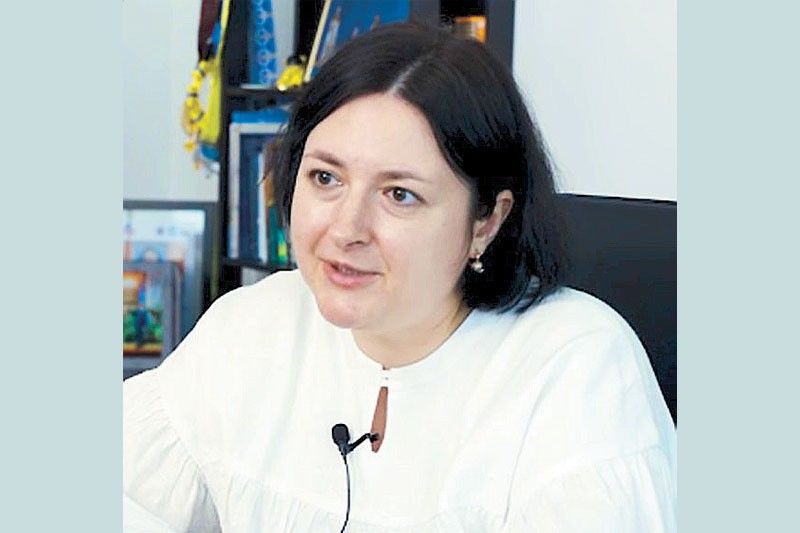
MANILA, Philippines — The air-raid sirens wail five or six times a day in Ukraine, sending Ukrainians to bomb shelters. But between the blaring sounds of danger, life goes on in the Eastern European country that has been fighting a Russian invasion. This includes keeping commerce alive while fighting the war, Ukraine Ambassador Yuliia Oleksandrivna Fediv told The STAR in an interview on Friday at the Ukraine embassy in Manila. For Ukraine, doing business is not something to be postponed until peace comes. It is part of how the country survives the war. “We understand that in order for Ukraine to sustain this fight for our independence and preservation of our territorial integrity, we need also to support our economy and to increase the exports,” she said. As such, Ukraine is forging stronger trade ties with the Philippines and other countries. Ube, the purple Filipino root crop is among the products that Ukrainian businesses are eyeing to bring to their country. Ukrainians love the purple yam; some have it in their hot or cold drinks like matcha. “I recently was in Kyiv; I went to buy a cappuccino and it had ube flavor,” Fediv said. But ube in Ukraine is not yet being imported directly from the Philippines. “Not yet,” she said. And this is where the opportunity for Philippine producers lies. “That’s a market we can penetrate,” the ambassador said. Businesses, she said, are among the main taxpayers supporting the economy, prompting Ukraine to expand into new markets. Ukraine and the Philippines are now finalizing agreements covering agriculture, trade and investment and technical cooperation. The Philippine Chamber of Commerce and Industry has signed a memorandum of understanding with the Ukrainian Chamber of Commerce and Industry, while the Ukraine embassy is working with Philippine business groups to create more opportunities for companies from both sides. There is room to grow, Fediv said. Bilateral trade was valued at around $60 million in 2025, with the bulk or 70 percent accounted for by goods from the Philippines. The Philippines can further supply a Ukrainian market that is looking increasingly toward Southeast Asia. Fediv said Ukrainians are interested in importing more Philippine products, including dried mangoes, banana chips and other dried fruits. Canned food, including tuna, is another area of interest as demand for shelf-stable food has grown during the war. Asian cuisine is also growing in popularity in Ukraine, although Thai, Vietnamese and Indonesian food currently have a much stronger presence than Filipino cuisine. This means that Filipino restaurants and food businesses still have room to establish a bigger presence in Ukraine. Ukraine is also looking to bring its own products and expertise to the Philippines. Several Ukrainian pharmaceutical companies are exploring the Philippine market, while Ukrainian businesses are also looking at opportunities in fintech, health technology, agricultural technology and other high-tech industries, Fediv said. “We also have big pharma companies in Ukraine who are exporting to South Asia, like India, Pakistan. Also, we’re exploring the markets in Malaysia, Thailand and Vietnam, and they want to go further to the Philippines,” she said. The Ukrainian Embassy has been bringing business delegations to Manila. Two Ukrainian business delegations have already visited the Philippines this year – one from the meat industry in March and another focused on agriculture and milk technology in July. More business forums are being planned, including a possible delegation from Ukraine’s creative industries in November. Asked about security concerns, Fediv assured that Ukrainian businesses have been forced to adapt to the war. “We adjusted to the new realities,” the ambassador said. For instance, Ukraine has developed new transportation routes through Poland, Romania and other neighboring countries, as well as through its Black Sea ports. Even amid war, business does not stop. For Ukraine, keeping it moving may be part of the fight. Source: Philstar Business
Original source
Philstar Business