General articles are free for 24 hours after publish.
Philippine Peso Hits Record Low Above 62.50 Per Dollar
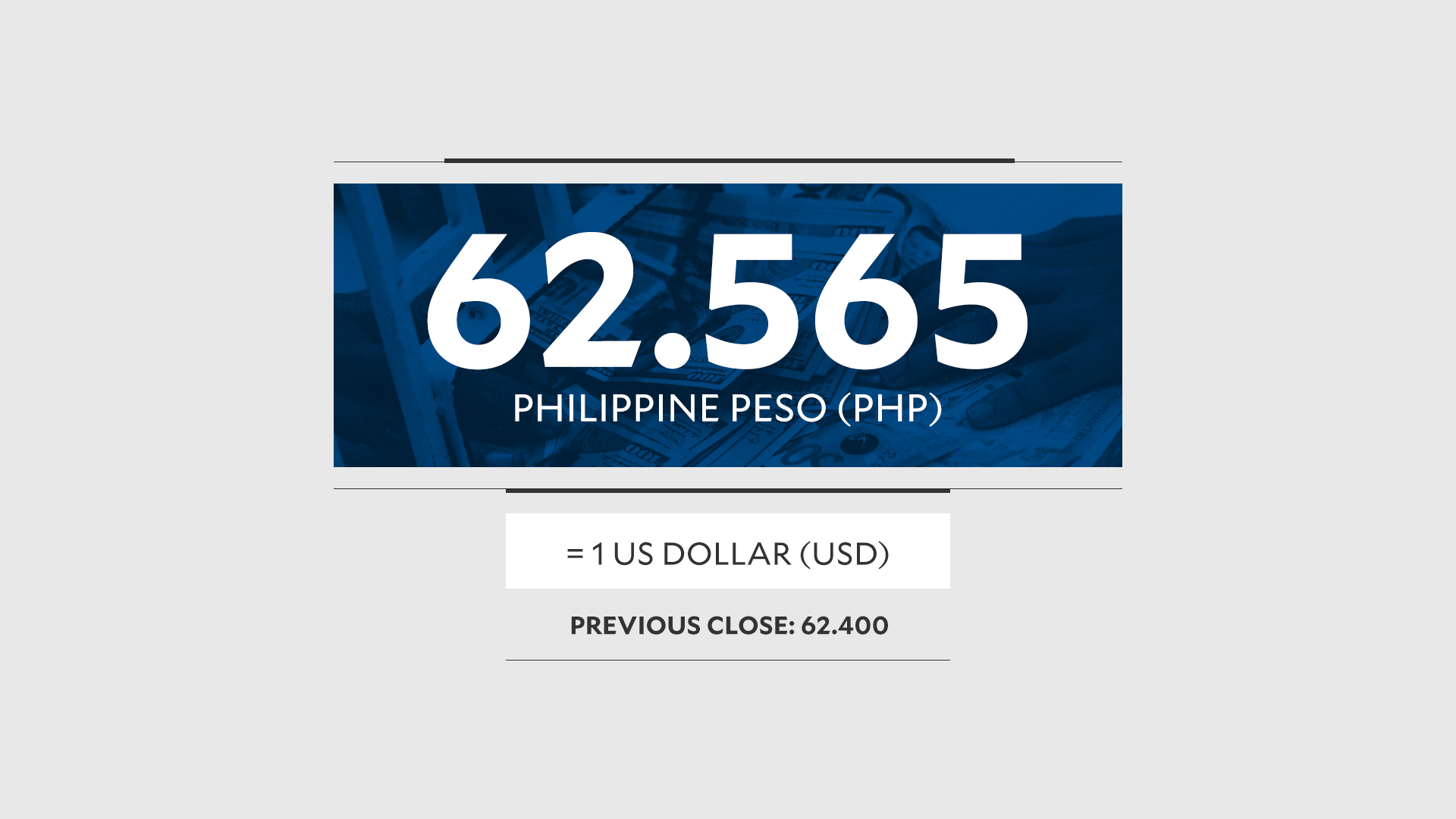
The Philippine peso plunged to a new record low of 62.565 against the US dollar on Wednesday, as renewed Middle East tensions fueled inflation concerns and boosted demand for safe-haven assets. Despite the central bank raising its inflation outlook, interest rate hikes have had a limited impact.
MANILA, Philippines — The Philippine peso broke past the 62.5-per-dollar level to hit a new record low on Wednesday, widening its losses as renewed tensions in the Middle East reignited concerns about inflation and increased the appeal of safe-haven assets. The currency weakened 16.5 centavos from its previous close to finish at 62.565 per dollar, according to data from the Bankers Association of the Philippines. The peso has set a record low for the fourth consecutive session. The currency touched an intraday low of 62.69 before paring its losses. Trading volume rose to $1.8 billion from $1.3 billion in the previous session. The United States launched a barrage of airstrikes on Iran on Tuesday, prompting Iranian retaliation, Reuters reported. Oil prices rose on Wednesday, while the dollar held firm against major currencies as expectations grew that the Federal Reserve could raise interest rates. “The peso’s weakness largely reflects a stronger US dollar environment driven by higher global interest rates and elevated geopolitical and energy-related uncertainties,” said Ruben Carlo Asuncion, chief economist at UnionBank of the Philippines. “While further depreciation remains a possibility, the currency’s near-term direction will continue to depend primarily on external developments, with domestic foreign exchange inflows providing some support against excessive volatility,” he added. The Bangko Sentral ng Pilipinas (BSP) expects inflation to average 6.1 percent this year, down from its previous forecast of 6.4 percent. But it sharply raised its inflation outlook for 2027 to 5.4 percent from 4.5 percent, citing risks from a severe El Niño episode and possible wage increases. The central bank last month raised its benchmark interest rate by a quarter percentage point to 5 percent, its third increase since the current tightening cycle began. The BSP described the move as a preemptive response to emerging risks to the inflation outlook. Even so, the rate increase has done little to bolster the peso, which is already trading well beyond the 60-to-62-per-dollar range assumed by the Marcos administration for this year. Michael Wan, a senior currency analyst at MUFG Global Markets Research, said the peso could remain around the 62-per-dollar level in the second half of the year before recovering toward 61 in the first half of 2027. MUFG expects the peso to gradually strengthen over time as the trade deficit narrows, economic growth rebounds and rice prices remain manageable. At the same time, Wan said the currency’s undervaluation against the dollar has continued. Still, the bank maintained a neutral view on Philippine peso-denominated bonds, citing outflows that have also weighed on the currency. “While there has already been quite a bit of sell-off on local bonds so far, a hawkish BSP, [alongside] a slower pace of fiscal consolidation coupled with uncertain inflation trajectory, makes us hesitant to take a strong view on Philippine bond yields at current levels,” Wan said. MUFG expects 10-year Philippine government bond yields to remain around 7 percent through its forecast horizon. INQ
Original source
Inquirer Business