General articles are free for 24 hours after publish.
HCMC's EV Transition Plan Faces Expert Doubts Over Feasibility
Ho Chi Minh City's ambitious plan to establish low-emission zones (LEZ) and transition to electric vehicles by 2040 is facing significant criticism from experts. Concerns center on infrastructure readiness, economic impacts, and the burden on low-income residents, with the exclusion of hybrid vehicles also being questioned.
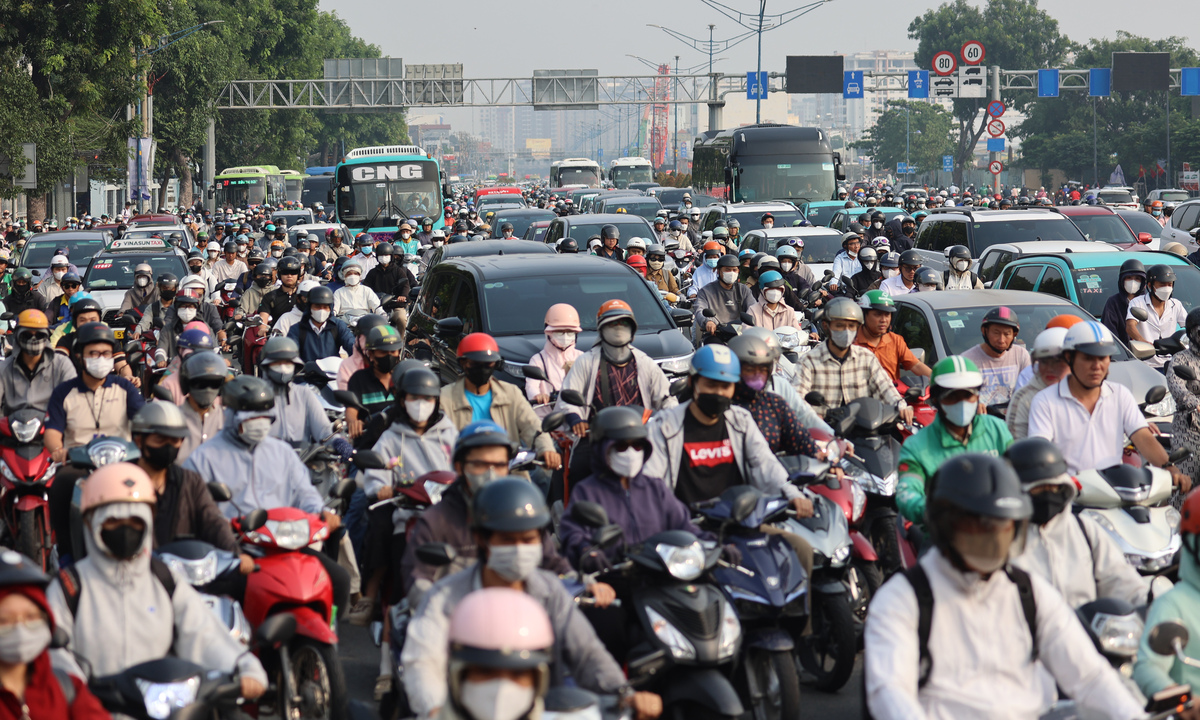
Ho Chi Minh City has unveiled a roadmap aimed at transitioning the entire city to electric vehicles (EVs) by 2040, including the phased introduction of low-emission zones (LEZs). However, experts have raised significant concerns regarding the plan's feasibility and potential impacts. The city's Department of Construction has proposed piloting LEZs in an area of over 16.6 sq.km, encompassing the central core and Thu Thiem, starting July 2027. Vehicles failing to meet emission standards would be prohibited from entering these zones. The LEZ is slated to expand to Ring Road 2, covering approximately 280 sq.km, by early 2029. The ultimate goal is for nearly all vehicles within the LEZ to run on electricity or green energy by 2035, before a citywide mandate by 2040. However, at a conference organized by the Vietnam Fatherland Front Committee of HCMC, experts urged a reconsideration of the roadmap. Tran Van, former vice chairman of the National Assembly's Economic and Financial Committee, described the plan as "too aggressive and unrealistic for practical application." He highlighted that expanding the LEZ to Ring Road 2 after an 18-month trial would affect over 6.1 million residents and roughly 11.5 million daily trips. Furthermore, he warned that the planned infrastructure, including 33,000 battery swapping stations and 19,000 charging posts, might struggle to meet demand, potentially straining the electrical grid. Tran Van also expressed concern that mandating all ride-hailing motorbikes to switch to EVs by 2028 and banning personal gasoline vehicles by 2040 would place immense pressure, particularly on low-income individuals. He criticized the proposal for exclusively calling for pure electric vehicles, excluding hybrid vehicles, which require no charging infrastructure, place less stress on the power grid, and contribute to pollution reduction. Ung Thi Xuan Huong, president of the HCMC Lawyers Association, concurred, pointing out that motorbikes, which constitute about 90% of vehicles in the city and are the primary livelihood for millions, face a "tight" conversion timeline that could impact vulnerable populations. She also voiced concerns about the capacity of charging stations and emissions testing systems. Tomoki Yanagawa of the Vietnam Automobile Manufacturers' Association stated that the emissions control timeline "is overly rushed and demands a thorough impact assessment, especially regarding the automotive industry." He noted that the sector is crucial for the supply chain and job creation, and a 100% EV mandate by 2035 could prematurely disrupt the market, leading consumers to delay purchases and negatively impacting auto and supporting industries. The Vietnam Automobile Manufacturers' Association (VAMA) suggested managing vehicles based on emission standards rather than fuel type and including transitional electrified solutions like hybrid vehicles. VAMA also proposed that the city run small-scale pilots from 2027 to 2030, gradually expanding based on infrastructure and market readiness, rather than a rapid expansion after a short trial. Ta Long Hy, vice president of the HCMC Transport Association, called for treating self-charging hybrid vehicles as a green transition option. He argued that businesses that have already invested in hybrid vehicles require a transition mechanism allowing them an additional two to three years beyond the draft's timeline. He also advocated for including hybrid vehicles in a transitional phase from 2026 to 2035 as a stepping stone toward the ultimate goal of transitioning entirely to green energy. Vo Khanh Hung, deputy director of the city Department of Construction, stated that the emissions control plan is being studied carefully as it is a new issue with broad public and business implications. He emphasized that the city's approach is not to introduce bans or restrictions but to address infrastructure, inspection capacity, management systems, and support policies in a coordinated manner. The drafting agency will review and consolidate comments to finalize the plan before submission to competent authorities.
Original source
VnExpress International