General articles are free for 24 hours after publish.
Bangladesh decides to build 108 km fence along Myanmar border
The Bangladesh government has decided to build a 108-kilometer border fence in some parts of the border area adjacent to Myanmar, Nikkei Asia reported. The decision was made to construct fences with barbed wire in the vu
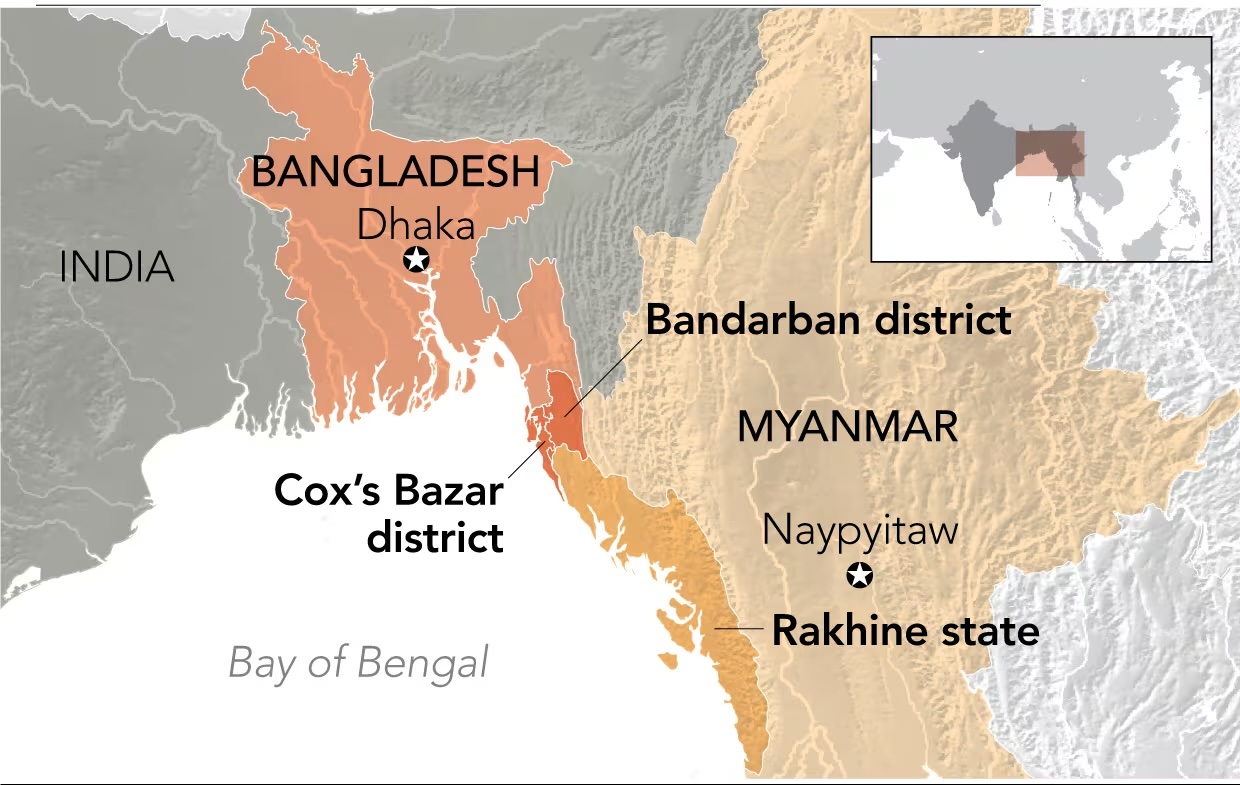
The Bangladesh government has decided to build a 108-kilometer border fence in some parts of the border area adjacent to Myanmar, Nikkei Asia reported. The decision was made to construct fences with barbed wire in the vulnerable border sections to prevent illegal border crossings, border crimes, and smuggling along the 271-kilometer Bangladesh-Myanmar border. This initiative will be Bangladesh's first border fencing project in its border areas adjacent to neighboring countries, including Myanmar and India, reflecting the growing security concerns along the border areas in southeastern Bangladesh. Bangladesh is concerned about the further influx of Bengalis (referred to as Rohingyas in the original text) due to some areas of Rakhine State in Myanmar being controlled by the Arakan Army (AA), as well as the smuggling of weapons and drugs, and the deteriorating situation of instability along the border. The proposal for the construction of this fence, aimed at preventing illegal infiltration, border crimes, and smuggling, was first announced in parliament last month by Home Minister Asaduzzaman Khan Kamal. Although Bangladesh authorities have not disclosed the locations where the border fences will be built, the Border Guard Bangladesh (BGB) stated that the fences will cover approximately 108 kilometers of strategically selected areas of concern. BGB officials said that the project aims to enhance border management by preventing illegal border crossings and dismantling networks involved in drug trafficking, arms smuggling, human trafficking, and other cross-border crimes. BGB Public Relations Officer Mohammad Shariful Islam told Nikkei Asia that the collapse of the border management system on the Myanmar side has created new security challenges for Bangladesh. Retired Major General Mohammad Shahidul Haque, former military attaché at the Bangladesh Embassy in Myanmar, also stated that the government is concerned about reports that some individuals from the Chittagong Hill Tracts are crossing into Rakhine State to join armed groups for financial gain, in addition to the continued influx of illegal weapons and drugs into Bangladesh. He pointed out that the construction of border fences, along with the creation of patrol routes, will significantly strengthen surveillance and reduce unauthorized movement along the border. Furthermore, Haque suggested prioritizing the construction of fences along the Naf River, a long-standing route for drug, arms, and human trafficking, before extending the fencing project to the difficult mountainous regions of Naikhongchhari and Bandarban. Second Lieutenant Commander Suvair Alam Sujon, spokesperson for the Bangladesh Coast Guard, said that the security landscape has changed significantly after the Arakan Army (AA) captured the town of Maungdaw on the Myanmar side and expanded its control along the border in December 2024. He stated that although Bangladesh maintains formal diplomatic relations with the Myanmar government, the Myanmar government has lost effective administrative authority in some border areas, resulting in increased instability, the kidnapping of Bangladeshi fishermen, cross-border smuggling, concerns about further influx of Bengalis, and threats from landmines and unexploded ordnance. According to BGB data, after the Arakan Army (AA) took control of the border area on the Myanmar side in late 2024, at least 426 Bangladeshi fishermen were detained in the Naf River and the Bay of Bengal. While 324 of them have been repatriated, the remaining are still in detention, according to BGB data. Retired Major General M. Sakhawat Hossain said that the Arakan Army (AA) has increased kidnappings and extortion to fund its operations, and after expanding its territorial control, cross-border drug and arms smuggling have increased.
Original source
Eleven Media