General articles are free for 24 hours after publish.
Vietnam's Garment Sector Embraces Transformation Amid Export Growth
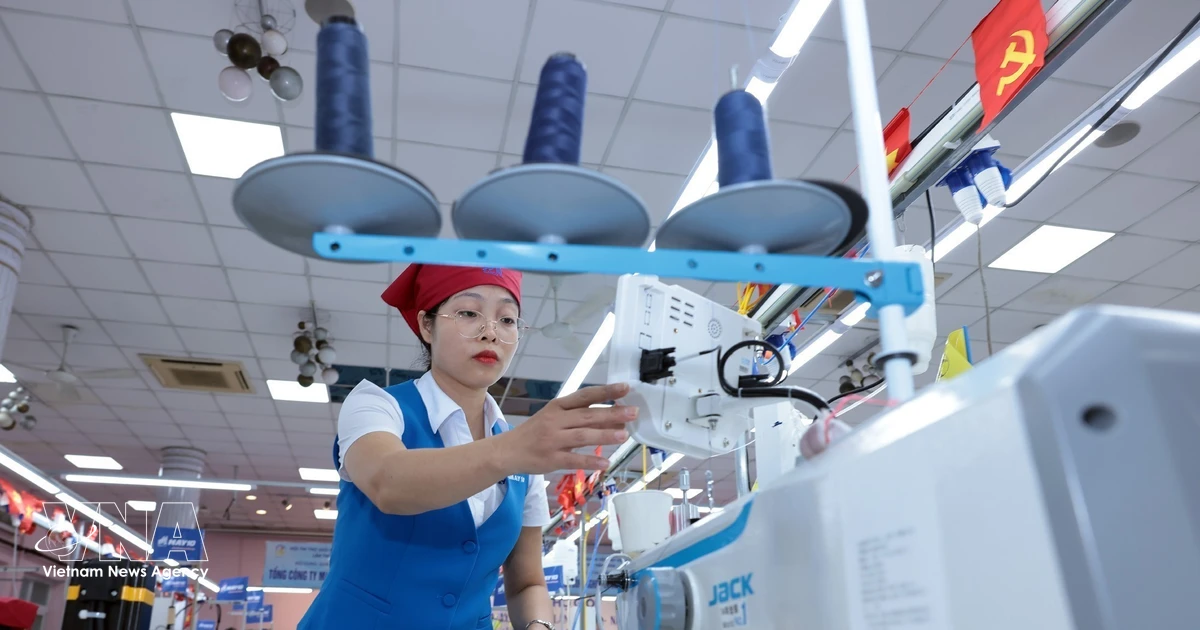
Vietnam's garment and textile sector is building data infrastructure to comply with the EU's Digital Product Passport. Agriculture sees strong durian exports to China, with an online market between Vietnam and Singapore planned. Infrastructure investment is also active as the country aims to sustain economic growth.
The European Union’s planned implementation of the Digital Product Passport (DPP) from 2028 is pushing Vietnam’s textile and garment industry to begin building the data infrastructure needed to meet the new requirements, a crucial transformation to sustain export momentum. The sector earned $18.8 billion from exports in the first five months of 2026, up 5.6% year-on-year despite weak global demand. To achieve its full-year export target of $48-49 billion, monthly export turnover will need to average $4.31-4.46 billion over the remaining seven months. Vietnam’s economy is experiencing robust growth, with total retail sales of goods and consumer service revenues in August estimated at $26 billion, up 1.6% from the previous month and 14.9% year-on-year. In the January-August period, the figure reached $5.24 quadrillion VND, representing a 13.3% increase year-on-year. Foreign direct investment (FDI) remains a strong driver. In the first eight months of 2026, the capital city attracted more than $3.7 billion in FDI, equivalent to 83% of the plan set for the year. Newly registered FDI exceeded $572 million across 450 projects, up significantly in both project numbers and capital compared to the same period last year. In the agricultural sector, durian exports have shown remarkable strength, with revenue estimated at $1.95 billion in the first eight months, of which exports to China alone fetched $1.85 billion or 95%. The country is working to earn $4 billion from durian exports this year. Vietnam’s fruit and vegetable exports have grown strongly in recent years, expected to surpass $10 billion in 2026. Furthermore, an online agricultural wholesale market aimed at expanding trade links between Vietnamese agricultural producers and buyers in Singapore is expected to become operational by the end of September 2026. Infrastructure development is also a key focus. The Climate Adaptation Through Irrigation Modernisation Project will benefit approximately 295,500 people by modernising seven irrigation systems and improving water management to help farmers cope with drought and shifting rainfall patterns. In the energy sector, a clear, transparent, and stable legal framework is essential for Petrovietnam to play a leading role in new energy development and to strengthen investor confidence, encouraging both domestic and foreign enterprises to invest, transfer technology, and cooperate in developing large-scale CCS projects. International organizations broadly agree that shifting the growth model from reliance on traditional factors toward technology and innovation is no longer an option but an imperative for Vietnam. Under its one-party system, the government is implementing substantive and comprehensive reforms, focusing on maximum cuts and simplification of administrative procedures and business conditions. It also seeks to shift management from pre-licence inspection to post-licence inspection based on risk management, while strengthening real-time, data-driven oversight and prioritizing people and businesses in public services. These efforts aim to enhance the business environment and attract further investment. Source: VietnamPlus English
Original source
VietnamPlus English