General articles are free for 24 hours after publish.
Plug-in Hybrid Vehicles Gain Traction Among Vietnamese Consumers, Especially Youth
Plug-in hybrid vehicles (PHEVs) are seeing a quiet surge in popularity in Vietnam. An evolution of existing hybrid vehicles (HEVs), PHEVs address concerns about EV charging infrastructure while offering an EV-like driving experience, appealing particularly to younger car buyers.
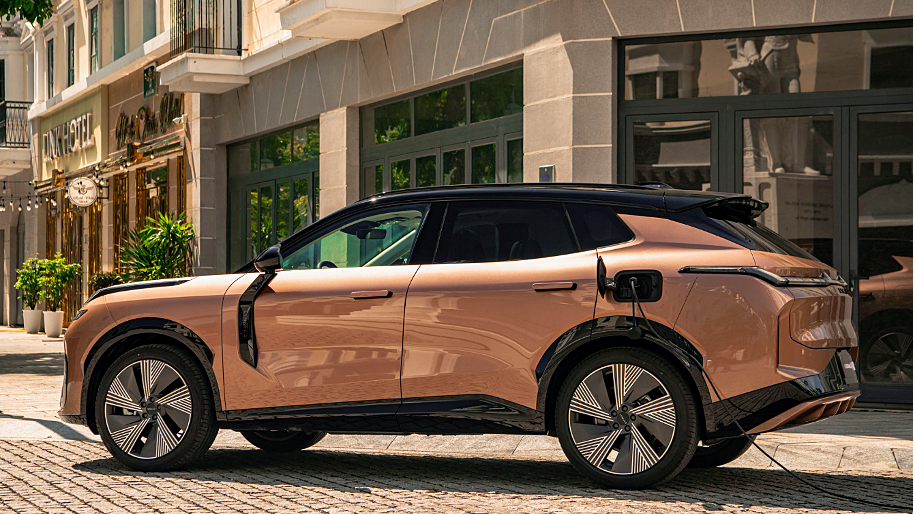
Plug-in hybrid vehicles (PHEVs) are emerging as a significant trend in Vietnam's automotive market. This advanced form of hybrid technology is attracting considerable interest, particularly among younger consumers, as it effectively bridges the gap between traditional hybrid cars and fully electric vehicles (BEVs). The primary advantage of PHEVs lies in their enhanced electric capabilities. Unlike conventional hybrids (HEVs) where the electric motor primarily assists the gasoline engine, PHEVs feature larger battery packs that allow for extended periods of pure electric driving. For instance, the Lynk & Co 08 boasts a substantial 39.6 kWh battery, comparable to some urban BEVs, enabling an impressive electric-only range of up to 200 km. This significantly surpasses the electric range typically offered by traditional HEVs. This robust electric powertrain, when combined with a 1.5L turbocharged gasoline engine, delivers a potent system output of 345 horsepower and 580 Nm of torque. This configuration ensures agile and smooth acceleration, making city driving effortless and responsive. Furthermore, PHEVs offer the flexibility to operate as a BEV for shorter commutes, while seamlessly switching to hybrid mode for longer journeys, alleviating range anxiety associated with BEVs. Users can leverage the electric-only mode for daily urban travel, prioritizing quiet operation and cost savings, and then rely on the hybrid system for extended trips without concerns about charging infrastructure. The increased reliance on the electric motor reduces the workload on the gasoline engine, leading to substantial fuel efficiency improvements. Lynk & Co reports that the 08 consumes as little as 1.38 liters of fuel per 100 km on mixed roads when the battery is charged, a figure that outshines many smaller, purely gasoline-powered hatchbacks. Beyond powertrain advancements, PHEVs are redefining the user experience through integrated technology. For younger demographics, who are increasingly influential in purchasing decisions, novel technological features are a key differentiator. Thanh Binh, an owner of a Lynk & Co 08 Pro, describes his vehicle as "like a high-tech gadget," appreciating its intelligent features, quiet and impressive acceleration, and superior sound insulation. The interior design complements this technological focus, featuring a 15.4-inch 2.5K center touchscreen, a 10.2-inch digital cluster, a virtual assistant, and a Harman Kardon sound system. These elements create a dynamic, digital-centric cabin. The flagship Lynk & Co 900 elevates this further with a massive 30-inch 6K front display and a 30-inch rear entertainment screen, supporting activities like watching movies, gaming, and even online conferences – features rarely seen in the Vietnamese market. Industry experts note a shift in consumer behavior, with a growing emphasis on experiential value and personal enjoyment over purely practical considerations like durability or resale value. In this context, Lynk & Co's "New Premium" positioning, which emphasizes youthful design, advanced technology, and high-end comfort, offers an appealing proposition that approaches the luxury segment. Source: VnExpress
Original source
VnExpress