General articles are free for 24 hours after publish.
Cambodia Defends 'Disciplined Borrowing' Amid Rising Debt, Pledges Selective Approach
Cambodia's Ministry of Finance defended its borrowing policy as 'disciplined' and 'selective,' asserting that public debt remains sustainable despite rising repayments. The ministry emphasized that loans are directed towards priority sectors and infrastructure, prioritizing transparency and efficiency. It denied any shift away from Chinese financing, highlighting a strategy of diverse funding sources.
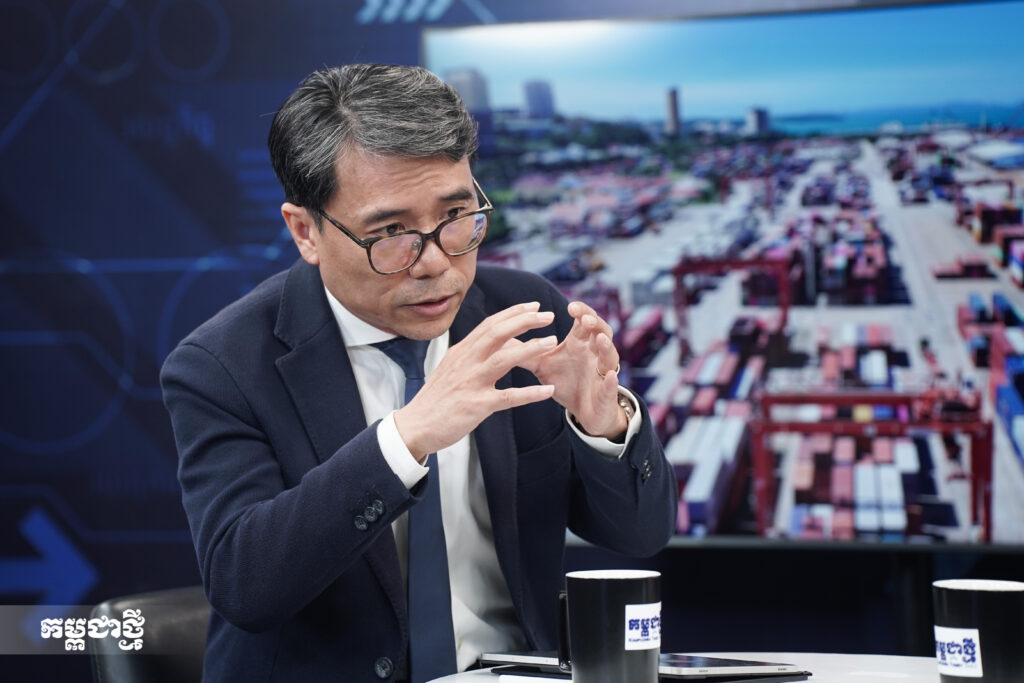
PHNOM PENH, Sept. 24, 2026 (KPT) — Cambodia’s finance ministry has defended its borrowing policy as “disciplined” and “selective,” stressing that public debt remains sustainable even as repayments surged in the first half of the year. Meas Sok Sensan, spokesman for the Ministry of Economy and Finance (MEF), told KPT English that Cambodia’s approach should not be seen as reluctance to borrow but as a cautious strategy guided by five principles. “I would not characterize Cambodia’s approach as hesitant to borrow. Rather, Cambodia follows a prudent and selective borrowing policy,” he said. Official figures of MEF released earlier this month showed Cambodia’s public debt stock reached $13.56 billion at the end of the second quarter, while debt‑service payments rose 31 percent year‑on‑year in the first half. External debt accounted for 95 percent of the total, with concessional loans signed in the first six months up 134 percent compared with 2025. Sensan said the debt‑to‑GDP ratio of around 19 percent should be understood in the context of the government’s management framework. “A debt threshold is a safeguard, not a borrowing target. Having room to borrow does not automatically mean that we should borrow up to that limit,” he explained. He outlined five guiding principles: borrowing only within sustainable levels; seeking highly concessional financing; directing loans to priority sectors; ensuring transparency and efficiency; and supporting high‑quality infrastructure aligned with Cambodia’s evolving needs, including climate resilience. “The relevant question for us is not simply ‘How much more can Cambodia borrow?’ but rather ‘What should Cambodia borrow for, on what terms, and can the investment generate sufficient economic and social returns while preserving debt sustainability?’” he said. Sensan added that Cambodia’s borrowing decisions are driven by project quality rather than the nationality of financing partners. “I would be cautious about interpreting changes in the composition of Cambodia’s public debt as indicating a shift away from China or toward any particular financing partner,” he said, noting cooperation with China, Japan, Korea, France, ADB, the World Bank and AIIB. He pointed to the recent financing agreement between China Exim Bank and the project company for the Funan Techo Canal, worth nearly $1 billion, as an example of major infrastructure borrowing. But he stressed that feasibility, economic and social impacts, environmental implications and risk allocation must be carefully assessed before commitments are made. “Ultimately, Cambodia’s approach is not about choosing between Chinese, bilateral or multilateral financing. It is about choosing appropriate projects and appropriate financing,” Sensan said. “Our objective is to mobilize development finance from diversified sources, on suitable terms, for well‑prepared projects that contribute to economic growth and social development, while preserving long‑term debt sustainability.”
Original source
Kampuchea Thmey English