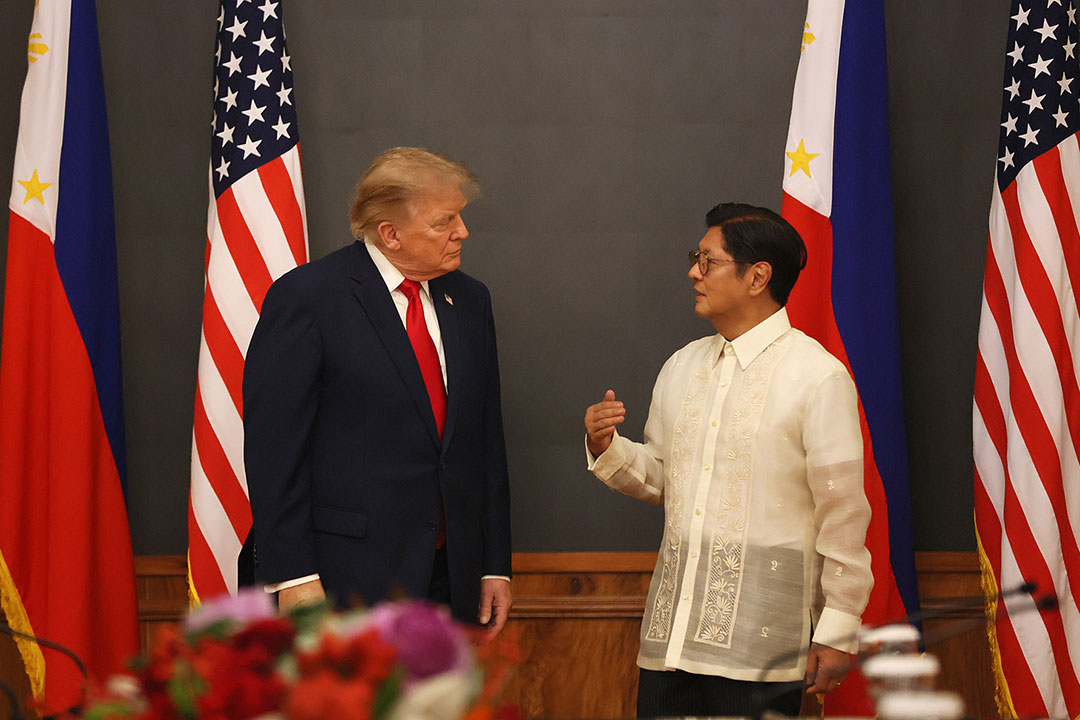
Palace Denies Deal to Buy More US Energy, Farm Products Amid Trump Claims
Malacañang on Tuesday denied having agreed to specific terms to buy more energy and agricultural products from the US, countering claims by former US President Donald Trump. The Palace stated that price and impact on domestic industries would be considered, while business groups and lawmakers called for transparency.
This article requires PRO
This article is outside the free access window or is a special report. PRO unlocks it and the full archive.
Related articles
- Trump's Energy and Agri Offer: Philippines Urges Caution Amidst Deal Uncertainty
Former US President Donald Trump claimed the Philippines would buy 100% of its energy and agricultural needs from the US by 2027. However, Philippine officials stated no such deal is finalized, emphasizing ongoing negotiations and the importance of food security and market diversification.
- No 100% US agriculture, energy purchase deal – Palace
The Philippine Presidential Palace has denied reaching an agreement with the United States to purchase 100% of its agricultural and energy supplies. The clarification follows concerns from local business groups about a statement by former President Trump, urging transparency in trade deals.
- Senators Grill DFA on Alleged 100% US Agri-Energy Import Deal
Philippine senators questioned the Department of Foreign Affairs (DFA) regarding a reported agreement that would require the Philippines to source 100% of its agricultural and energy imports from the United States. The DFA was pressed for details during the Senate's deliberations on its proposed 2027 budget.
- Imee Marcos Questions US Agricultural and Energy Import Claim
Senator Imee Marcos has raised concerns over the alleged plan for the Philippines to import 100% of its agricultural and energy needs from the US, citing a lack of prior consultation with the Department of Foreign Affairs (DFA). The claim, attributed to former US President Donald Trump, has sparked debate on its feasibility and implications for foreign policy.