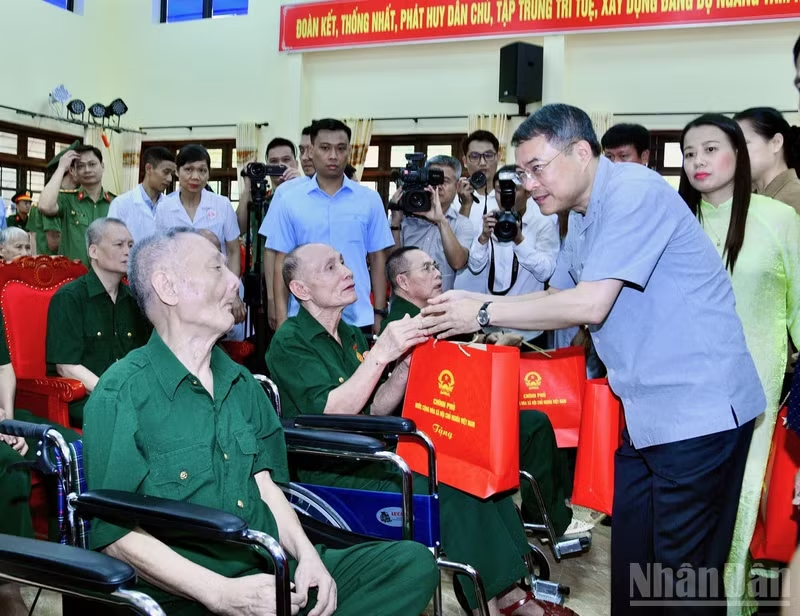
Vietnam Honors Fallen Soldiers and War Invalids Ahead of Commemoration Day
Ahead of the July 27th Day for Fallen Soldiers and War Invalids, Vietnamese government leaders are visiting and presenting gifts to war invalids across the country. This initiative underscores respect for those who sacrificed in past wars, including the Vietnam War, and expresses gratitude to current war invalids needing support.
This article requires PRO
This article is outside the free access window or is a special report. PRO unlocks it and the full archive.
Related articles
- Vietnam Clarifies Cases Not Eligible for Military Service Deferment
Vietnam has clarified specific cases ineligible for military service deferment. The scope of deferment for students extending their university courses may be limited, potentially impacting career choices and development for young people.
- Panama President Visits Vietnam for Official State Visit
Panama's President José Raúl Mulino arrived in Vietnam on October 6th for an official state visit, hosted by Vietnamese President Tô Lâm. The leaders met to discuss strengthening bilateral ties and expanding cooperation across various sectors.
- Vietnamese President Holds Talks with Panamanian President Ahead of 50th Anniversary of Diplomatic Ties
Vietnamese President To Lam held talks with Panamanian President Jose Raul Mulino, reaffirming efforts to strengthen bilateral relations. This marks the first head-of-state visit in 14 years, signaling potential for enhanced cooperation ahead of the 50th anniversary of diplomatic ties in 2025.
- Vietnam and Cambodia Enhance Legal Framework for Waterway Transport to Deepen Cooperation
Vietnam has issued a consolidated legal document guiding the implementation of its agreement with Cambodia on waterway transport. This aims to streamline logistics and strengthen economic ties between the two nations. Notably, faster customs clearance and digitalization are expected to reduce transportation costs.