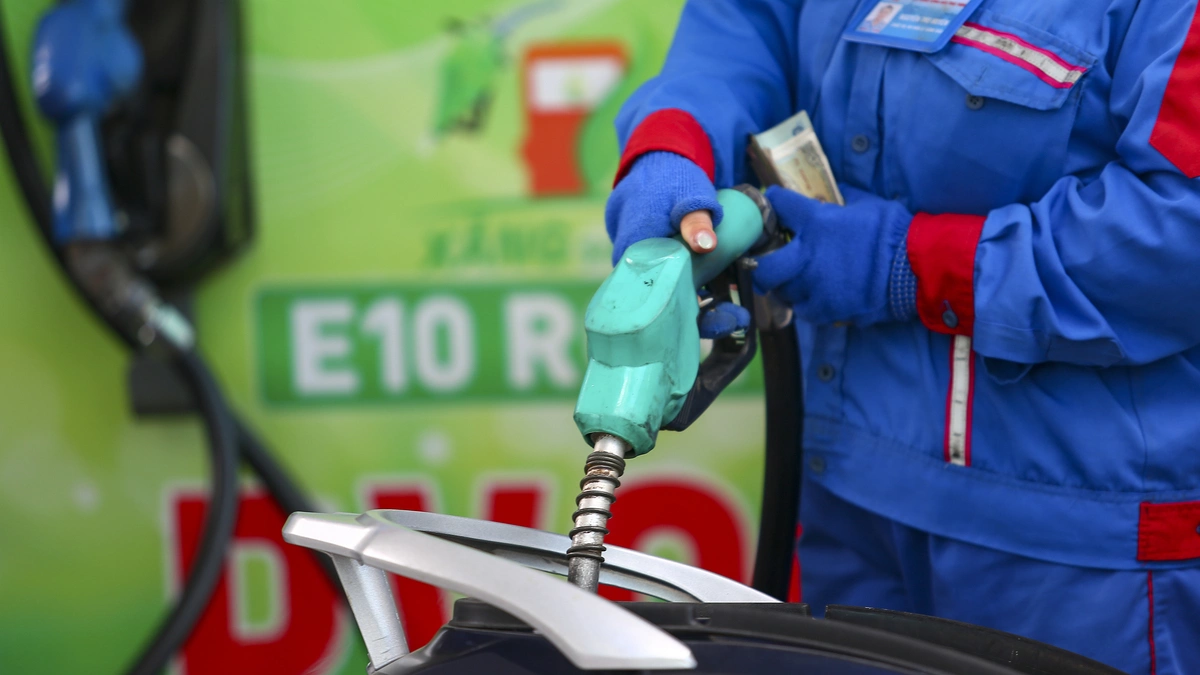
Vietnam Gasoline Prices Rise Amid Global Tensions and Domestic Supply Adjustments
Vietnam has seen gasoline prices increase by up to VND 1,580 per liter, driven by global energy market fluctuations and escalating Middle East tensions. E10 RON 95 now costs VND 20,550, raising concerns for consumers, while the government utilizes the price stabilization fund.
This article requires PRO
This article is outside the free access window or is a special report. PRO unlocks it and the full archive.
Related articles
- Hanoi Adds Fireworks Site for Capital Liberation Day Celebration
Hanoi has announced an additional fireworks display at Ho Van Quan Lake for the 72nd anniversary of the Capital Liberation Day on October 10th, in addition to existing sites at Hoan Kiem Lake and West Lake. This expands public access to the celebratory atmosphere.
- Former Head of Central Psychiatric Forensic Institute Sentenced to 20 Years in Prison
A trial in Hanoi has concluded with a 20-year prison sentence for the former director of the Central Psychiatric Forensic Institute, among 65 defendants implicated in a large-scale corruption case. The trial highlights the extent of corruption within public institutions.
- Vietnam and Panama Issue Joint Statement to Strengthen Bilateral Ties
Vietnam and Panama have issued a joint statement aimed at strengthening bilateral relations and promoting multifaceted cooperation. The statement emphasizes the importance of both nations as 'gateways' connecting Southeast Asia and Latin America, seeking to expand economic, cultural, and exchange opportunities.
- Vietnam Seeks Stronger Ties with Panama to Bridge Latin America
Vietnamese National Assembly Chairman Tran Thanh Man highlighted the strengthening of ties between the two legislatures as a key pillar of Vietnam-Panama relations, fostering political trust and overseeing high-level agreements. Panama views Vietnam as a leading partner in Southeast Asia.