General articles are free for 24 hours after publish.
Guide to Replacing a Lost Thai Driving Licence
Replacing a lost Thai driving licence is usually possible without retaking written or practical tests. Requirements vary based on whether the licence was lost or stolen, and the applicant's nationality. Procedures are handled at local Department of Land Transport (DLT) offices.
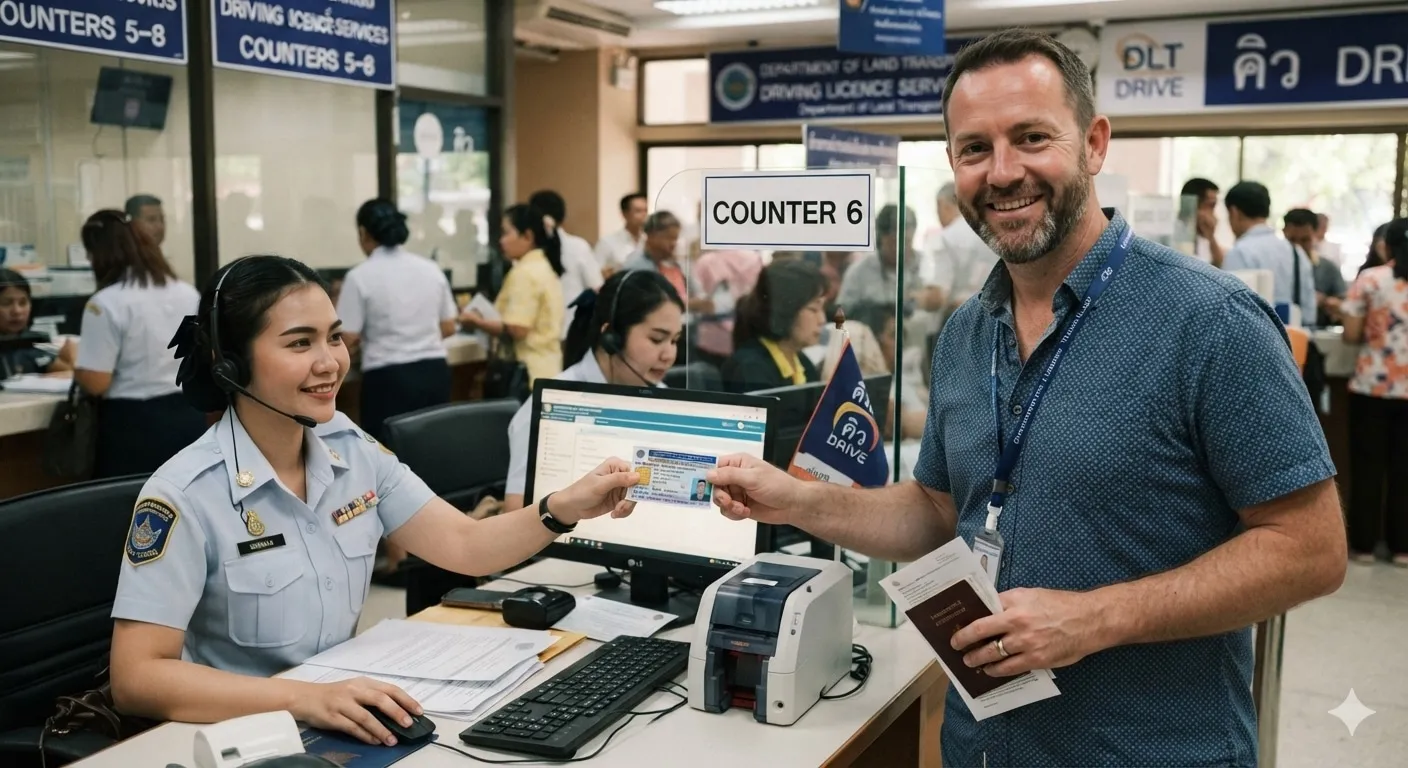
A lost private Thai driving licence can usually be replaced at a Department of Land Transport (DLT) office. To replace a lost Thai driving licence, you normally request a duplicate card, so you usually won’t need to repeat the written or practical driving test. Bring the right identification, confirm whether a police report applies to your case, and check whether the office accepts walk-ins or wants an appointment. Rules can differ for stolen cards, public licences, and foreign licence holders, so a quick call to the chosen DLT office can save a wasted trip. Start by choosing a DLT licensing office that is convenient for you. Many applicants can use a provincial office, although local queue rules and document checks may differ. If you live in northern Thailand, this Thai driver’s licence guide for Chiang Rai is useful for checking local procedures before you travel. At the office, tell staff that you need a replacement for a lost, stolen, or damaged card. They will check your record, review your documents, collect the fee, and issue a new card if the application is approved. Same-day service is common, but it depends on the queue and whether staff need extra documents. The DLT Smart Queue app is published by Thailand’s Department of Land Transport and can reduce time spent waiting at the office. Register or sign in, select your DLT office, choose “License Services,” then look for the service for a lost or damaged licence replacement. Choose an available date and time, then save a screenshot of the confirmation. Bring it with you, even if the office can see the booking in its system. Some DLT offices still accept walk-in applicants. However, daily limits may apply, so an appointment is the safer option when your schedule is tight. Call ahead if the app doesn’t show a suitable slot. Staff will first check your identification and locate your existing licence record. You may need to complete or review a short application form, then pay the required fee before your photo and card are processed. A simple replacement usually doesn’t involve a new theory test or road test. Still, some offices may ask for basic eyesight, color vision, reaction, or other physical checks. These checks aren’t universal for every duplicate-card request. Before you leave the counter, ask how long printing will take. In many cases, applicants wait at the office and receive the replacement card that day. Bring original documents, not only phone images or photocopies. DLT staff need to confirm your identity and match it to the licence record. Your checklist changes based on whether you are a Thai citizen or foreign national, and whether the card was lost, stolen, or damaged. A basic private licence that was misplaced is usually the most straightforward case. If your situation involves a visa issue, theft, or a public driving licence, contact the office before traveling. For most Thai citizens, the main document is the original Thai national ID card. The DLT can use it to verify your identity and find the existing licence details. A police report is often not needed when a private card was accidentally lost. However, bring one if the card was stolen, if identity theft is a concern, or if the office asks for proof of the loss. If the licence is damaged, take the card and any remaining pieces with you. Even a cracked or faded card can help staff confirm that you are requesting a replacement rather than a renewal. Foreign licence holders should generally bring their original passport and evidence of their current visa or residency status. The precise documents can vary by DLT office and the details attached to the original Thai licence record. For example, an office may want to see an immigration document connected to your current address. Applicants in Chiang Rai can review the guidance on a Certificate of Residence at Chiang Rai Immigration before asking the DLT what it accepts. Call first if your visa has expired, your residence evidence is unusual, or your record was created in another province. Don’t assume a document checklist from an older online post will apply to your current circumstances. Police-report advice differs across DLT offices and online guides. Many current replacement procedures do not require one for an ordinary private licence that was accidentally lost. Yet a report is a sensible safeguard when the card was stolen. Some public, commercial, or special licence cases may also involve extra requirements. The replacement guidance from Motorist Thailand also advises checking the applicable documents before visiting. A police report is most useful when theft or an unusual licence category changes the facts of your case. If you are unsure, describe the situation clearly when you call the DLT. Ask whether the office needs a police report, a loss statement, or no additional evidence. A replacement card is normally cheaper and faster than renewing an expiring licence. It is a duplicate of an existing record, so it generally keeps the same licence category and validity period. Most applicants can plan for a short office visit, although queues can lengthen the process. Bring enough cash for the stated fee and any small processing charges the office may collect. Current guidance commonly places the cost of a lost or damaged private licence at about 200 baht. Some published fee breakdowns total around 205 baht because they separate the application charge, replacement fee, and photo or card printing charge. Carry extra cash and confirm the total with the office before payment. Don’t confuse a replacement fee with a renewal fee, a medical check, a driving test, or another DLT service. Public licences and cases with additional paperwork may follow a different schedule. Staff at the selected office can give the current total for your licence class. A replacement normally keeps the original licence type and remaining expiration date. It does not usually start a new validity period because it is a substitute card rather than a renewal. Check every printed detail before leaving. Confirm the licence class, issue information, and expiration date match the record you expected. Lifetime licences should also be handled as duplicate-card requests, but ask staff to confirm what is printed on your replacement. Requirements and card formats can change. The easiest way to delay a replacement is arriving with incomplete documents. An old checklist may miss a current office policy, especially if you are a foreign applicant or your licence was stolen. Also, don’t mistake a replacement for a renewal. An expired or nearly expired card may need a different service, with separate requirements and fees. A private licence that was simply misplaced usually needs the fewest documents. Theft creates a stronger reason to bring a police report, while public driving licences may need additional checks or records. Damaged cards should go with you to the DLT office if you still have them. Tell the staff you are requesting a replacement rather than a renewal, even if the card is cracked or faded.
Original source
Chiang Rai Times