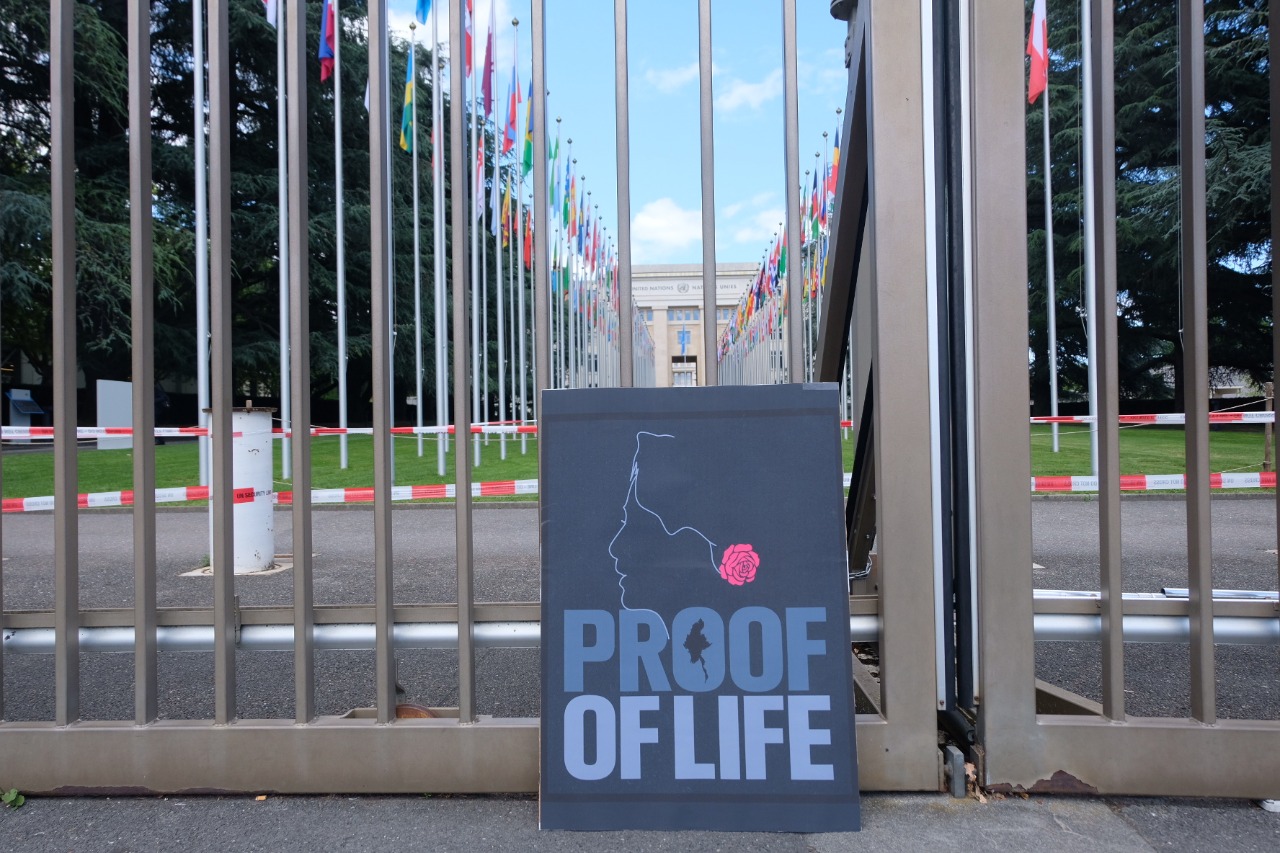
Myanmar faces backlash after denying ASEAN Special Envoy access to Aung San Suu Kyi
Myanmar’s military regime is facing renewed international criticism after rejecting a request by a top regional envoy to meet with detained State Counsellor Aung San Suu Kyi, a move human rights advocates and her family
Myanmar’s military regime is facing renewed international criticism after rejecting a request by a top regional envoy to meet with detained State Counsellor Aung San Suu Kyi, a move human rights advocates and her family say violates international law. Ma. Theresa P. Lazaro, the Philippines Special Envoy to Myanmar representing the 2026 Association of Southeast Asian Nations (ASEAN) Chair, was recently denied access to the ousted leader. According to Zar Li Aye, a Thailand-based Myanmar human rights lawyer, the regime’s refusal to grant access to both outside observers and family members is a direct violation of international prisoner standards. Speaking to DVB, Zar Li Aye pointed to the U.N. Standard Minimum Rules for the Treatment of Prisoners—known as the Nelson Mandela Rules—which mandate that prisoners be allowed regular communication and visits with family and friends. “Even under prison regulations, prisoners should be given opportunities to meet family members and maintain contact with the outside world,” Zar Li Aye said, emphasizing that the regime’s isolation tactics raise serious questions about its compliance with basic human rights. Disputed health claims and the “Proof of Life” campaign During a June 30 press conference in the capital of Naypyidaw, regime spokesperson Khaing Khaing Soe defended the decision to block the ASEAN meeting, citing Aung San Suu Kyi’s status as a prisoner. The 81-year-old is currently serving an 18-year sentence—reduced from an original 33 years—following a series of closed-door trials on charges ranging from corruption to violating state secrecy rules. Aung San Suu Kyi’s supporters deny the allegations, which international rights groups have widely condemned as politically motivated. At the press conference, Khaing Khaing Soe also claimed, without providing evidence, that the detained leader is in “good health” and receives “regular check-ups.” Those claims were quickly refuted by Aung San Suu Kyi’s son, Kim Aris. In an interview with Japan’s Kyodo News, Aris expressed deep concern that his mother is suffering from age-related ailments, including osteoporosis. Frustrated by over five years of isolation since the military seized power in the military coup on Feb. 1, 2021, Aris recently launched the global “Proof of Life” campaign. The movement demands that Myanmar provide independent verification that Aung San Suu Kyi is still alive. Ahead of her 81st birthday on June 19, the campaign mobilized pro-democracy supporters to hold rallies across the U.S., the U.K., Canada, Australia, Japan, and South Korea. “The military junta has now refused ASEAN’s request to meet my mother,” Aris stated on social media July 2. “As her son, I have a basic human right to know whether my mother is alive and to have contact with her… Yet, for more than five years, I have been denied even a single phone call or visit with my mother. My mother remains a hostage, cut off from her family and the outside world.” Calls to withhold international aid The June 30 press briefing also saw the regime in Naypyidaw attempt to secure international financial support, with Khaing Khaing Soe publicly calling on Japan to resume development assistance to Myanmar. However, international watchdogs are pushing back. Human Rights Watch has urged Tokyo to maintain its ongoing suspension of new aid to the country, citing the regime’s extensive track record of human rights abuses and its continued obstruction of humanitarian assistance to vulnerable populations since the 2021 coup.
多角的分析
実務協力は短期の投資案件に直結しなくても、人材育成、技術移転、行政能力の底上げにつながる可能性があります。ただし制度透明性が低いままでは、協力の実効性は限定されます。
投資家にとっては、どの国との実務協力が残っているかがリスク評価の材料になります。外交接点の継続はプラス材料ですが、政治的正統性や制裁環境を切り離して見ることはできません。
オブザーバーの生活者から見れば、国際協力は遠い話に見えます。だからこそ、DVBの報道では、合意文書ではなく拘束に触れる具体策が出るかを追う必要があります。
市民にとっては、会談そのものよりも、雇用、教育機会、公共サービスの改善として実感できるかが焦点です。成果が見えなければ公式報道への信頼は高まりません。
背景・歴史的文脈
このニュースは、ミャンマー政府が対外関係を通じて行政分野の協力を維持しようとする動きです。国際的な孤立や制裁圧力が続く中でも、科学技術、教育、金融など実務分野の会談は、政府間チャネルを保つ意味を持ちます。
原文ソース
DVB