DA Accelerates Water Projects, Data Strategy to Combat El Niño
Infrastructure
2026年7月1日
4
Inquirer NewsInfo
Relations
🇵🇭Philippines🇹🇭Thailand

DA Accelerates Water Projects, Data Strategy to Combat El Niño

AI サマリー

The Philippine Department of Agriculture (DA) is accelerating a data-driven strategy and infrastructure development to mitigate the impact of El Niño on the agriculture and fisheries sector, integrating real-time data and fast-tracking irrigation and water impounding projects.

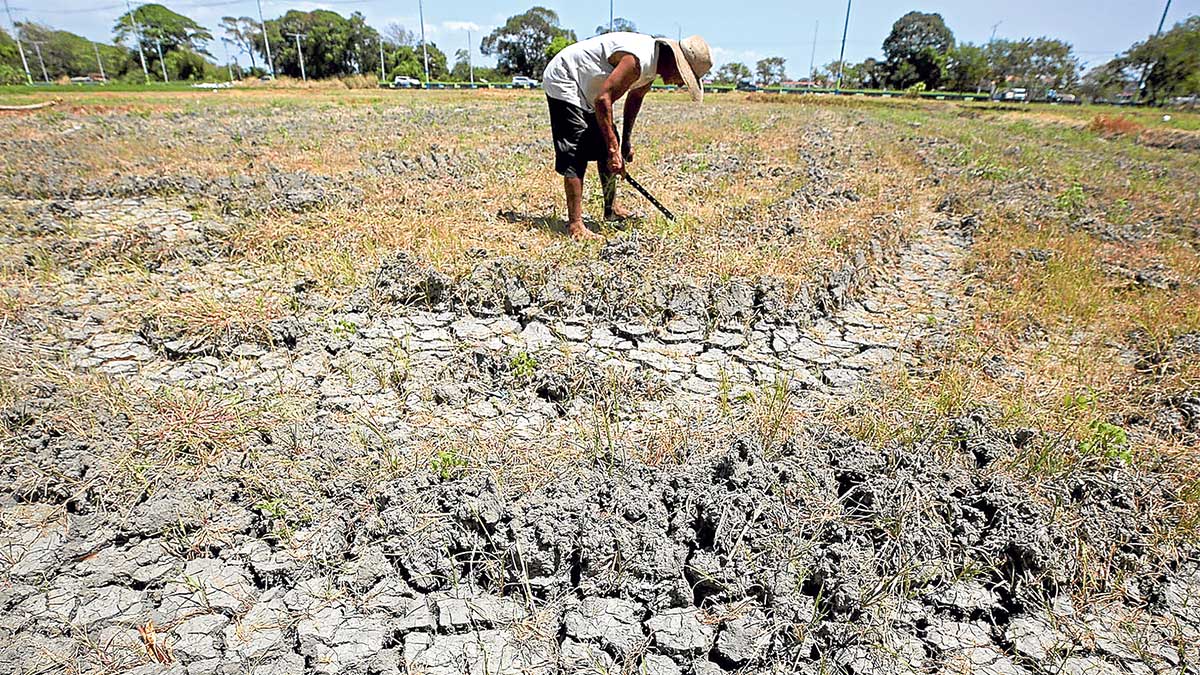
PARCHED LAND In this photo taken in March 2024, a farmer in Imus, Cavite, inspects his parched farm during that year’s onset of El Niño. —INQUIRER FILE PHOTO MANILA, Philippines — The Department of Agriculture (DA) is implementing a data-driven planning strategy to safeguard the country’s agriculture sector from a looming El Niño phenomenon expected to peak later this year. Agriculture Secretary Francisco Tiu Laurel Jr. said in a statement on Tuesday that the agency is shifting to a broader food systems approach by integrating data on production, storage, logistics, weather information and market demand into a single network supported by real-time data. The DA is also fast-tracking the development of irrigation, water impounding and other climate adaptation projects, including small farm reservoirs, to help mitigate the impact of El Niño on farmers and fishers. READ: Peasant group urges gov’t to act urgently as ‘super’ El Niño looms Tiu Laurel has further directed DA regional offices to identify the strongest agricultural and fisheries commodities per province, quantify production capacity, and measure postharvest losses to guide investments in storage, processing, and cold chain infrastructure. The agriculture chief said that, for instance, the Philippines continues to import onions and carrots despite sufficient production to meet domestic requirements due to inadequate storage and cold chain infrastructure. “Additional cold storage, blast freezers and logistics facilities … would allow local harvests to be preserved longer and distributed more efficiently, significantly reducing the country’s dependence on imports,” Tiu Laurel said. The DA outlined its mitigating measures following the latest forecast of another strong El Niño that is expected to reach its peak around November. “Preparedness prevents a challenge from becoming a crisis, and a crisis from deteriorating into a catastrophe. That must be our guiding principle in the months ahead,” Tiu Laurel said. READ: Pagasa: Over 60% chance of El Niño intensifying from August onwards The Philippine Atmospheric, Geophysical and Astronomical Services Administration (Pagasa) has projected a 69-percent chance of a strong El Niño emerging between August and September. Likewise, there is a 62-percent chance that the weather phenomenon could become “very strong” during the October-December and November-January seasons. Tiu Laurel said external conditions have become more favorable amid expectations of a prolonged dry spell, allowing farmers to maximize planting before the dry spell intensifies. According to the DA, fuel prices have eased, while fertilizer prices have significantly declined to around $450 per metric ton (MT) from a peak of $930 per MT. Domestic retail prices are expected to return to near pre-Middle East war levels of P1,600 to P2,000 per bag by August, it added. /cb

多角的分析

経済的影響

エルニーニョによる干ばつは、フィリピンの主要産業である農業に深刻な打撃を与える可能性がある。特に米やトウモロコシなどの主食作物の収穫量減少は、食料価格の上昇とインフレ圧力の増大を招く。今回のDAのデータ駆動型アプローチとインフラ投資加速は、こうした経済的ショックを緩和し、国内の食料安全保障を強化するための重要な一歩である。輸入依存度の低減は、貿易赤字の改善にも寄与する可能性がある。

投資家心理

エルニーニョによる農業生産の不安定化は、関連企業の収益に直接的な影響を与える。特に、肥料や農薬メーカー、食品加工業者、物流業者は、供給途絶や価格変動リスクに直面する。しかし、DAによるインフラ投資(貯蔵、コールドチェーン)の加速は、これらの分野への新たな投資機会を生み出す可能性がある。長期的な視点では、気候変動への適応能力が高い企業や、持続可能な農業技術を開発・導入する企業への投資が有望視されるだろう。

社会的影響

エルニーニョによる干ばつは、農村部の生計を脅かし、食料価格の上昇は都市部の低所得者層に最も大きな影響を与える。農民は収穫量の減少による収入減に直面し、食料不足は栄養失調のリスクを高める。今回のDAの取り組みは、農民や漁民への直接的な支援策として期待されるが、その効果は迅速かつ広範な実施にかかっている。特に、小規模農家への技術支援や、被災者への迅速な食料支援体制の構築が、社会的な混乱を防ぐ上で重要となる。

市民の声

エルニーニョによる干ばつは、フィリピン全土の市民、特に農村地域に住む人々の生活に直接的な影響を与える。農作物の収穫量が減れば、食料価格が上昇し、家計を圧迫する。特に、米や野菜などの必需品の価格高騰は、低所得者層にとって深刻な問題となる。今回の農業省の対策は、水資源の確保と農産物の安定供給を目指すものだが、その効果が市民の食卓に届くまでには時間がかかる可能性がある。日々の生活費への影響が懸念される。

背景・歴史的文脈

フィリピンは地理的にエルニーニョ現象の影響を受けやすい国であり、過去にも干ばつや洪水による農業被害が頻発してきた。特に、米やトウモロコシといった主要作物は、気候変動の影響に対して脆弱である。2015-2016年のエルニーニョでは、深刻な干ばつが発生し、農作物の収穫量が大幅に減少し、食料価格の高騰を招いた。こうした経験から、フィリピン政府は気候変動への適応策を強化する必要性に迫られている。今回のDAの取り組みは、過去の教訓を踏まえ、よりデータに基づいた、より迅速な対応を目指すものと言える。

原文ソース

Inquirer NewsInfo

原文を読む