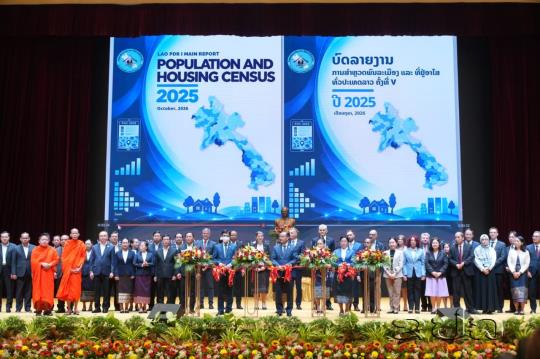
Lao PDR Releases 2025 Census Data to Guide Development
The Lao PDR government has released the results of its 2025 Census, revealing an estimated population of 7.24 million and 313,000 emigrants. The data will serve as a crucial evidence base for guiding the 10th National Socio-Economic Development Plan and investments in infrastructure, health, and education.
Read up to 3 eligible full articles per Japan day (JST) for free
Create a free account to open up to 3 eligible full articles per Japan calendar day (JST). Headlines and summaries remain available across ASEAN 7.
Related articles
- Laos Risks Falling Behind Vietnam in Carbon Storage Race
As Vietnam moves to capitalize on the burgeoning Carbon Capture and Storage (CCS) market, concerns are rising that Laos could miss out on opportunities due to policy delays. The nation faces challenges in leveraging its natural resources and maintaining international competitiveness.
- Laos Seeks to Boost Business Cooperation with South Korea, Focusing on Investment and Human Resources
The Lao government hosted a business forum aimed at increasing investment from South Korea. The Prime Minister outlined investment promotion policies, while the Korean side expressed commitment to deepening cooperation in economic, trade, and investment sectors. Both nations anticipate strengthened collaboration in human resource development and technology transfer.
- National Assembly Urges Enhanced Revenue Collection and Investment Oversight
The Lao National Assembly has passed resolutions calling for strengthened revenue collection and stricter investment oversight, marking a crucial step towards sustainable economic growth and fiscal health. The body is also actively pursuing legal reforms, including the submission of an amended anti-cybercrime law.
- Xaysomboun Province Reports Progress in Labour and Social Welfare Development Amidst Lingering Challenges
Xaysomboun province has achieved or exceeded targets in its 2026 labour and social welfare development plan. However, challenges persist, including limited business participation in skills development and irregular labour migration. The government prioritizes vocational training and domestic employment.