General articles are free for 24 hours after publish.
India Pushes for Deeper Trade and Investment Ties with Thailand
The Indian Ambassador urged deeper trade and investment ties with Thailand at a business conclave in Bangkok. While bilateral trade has grown, it has not reached its full potential, with challenges like non-tariff barriers and lack of information needing attention.
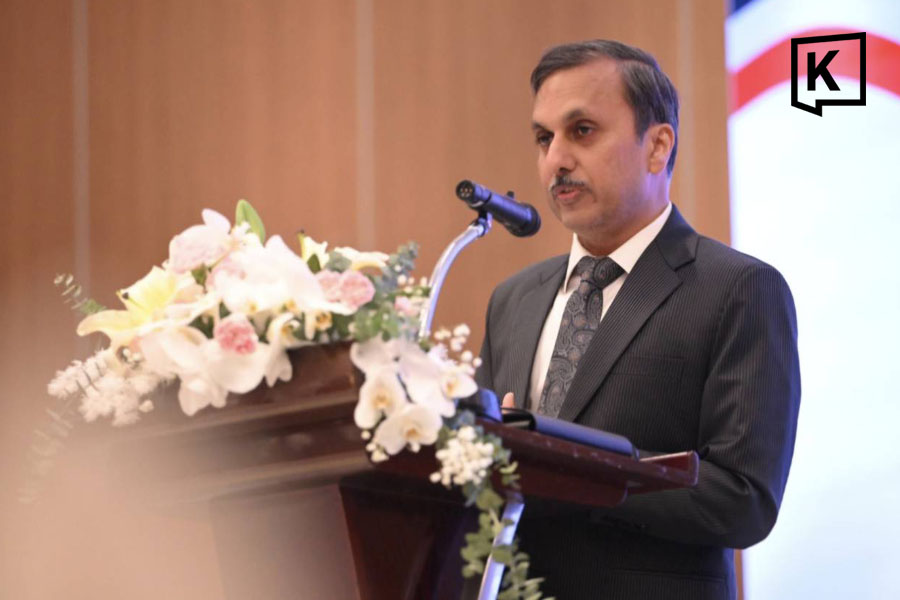
Business leaders and entrepreneurs from India and Thailand convened in Bangkok on August 27 for the India-Thailand Business Conclave, an event designed to explore opportunities for deepening trade and investment ties between the two nations. Organized by the Embassy of India in Thailand, the gathering aimed to foster stronger economic engagement under India's "Act East" policy. Indian Ambassador Agrawal highlighted that bilateral trade between the two countries has grown significantly over the last decade, now standing between USD 20 to 21 billion. However, he stressed that despite a trade surplus of approximately USD 10 to 11 billion in Thailand's favor, the relationship has not yet reached its full potential. Agrawal pointed out that while Thailand is the second-largest economy in ASEAN, it ranks only as India's fourth-largest trading partner in the region, trailing behind Singapore, Indonesia, and Malaysia. Challenges remain, including non-tariff barriers and a simple lack of information and understanding of the regulatory ecosystems on both sides, which demand close attention. He emphasized that stronger business-to-business ties can play a vital role in strengthening the broader economic and strategic partnership. "The elevation of India-Thailand relations to a Strategic Partnership embodies our shared aspiration for deeper engagement. Facilitating trade, resolving market access issues, strengthening our linkages to global value chains, and building the confidence of the private sector in both countries are steps to realise that vision, and to prepare us for new frontiers of trade and investment in future-oriented industries such as renewable energy, electric vehicles, digital technology, robotics, ICT, space technology, biotechnology, the creative industries, and start-ups," he told a gathering of around 50 Thai and Indian business leaders in Bangkok. "Indian companies bring scale, technological expertise, and a deep talent pool and see in Thailand a gateway to ASEAN. Thai businesses, in turn, see in India’s vast domestic market an attractive destination for expansion. Together, deeper economic integration will help both countries diversify away from dependence on any single market or source." Thailand is a well-established hub for food processing, automotive, electronics, and petrochemical production, and Indian firms are increasingly plugging into this ecosystem to gain access to broader ASEAN markets. Physical links such as the India-Myanmar-Thailand Trilateral Highway are expected to boost trade flows and cut logistics costs, while ongoing discussions on port-to-port connectivity and coastal shipping aim to bring the regions closer. This kind of integration opens real opportunities for manufacturers on both sides — particularly MSMEs — to scale up production and expand their presence in international markets. Agrawal proposed closer business-to-business exchanges focusing on the unique capabilities and advantages offered by India’s northeastern states, which he said could be immensely beneficial for both countries. "With North-east getting better connected to other parts of India, Thai investors especially in food, hospitality, and logistics sectors can access the Indian market with greater ease basing their operations in this part of India." The ambassador added that Thai companies see India as a high-potential market, driven by a rapidly expanding middle class. "Access to that growing consumer base, including in food, petrochemicals, construction materials, and renewable, matters greatly to our Thai partners. Rather than competing head-on, businesses on both sides have abundant opportunity to play complementary roles within the same regional value chains. India’s strengths in IT, pharmaceuticals, and manufacturing can complement Thailand’s established industrial base. Thailand, for its part, is actively seeking the kind of foreign investment that brings technology transfer and strengthens its domestic supply chains. Deeper linkages with India, particularly in automobiles, pharmaceuticals, and IT services, can help feed that process… India today is the world’s sixth-largest economy, with a GDP of over 4 trillion US dollars. We have been the fastest-growing major economy in the world for more than a decade, and in the first quarter of this year, we grew at around 7.8 percent. India is on track to become the world’s second-largest consumer market by 2030." Following the ambassador’s address, Vichaow Rakphongphairoj, Vice Chairman of the Federation of Thai Industries, who was invited as the guest of honour, addressed the conclave. Vichaow stressed the importance of Thai businesses gaining access to India, which he described as “one of the world’s largest and dynamic markets.” India, Vichaow added, has complementary strengths in innovation and start-ups, while Thailand is strong in manufacturing, food, logistics, and regional supply chains. “Thailand can serve as a manufacturing base and gateway to ASEAN,” he said. The event was followed by a panel discussion involving two Indian and two Thai businessmen. Manoj Gajarlawar, Asia Pacific Business Head at Royal Enfield Thailand, recalled how Thai customers quickly embraced the motorcycle brand after it entered the Thai market in 2016, as well as the success of organising motorcycle trips in the Himalayas and subsequently in Thailand. At present, there are more than 40 Royal Enfield riding communities in Thailand. Nagaraj Prasadh, HR & Operations Head, Asia Pacific, at Intellect Design Arena Ltd., said India’s fintech sector has much to offer Thai banks, but that a long-term commitment is needed. “You have to make Thailand your home in order to succeed and you must invest in people,” Prasadh said. Another speaker, Indian businessman Abhijit Datta, Director of SAMEA at Siam Cement Group (SCG) International, took the point a step further. Datta is married to a Thai, speaks Thai, and is working to promote India to major Thai corporations. He said India today is a new India, not merely a destination for sacred Buddhist sites familiar to Thai tourists, such as Bodh Gaya. "India is a huge market but also a difficult market," Datta said, adding that SCG had focused on products that were less readily available in India, including large prefabricated concrete walls. Such views resonated with two Thai businessmen whom Khaosod English spoke to on condition of anonymity at the conclave. One said Thailand would find it increasingly challenging to sell to India because the country can produce almost everything itself. Another said Thai businesses would need to make greater adjustments because of differences in business “chemistry”, unlike doing business with Japanese companies, with which Thais are more familiar. Information Source: Khaosod English
Original source
Khaosod English