General articles are free for 24 hours after publish.
Juhu Village, South Kalimantan's Hidden Gem: Rainforest Bounty and Rare Fruits
Juhu Village, nestled deep in South Kalimantan's Meratus Mountains, stands out as a unique haven for fruit production amidst a severe dry season. Local residents benefit from diverse native fruits, including rare species like kapul (Baccaurea macrocarpa) and kulidang (Artocarpus lanceifolius).
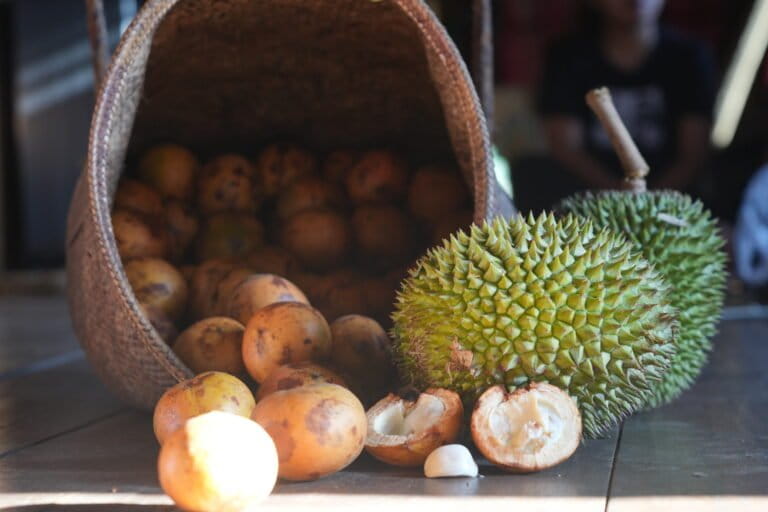
After a two-day journey, the team arrived at Juhu Village, the highest settlement in the Meratus Mountains. There, they visited the home of Pinan, a local resident and guide, and were amazed by the variety of fruits filling his living room. Pinan mentioned that their village is the only location in the Meratus region that produces fruits. This is particularly striking, as by late July 2026, most of South Kalimantan (Kalsel) was experiencing a severe dry season. "Nowhere else are fruits bearing; only here. It's quite strange," he said, expressing his wonder. Pinan proceeded to name the local fruits one by one, ranging from those that are relatively well-known to species that are becoming rare and only grow in the deep forest. Among them is kapul, or tampui (Baccaurea macrocarpa), an exotic fruit related to menteng, rambai, and mangosteen. Another is kulidang, or keledang (Artocarpus lanceifolius), from the Moraceae family, which includes jackfruit and its relatives. This fruit is related to mentawa, kluwih, pintau, cempedak, sukun, selanking, benda, and nangka. According to Pinan, kulidang is now found less frequently by residents as natural forests diminish. "This isn't found in Banua (a term for the upper Banjar region), is it?" he asked. Keledang is becoming rare in various parts of Borneo and is known by many local names, including bangsal, binturung, bunon, kayu dadak, emputu, kakian, sedah, and tempunang. Durian was one of the most abundant fruits when the team arrived in Juhu. The spiky fruit was falling from trees along the travel route. "Is this our durian, Abah?" asked Ayyub Muhajad, a lecturer from the Development Economics Study Program, Faculty of Economics and Business, Lambung Mangkurat University. For the local community, these fruits are an integral part of their daily lives, and the team was able to eat to their heart's content.
Original source
Mongabay Indonesia