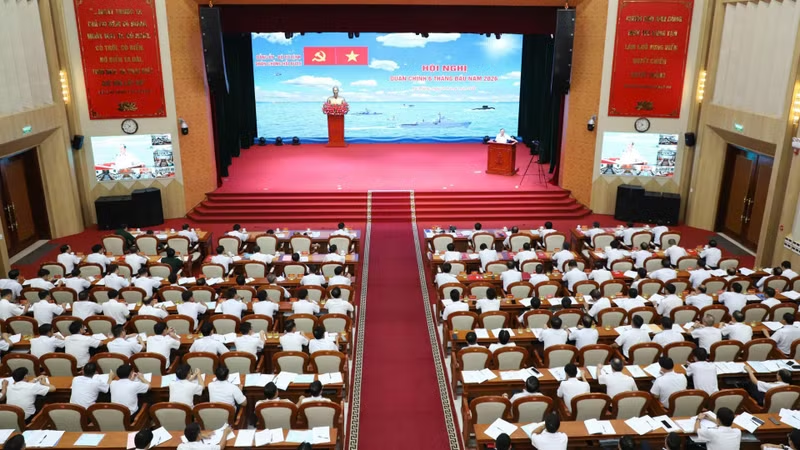
Vietnam Navy Holds Military-Political Conference for First Half of 2026
The Vietnam Navy convened a military-political conference in Hai Phong to review its activities for the first half of the year. The meeting, held both in-person and online across 22 locations, covered advancements in radar technology and efforts to enhance public relations capabilities within Naval Region 3.
This article requires PRO
This article is outside the free access window or is a special report. PRO unlocks it and the full archive.
Related articles
- How a Criminal Ring Fattened 10,000 Tons of Pork Using Banned Substances
A large criminal ring in Vietnam has been busted for illegally fattening approximately 10,000 tons of pork using banned substances before supplying it to the market, raising serious food safety concerns.
- Vietnam Cracks Down on Counterfeit Food and Origin Fraud
Vietnam is witnessing a surge in crackdowns on the production and sale of counterfeit goods, particularly food items falsely labeled with origins from countries like South Korea and Japan. This highlights growing concerns over the circulation of substandard and potentially unsafe products.
- Vietnamese police arrest 12 for nighttime cat theft
Vietnamese police have arrested 12 individuals suspected of prowling city streets at night and stealing cats for meat. The arrests highlight rising crime in urban areas and the social issue of cat meat consumption in some regions.
- British man stranded in forest rescued by police, praises Vietnam's kindness
A British man who got lost in a forest after following Google Maps directions was rescued thanks to the help of local residents and police. He praised his experience in Vietnam as "unparalleled kindness found in no other country."