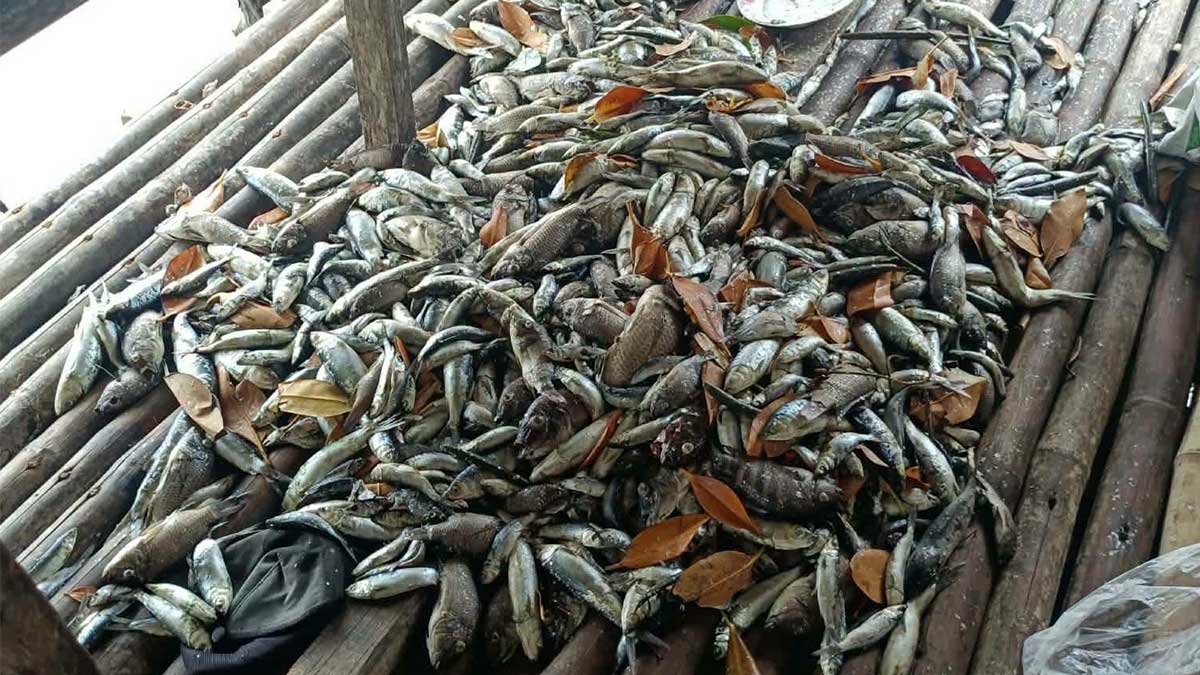
Massive Fish Kill Hits Pangasinan Town, Climate Change and Pollution Suspected
Environment
2026年7月13日
5
Inquirer NewsInfo

Massive Fish Kill Hits Pangasinan Town, Climate Change and Pollution Suspected

AI サマリー

A massive fish kill has devastated fish farms in Binmaley, Pangasinan, Philippines, wiping out thousands of milkfish (bangus). Erratic weather patterns linked to climate change and water pollution from overfeeding in aquaculture ponds are suspected as primary causes.

BINMALEY, PANGASINAN, Philippines — Instead of bringing their harvest to market, fish farmers in this town spent the past two days burying tons of dead “bangus” (milkfish) in freshly dug pits after a massive fish kill wiped out stocks in several villages. “The fish mortality was widespread. Almost all of the cultured fish died during the wee hours, when dissolved oxygen levels in the ponds dropped,” said fishery technician Joey de Leon. He said the fish gasped for air and eventually died when dissolved oxygen levels became critically low, especially in ponds without aerators or other intervention. De Leon estimated that fish farmers lost “perhaps half a million fish of different sizes” in the villages of Caloocan Norte, Buenlag and Salapingao. The operator he works for alone lost 40,000 bangus fingerlings worth about P280,000, with each fingerling valued at P7. Lune Quinto, who operates a one-hectare fishpond in Barangay Gayaman, said she and her husband managed to save most of their 17,000 bangus by running aerators continuously for the past two weeks. “We lost only around 1,500 fish weighing about 200 to 250 grams each, but we spent a lot on gasoline just to keep the aerators running,” Quinto said. Their neighbor, however, was less fortunate, losing 2,000 market-ready bangus during the fish kill. “He had aerators, but they perhaps could not produce enough dissolved oxygen for the bigger fish, which weighed around 600 to 700 grams each,” she said. The fish kill also affected other species. “Sari-sari” (different species) of fish, including the hardy black chin “tilapia” (molmol), an invasive species regarded as a pest by many aquaculture operators, were found floating dead in rivers on July 9 and July 10. Fish farmer Rico Aquino said about 80 percent of the “malaga” (siganid) he was raising in ponds along the Caloocan Sur River also died. “I lost 12,000 fingerlings and 10,000 grow-out fish that I was supposed to harvest in the next few days,” Aquino told the Inquirer. “I estimate my losses at half a million pesos.” Aquino said he tried to salvage his stocks as soon as water quality in the river deteriorated but managed to recover only about 20 percent by using fishing nets. He explained that malaga stay near the bottom of the water column, making it necessary to drain ponds before the fish can be collected. Fish farmers blamed the erratic weather associated with climate change for triggering the fish kill. “The sun is shining, then it suddenly rains. The temperature rises again, then another rain comes,” De Leon said. He added, however, that poor aquaculture practices may have aggravated the problem. “Some operators overfeed their fish. The excess feed settles at the bottom of the ponds, decomposes and pollutes the water,” Aquino said. Aquino said Binmaley’s rivers have also become increasingly polluted because they draw water from nearby Dagupan City, where a large aquaculture industry operates. De Leon said fish farms in Dagupan’s Salapingao area were likewise affected, although city authorities had yet to issue an official report. He also noted that Binmaley’s rivers were once replenished by waterways from Lingayen, but the construction of the Lingayen-Binmaley-Dagupan bypass road blocked several natural channels. Fish farmers appealed to the Bureau of Fisheries and Aquatic Resources (BFAR) for assistance as they struggle to recover from successive disasters, including recent typhoons and flooding. BFAR regional director Remely Lachica said the provincial fisheries offices and laboratory personnel remain ready to assist fish farmers. /cb Information Source: Inquirer NewsInfo

多角的分析

経済的影響

この魚の大量死は、パンガシナン州の主要な水産物であるバンガス(ミルクフィッシュ)の供給に打撃を与え、漁業従事者の収入を直撃した。経済的損失は数百万ペソに達し、地域経済への影響は避けられない。気候変動による異常気象は、過去にも同様の災害を引き起こしており、漁業セクターの脆弱性を露呈している。これにより、生産コストの増加や、市場価格の変動、さらには食料安全保障への懸念が生じる可能性がある。政府による迅速な支援が、経済的打撃からの回復に不可欠となる。

投資家心理

今回の魚の大量死は、フィリピンの水産養殖セクターへの投資リスクを浮き彫りにしている。気候変動に起因する予測不可能な自然災害は、生産設備や在庫への物理的な損害をもたらし、直接的な収益減に繋がる。また、水質汚染やインフラの問題は、長期的な操業安定性に対する懸念材料となる。投資家は、これらのリスクを軽減するための保険や、よりレジリエントな養殖技術への投資を検討する必要があるだろう。政府の災害対策や、気候変動適応策への投資も、間接的に投資環境を左右する要因となる。

社会的影響

パンガシナン州ビンマレイの魚の大量死は、沿岸地域のコミュニティに深刻な影響を与えている。失業や収入源の喪失は、多くの家族の生活を困窮させ、食料不安を引き起こす可能性がある。特に、水質汚染の原因とされる過剰な餌やりやインフラの問題は、地域住民の健康や生活環境への懸念も生じさせる。さらに、気候変動による異常気象は、漁業従事者だけでなく、地域全体の生活基盤を脅かす。災害からの復興には、経済的支援だけでなく、コミュニティのレジリエンスを高めるための社会的な取り組みも不可欠である。

市民の声

今回の魚の大量死は、パンガシナン州の多くの市民、特に漁業に依存する人々の生活に直接的な打撃を与えています。収入源を失った家族は、日々の食料を確保するのに苦労するでしょう。また、気候変動による異常気象は、彼らの生業を不安定にし、将来への不安を増大させています。近隣のダグパン市からの水質汚染という指摘は、自分たちの住む環境が悪化することへの懸念も生じさせています。政府からの迅速な支援と、持続可能な漁業のための対策が強く求められています。

背景・歴史的文脈

フィリピンは、その地理的条件から気候変動の影響を受けやすく、台風や洪水などの自然災害が頻発している。特に、沿岸部の漁業コミュニティは、海面上昇や水温上昇、異常気象による魚の大量死といった複合的なリスクに直面している。過去にも、2020年にはパンガシナン州で同様の魚の大量死が発生しており、その原因として水質汚染や異常気象が指摘されていた。また、インフラ整備の遅れや、地域間の水資源管理の不備も、こうした問題の根本原因として長年指摘されてきた。近隣のダグパン市からの水質汚染の可能性や、道路建設による水路の遮断といった具体的な問題は、地域開発と環境保全のバランスの難しさを示唆している。

原文ソース

Inquirer NewsInfo

原文を読む