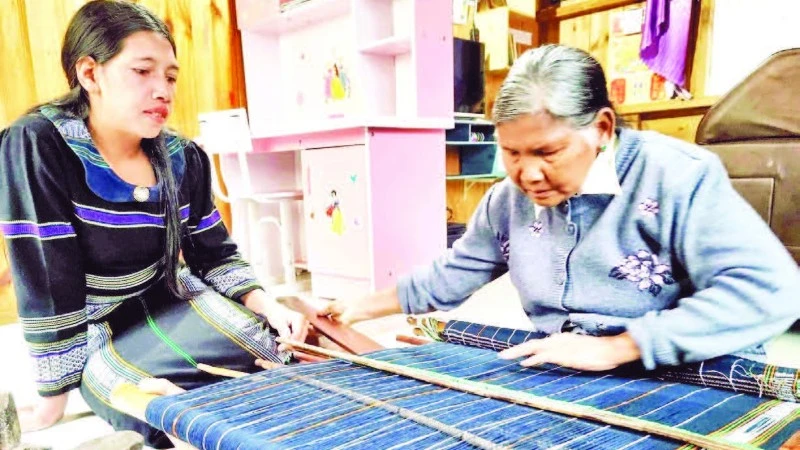
Vietnam's Ethnic Minorities Preserve Traditional 'Tho Cam' Textile Colors
The Co Ho ethnic group in Vietnam's Central Highlands is striving to pass down traditional 'Tho Cam' textile dyeing techniques using natural materials. Amidst a shift towards industrial dyes, maintaining natural dyeing is increasingly crucial for both cultural heritage preservation and livelihoods.
This article requires PRO
This article is outside the free access window or is a special report. PRO unlocks it and the full archive.
Related articles
- Hanoi Metro to Produce Trains Domestically via Alstom-Vingroup Tech Transfer
French rail giant Alstom will transfer technology and supply components to Vingroup for the assembly of 117 new metro trains in Vietnam, destined for five Hanoi metro lines. This partnership aims to localize train manufacturing within the country.
- Flash Flood Sweeps Away Truck in Central Vietnam, Multiple Casualties Feared
A flash flood in Vietnam's Central Highlands province of Lam Dong swept away a truck that attempted to cross a swollen stream. According to a witness, the driver proceeded despite warnings of strong currents, with the vehicle submerged within seconds. Multiple casualties are feared, and local authorities are conducting search and rescue operations.
- Ho Chi Minh City Reviews Resolutions to Implement Urban Development Law
The Standing Committee of the Ho Chi Minh City People's Council reviewed draft resolutions to operationalize the Urban Development Law. The aim is to adopt these at the upcoming 6th session, potentially accelerating the city's urban development.
- Vietnam-UK Education Cooperation Enters New Phase
Vietnam and the UK are entering a new phase of cooperation in education. The Vietnam Education Forum 2026, organized by BritCham Vietnam and the British Embassy, discussed the quality and future of education, signaling a commitment to enhancing academic exchange between the two nations.