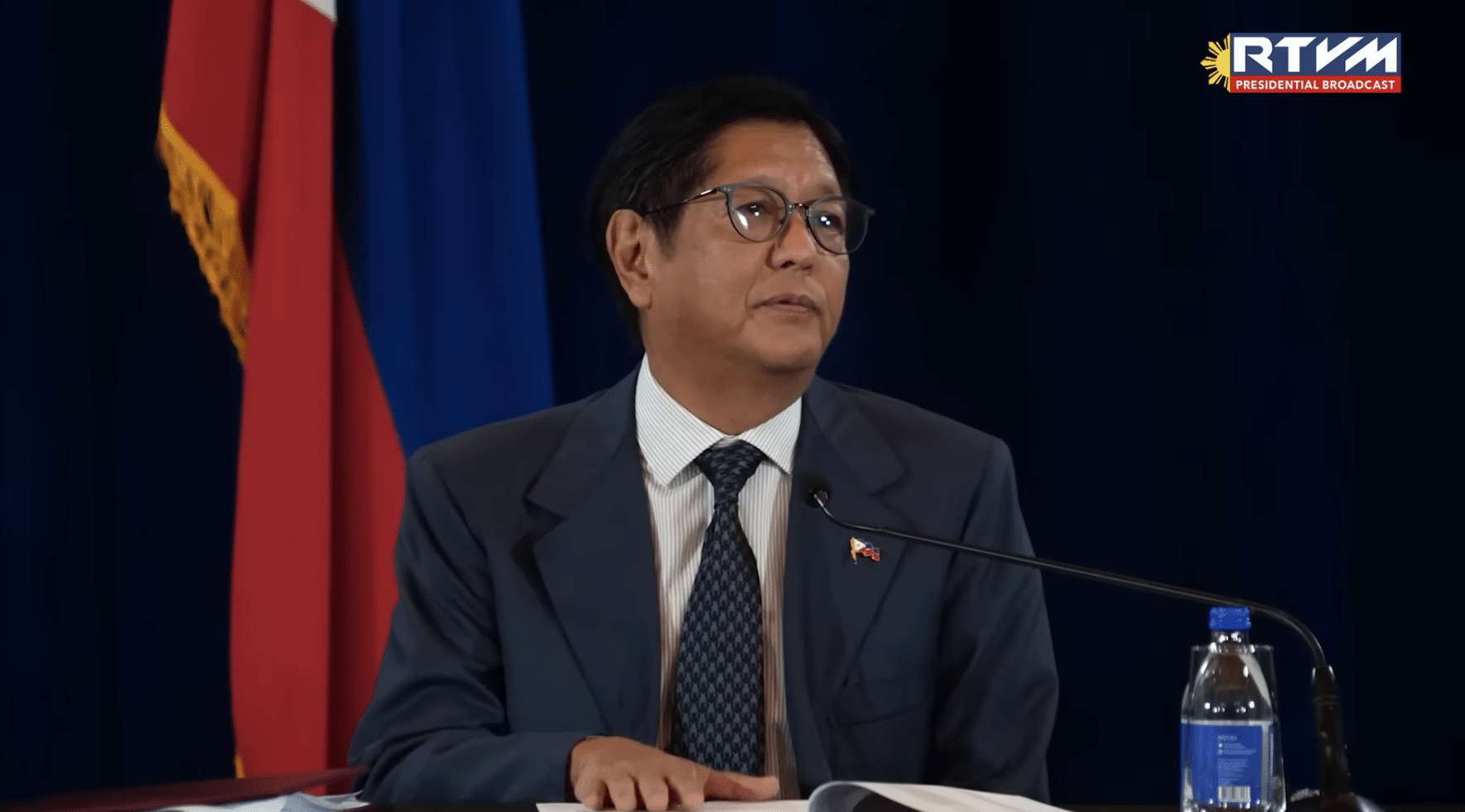
Marcos Jr. Blames Duterte for Inaction on Flood Control Anomalies
President Ferdinand Marcos Jr. has publicly blamed his predecessor, Rodrigo Duterte, for failing to act on anomalies in flood control projects during his term. Marcos asserted that he was the one who exposed the massive corruption scandal and initiated investigations.
MANILA, Philippines — For the first time, President Ferdinand Marcos Jr. publicly called out his predecessor, former President Rodrigo Duterte, for failing to act on anomalous flood control projects during his term, leaving the current administration to clean up the massive corruption scandal. On Saturday, Marcos answered critics of his administration who criticized him for his alleged snail-paced investigation and selective justice in exacting accountability from those behind the massive corruption scandal. The president countered that, had he not exposed the issue in his fourth State of the Nation Address (Sona) in July last year, the multibillion-peso scheme between contractors and some lawmakers and officials of the Department of Public Works and Highways (DPWH) would not have been addressed. Marcos criticized Duterte for doing nothing about the ghost flood control projects of the DPWH, despite learning about the “great problems” early on in his term. “But nothing happened. Having acknowledged it, he did not find accountability in anybody. So I guess that was left up [for] me to do,” he told reporters in Vancouver as he concluded his official visit to Canada. “I’m the one who exposed all of this. And I’m the only one who has started doing something about it,” the president said. “Did previous presidents do something like this? Did you see any of them put anyone in jail? Did they freeze accounts? Did they conduct investigations? There were none. It only happened under me,” he added. READ: ‘Nonsense’, Marcos says on oust calls over slow flood control probe He questioned groups and individuals who accused him of being behind the flood control mess. “If that were really my racket, why would I ruin it in the first place? That makes absolutely no sense,” he said. Marcos noted that as early as 2018, then-House Majority Leader Rolando Andaya Jr. publicly exposed what he described as a P300-billion flood control anomaly. Citing information from a town mayor from the Bicol region, Andaya said a former member of Duterte’s Cabinet, who resigned to run for public office, had facilitated the “parking” of P300 million for a flood mitigation project in his municipality. The controversy also involved allocations worth hundreds of billions of pesos and raised questions about a disputed P75-billion DPWH budget insertion process. Previous pushbacks from the Marcos administration in defense of the flood control investigation have been relayed mostly by Malacañang, through its press officer, Undersecretary Claire Castro, or other officials under the executive branch. Marcos also denied his administration was doing selective justice by only prosecuting and jailing those who are considered against him and his government. “From the time we formed the independent commission, I said we’ll just follow the evidence, and we’ll continue to do that,” he said. Last week, the Iglesia Ni Cristo staged a three-day demonstration in support of one of its members, Sen. Rodante Marcoleta, after the Office of the Ombudsman announced the filing of plunder charges against him. Marcoleta was a former chair of the Senate blue ribbon committee, which investigated the flood control scandal, until he was replaced following changes in the Senate leadership. READ: ‘Message sent’: Iglesia ends mass action for Marcoleta on third day Marcos acknowledged, however, that the government was “not yet done” in holding accountable all those involved in the flood control scandal. “I cannot say that we have done enough because we are not done yet. Unfortunately, the more we look, the more we find. And it is already going back beyond my administration, beyond my term,” he said. In September 2025, Marcos issued Executive Order No. 94, creating the now-defunct Independent Commission for Infrastructure (ICI) tasked with investigating questionable flood control projects for the past 10 years. However, it terminated its fact-finding mission in February this year, saying it had already completed its mandate. In the five months of its operations, the ICI came up with nine referrals, including those jointly filed with DPWH, which recommended various criminal and administrative charges against 65 individuals, lawmakers, contractors, and past and present officials of DPWH and the Commission on Audit. It said it also coordinated with the Department of Justice (DOJ) for the issuance of immigration lookout bulletin orders against 66 individuals tagged in the irregularities. Through ICI’s investigations, the Anti-Money Laundering Council secured orders from the Court of Appeals to freeze more than 6,700 bank accounts and assets amounting to P24.7 billion. Among the high-profile personalities detained for these investigations are Sen. Jinggoy Estrada, former Sen. Bong Revilla, former Public Works Secretary Manuel Bonoan, and several DPWH officials. Former Rep. Elizaldy “Zaldy” Co was also ordered arrested, but he remains hiding in Europe. Meanwhile, Marcos said the decision on whether or not Bonoan should be discharged as a state witness rests solely with the Office of the Ombudsman. According to the President, he has “complete faith” in the decision of Ombudsman Jesus Crispin “Boying” Remulla, who previously served as his justice secretary. /atm
多角的分析
洪水対策プロジェクトにおける不正は、公共事業への巨額の資金流用という点で、フィリピン経済に深刻な影響を与えている。不正によって本来必要とされるインフラ整備が進まず、災害時の被害拡大や経済活動の停滞を招く可能性がある。また、不正に関与した企業や個人への罰金や資産凍結は、短期的な資金回収に繋がるが、長期的な投資環境への信頼低下を招くリスクもある。過去の同様の汚職事件でも、経済成長の阻害要因となっていることが統計的に示されている。
今回の汚職スキャンダルは、フィリピンのインフラ投資に対する投資家の懸念を増幅させる可能性がある。透明性の欠如や法執行の不確実性は、新規投資の障壁となり得る。特に、公共事業分野における汚職は、プロジェクトの遅延やコスト超過のリスクを高め、投資収益率を低下させる要因となる。過去の汚職事件が投資家の信頼を損ない、資本流出を招いた事例を考慮すると、今回のマルコス政権の対応が、今後の海外直接投資(FDI)に与える影響は注視する必要がある。
洪水対策プロジェクトの不正は、直接的に国民の生活に影響を与える。本来、インフラ整備によって軽減されるはずの洪水被害が、不正によって十分に進まないことで、多くの市民が災害のリスクに晒され続ける。特に、マニラ首都圏や低地の農村部など、洪水の影響を受けやすい地域に住む人々は、財産や生命の安全を脅かされる。また、不正に対する捜査や処罰の遅れは、政府への不信感を増大させ、社会的な不安定要因となり得る。例えば、過去に同様の不正が指摘された際、地域住民からの抗議活動が発生した事例がある。
マルコス大統領がドゥテルテ前大統領を名指しで批判したことは、国民の関心を引く一方で、政治的な駆け引きとの見方も出ている。国民は、過去の不正に対する責任追及が迅速かつ公正に行われることを期待している。特に、洪水被害に苦しむ地域住民や、税金が不正に流用されたことへの不満を持つ人々からは、厳格な処罰を求める声が上がっている。また、イグレシア・ニ・クリストのような宗教団体が政治的なデモを行う背景には、特定の政治家や政策に対する支持・反対が、社会的な影響力を持つ複雑な構図がある。
背景・歴史的文脈
フィリピンでは、過去数十年にわたり公共事業における汚職が根深い問題となっている。特に、インフラ整備プロジェクトは巨額の予算が動くため、不正の温床となりやすい。2018年には、ロランド・アンダヤ・ジュニア議員が3000億ペソ規模の洪水対策不正を公に指摘し、大きな議論を呼んだ。この問題は、当時のドゥテルテ政権下でも一部で調査されたが、抜本的な解決には至らなかった。マルコス・ジュニア大統領は、この問題を政権の課題として取り上げ、独立委員会を設置するなど、前政権の対応の遅れを批判し、現政権での責任追及を強調している。
原文ソース
Inquirer NewsInfo