Vietnam Considers Lenient Treatment for Pre-2024 Land Violations
Technology
2026年7月13日
4
Nhan Dan

Vietnam Considers Lenient Treatment for Pre-2024 Land Violations

AI サマリー

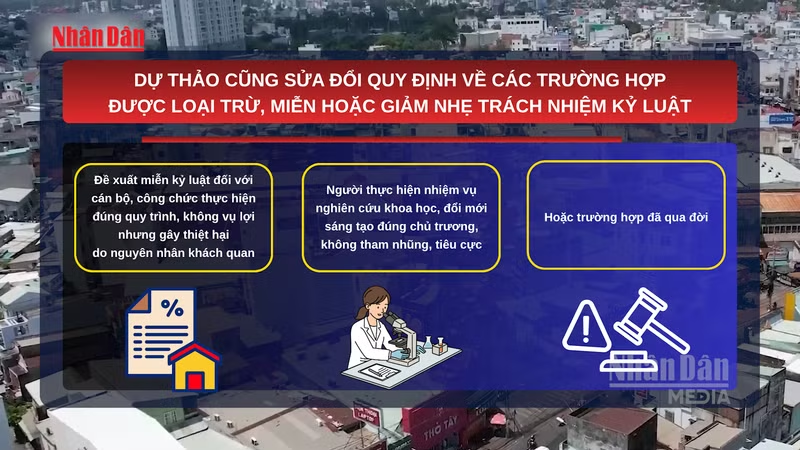
Vietnam's Ministry of Home Affairs has proposed draft amendments to disciplinary regulations for officials, suggesting leniency for land violations occurring before the 2024 Land Law takes effect. This move aims to resolve complex past land management issues and expedite stalled development projects.

The Ministry of Nội vụ (Home Affairs) of Vietnam is currently soliciting feedback on a draft decree aimed at amending regulations concerning disciplinary actions against civil servants, public employees, and officials. A key proposal within this draft is to supplement the existing provisions by including specific circumstances where disciplinary review might not be initiated, or where penalties could be mitigated or waived. These circumstances notably include land violations that occurred prior to the effective date of the 2024 Land Law, in accordance with resolutions passed by the National Assembly. This initiative is understood to be part of a larger strategic effort by the Vietnamese government to untangle complex land management issues and to expedite the resolution of stalled development projects across the country. The need for such measures has become increasingly apparent, as recent years have seen a significant number of land management and construction-related violations reported in major urban centers, including the capital city of Hanoi, placing considerable pressure on regulatory bodies to address these infractions. Vietnam's remarkable economic growth, facilitated by its one-party political structure, has placed land utilization at the forefront of its development agenda. However, historical inadequacies in land management practices, coupled with the challenges posed by rapid urbanization, have frequently created significant impediments to ongoing development initiatives. The current proposed measures are therefore interpreted as a strategic move to ameliorate these conditions and to foster a more conducive environment for investment and economic activity. In a parallel effort to bolster transparency within the land sector, the Ministry of Agriculture and Rural Development is preparing to implement a system that will publicly list individuals and entities found to have committed land violations through an official electronic portal. Concurrently, substantial progress is being made in the development of a comprehensive, nationwide land database, a project designed to enhance the digitization and overall efficiency of land management processes. Collectively, these developments underscore the critical role that effective land resource management and judicious utilization play in sustaining Vietnam's trajectory of economic expansion. Through legislative adjustments and the ongoing enhancement of its data infrastructure, Vietnam appears committed to establishing a land management framework characterized by greater transparency and operational efficiency.

多角的分析

経済的影響

ベトナム経済は土地利用の効率化に大きく依存している。今回の土地法改正前の違反に対する処分軽減は、過去の遺産を整理し、開発プロジェクトの遅延を解消することで、不動産市場の活性化とインフラ投資の促進につながる可能性がある。これにより、建設業や関連産業への波及効果も期待されるが、同時に、過去の違反行為に対する公平性の観点からの懸念も生じうる。

投資家心理

投資家にとっては、土地関連の法的不確実性が低減されることは歓迎すべき兆候である。開発プロジェクトの遅延解消は、事業計画の実行可能性を高め、収益化までの時間を短縮することにつながる。しかし、過去の違反に対する処分軽減が、将来的な法遵守のインセンティブを弱める可能性がないか、注意深く見守る必要がある。

社会的影響

土地違反の公表制度導入は、不正行為に対する抑止力となると期待される。しかし、処分軽減は、過去に土地法規を遵守した人々との間に不公平感を生む可能性も指摘される。また、土地利用に関する紛争は、地域社会における人間関係や生活基盤に直接影響を与えるため、透明性のある解決プロセスが求められる。

市民の声

今回の措置は、長年開発が遅延していたプロジェクトに関わる市民にとっては、朗報となる可能性がある。しかし、土地の権利や利用に関する過去の複雑な問題が、処分軽減によってどのように扱われるのか、具体的な運用方法が市民の生活にどのような影響を与えるか、注視する必要がある。特に、土地を巡る紛争に関わった当事者間の感情的な側面も無視できない。

背景・歴史的文脈

ベトナムでは、ドイモイ(刷新)政策以降、急速な経済発展と都市化が進む中で、土地利用に関する法整備や管理体制が追いつかず、多くの複雑な問題が生じてきた。特に、土地の所有権や利用権に関する法解釈の曖昧さ、地方政府による裁量の大きさなどが、違反行為の温床となっていた。2024年土地法は、これらの問題を包括的に解決し、より市場経済に適した土地管理制度を構築することを目指しているが、施行前に発生した過去の違反行為の処理が大きな課題となっていた。今回の内務省の提案は、この過去の遺産を整理し、新法の円滑な施行を後押しするための措置と考えられる。

原文ソース

Nhan Dan

原文を読む