Cambodia and Japan Plant 10,000 Saplings to Protect Angkor Heritage
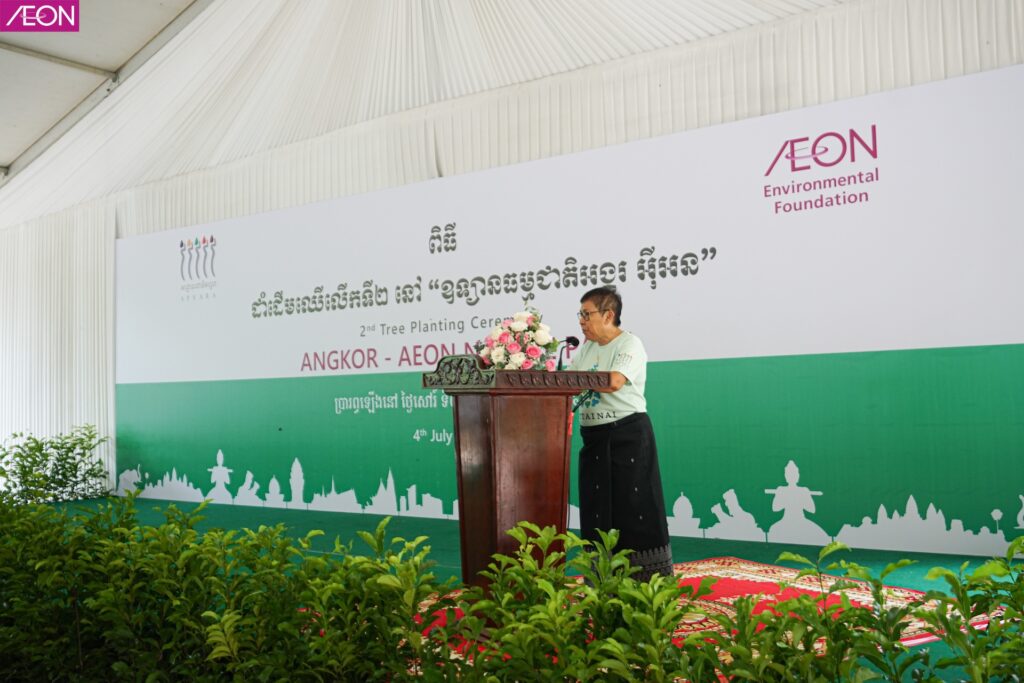
Cambodian and Japanese citizens planted 10,000 saplings in the Angkor Natural Park to protect the Angkor heritage sites from natural disasters. This initiative is part of a five-year project by the AEON Environmental Foundation, aiming to preserve cultural heritage and biodiversity.
Approximately 10,000 saplings of over 20 varieties, planted by Cambodian and Japanese citizens in the Angkor Natural Park, are aimed at protecting the World Heritage site. The event took place on July 4, 2026, under the auspices of Her Excellency Dr. Pheung Sakuna, Minister of Culture and Fine Arts, and the Japanese Ambassador to Cambodia, with the participation of 800 Cambodian and Japanese nationals. Mr. Motoya Okada, President of the AEON Environmental Foundation, stated that this tree-planting project is a five-year initiative commencing in 2025. Its objective is to safeguard the World Heritage site from the impacts of wind and rain, and to conserve biodiversity. The first planting in 2025 saw over 800 participants from Japan and Cambodia, and this second phase involved another 800 participants for the 10,000 saplings. He further added that the foundation will continue to actively engage in environmental protection activities, including tree planting, to preserve rich natural environments for future generations. Tree planting with volunteers has been conducted in various regions across Cambodia since 2002, including at Chau Srei Vibol Temple, along the road to Angkor Wat, in the Siem Reap Forest Park, at the Norodom Sihanouk-Angkor Museum, at Phnom Tamao Zoological Park and Wildlife Rescue Center in Takeo Province, and other locations. The AEON Environmental Foundation, established 36 years ago, focuses on environmental protection and has planted over 12.87 million saplings worldwide to protect the environment, restore forests, and conserve biodiversity. Concurrently, the AEON Foundation supports the Prosthetic Limb Center in Battambang Province, has funded 151 school buildings, made donations to the Norodom Sihanouk-Angkor Museum, and conducted clean water campaigns. Her Excellency Dr. Pheung Sakuna, Minister of Culture and Fine Arts, remarked that this second tree-planting event serves as further evidence of the model of cooperation between the private sector and government institutions in strengthening and expanding the green cover of the Angkor resort, fully responding to the priority principles of Angkor conservation, where continued planting of new saplings and preservation of old forests are our work methodologies. Beyond the conservation and restoration of hundreds of ancient temples in the Angkor area, the APSARA National Authority also focuses on sustainable development and the restoration and enhancement of ancient irrigation systems and natural resources, which benefit both the preservation of ancient temples and the people living in the World Heritage Angkor resort area. Her Excellency added that to date, the APSARA National Authority has nurtured and distributed approximately 3 million diverse saplings within the Angkor Park, including collaborations with AEON for forest cover restoration in the past and today. She elaborated that in the Angkor region, trees, in addition to their role in attracting rainfall, maintaining underground water sources, absorbing carbon dioxide to convert into oxygen, and providing shade beneficial to communities and national and international tourists, also play a crucial role in protecting ancient temples. This is because Khmer ancient temples are built on sandy foundations, necessitating underground water and rainwater to preserve and channel water into the ancient canals, ponds, and barays that surround them, thereby maintaining the moisture and stability of the temple foundations and preventing collapse. Trees also serve as a protective barrier against climate change, the weathering of temple stones, and natural disasters such as storms and floods. Trees and green spaces are values of cultural landscape, an inseparable component of Angkor's outstanding universal value, she emphasized.
多角的分析
イオン環境財団による植樹プロジェクトは、カンボジアの観光産業と環境保全への長期的な投資と見ることができる。植樹による環境改善は、アンコール遺跡群の魅力を高め、持続的な観光客誘致に繋がる。これは、観光収入の安定化と地域経済の活性化に寄与する可能性がある。また、イオングループのCSR活動の一環として、企業イメージ向上とブランド価値の向上にも貢献している。
このニュースは、カンボジアの環境保全と文化遺産保護への投資が、長期的な視点で観光産業の持続可能性を高める可能性を示唆している。イオン環境財団のような企業の積極的な関与は、他の投資家にとっても、カンボジアの環境・社会・ガバナンス(ESG)分野への投資機会を探るきっかけとなりうる。特に、アンコール遺跡群は世界的に有名な観光資源であり、その保全は関連産業への波及効果が大きい。
今回の植樹活動は、カンボジアと日本の市民が共同で世界遺産の保全に取り組むという点で、両国間の友好関係を深める機会となった。参加者は、環境保護への意識を高めるとともに、異文化交流を通じて相互理解を深めることができた。また、地域住民にとっては、遺跡群の保全が将来にわたって観光資源としての価値を維持し、生活基盤の安定に繋がるという期待感を持つことができる。
アンコール遺跡群周辺に住む市民にとって、植樹活動は直接的な生活の改善に繋がるものではないかもしれないが、長期的には観光客の増加や環境の保全が、地域経済の安定や生活環境の向上に寄与することを期待できる。特に、自然災害からの遺跡保護は、文化遺産を守り、将来世代に引き継ぐという点で、市民の誇りやアイデンティティにも関わる重要な取り組みである。
背景・歴史的文脈
カンボジアの世界遺産アンコール遺跡群は、1992年にユネスコ世界遺産に登録された。しかし、近年、気候変動による異常気象、特に豪雨や強風、そして過剰な観光客の増加による環境負荷が、遺跡の劣化を加速させる懸念が高まっている。これを受け、カンボジア政府は遺跡保護のための緑化推進を重要な政策課題として掲げている。イオン環境財団は、1991年の設立以来、世界各地で植樹活動を展開しており、カンボジアにおいても2002年から継続的に環境保全活動に関与してきた。今回の植樹は、こうした背景のもと、民間企業と政府が連携し、持続可能な観光と文化遺産保護の両立を目指す取り組みの一環である。
原文ソース
Kampuchea Thmey Local