General articles are free for 24 hours after publish.
Vietnam Faces Land Rights Hurdles Stemming from State Farms
Over 250 households in Thanh Hoa province, Vietnam, who have long resided on land originating from former state farms, are facing issues with unissued land use rights certificates. Historical context and discrepancies with current laws are hindering residents' economic activities and rights.
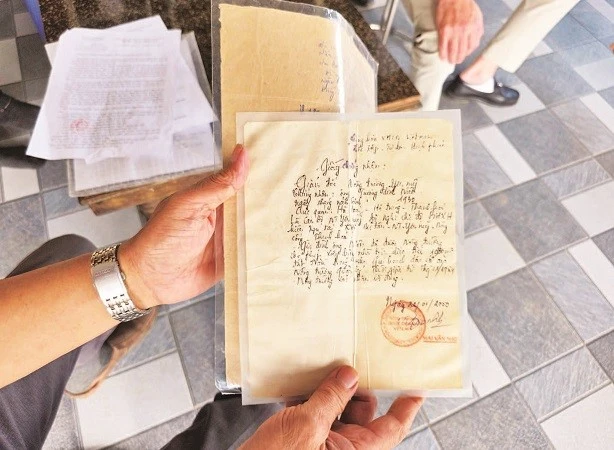
In Cong Chinh commune, Thanh Hoa province, Vietnam, over 250 households residing for generations on land that was formerly a state farm are facing the issue of not having received land use rights certificates (commonly known as "red books"). This problem stems from the discrepancy between land allocation during the farm's establishment and current legal frameworks, casting a shadow over the protection of residents' rights. Since the late 1950s to the early 1990s, under state policy, many people migrated to the Yen My State Farm area, clearing land and establishing their livelihoods. While these settlers and their descendants have cultivated the land and built homes for decades, the legal documents proving land ownership have yet to be issued. For instance, 93-year-old Le Ngoc Thin hopes for the prompt completion of documentation for his over 1,300 sqm plot, where he has lived since the farm's early days, for peace of mind in his old age. In 2006, when the Yen My State Farm was subject to land recovery, much of the residents' land was placed under the management of local authorities. Although specialized departments conducted surveys and prepared individual resident files in 2011, "red books" have not materialized even after 15 years. Without these certificates, residents are unable to use their land as collateral for loans, restricting their economic activities. Truong Manh Hung, who owns nearly 2,000 sqm of land with a house of about 200 sqm, laments the inability to secure loans for economic development. While some residents have received certificates, cases where individuals with similar land use histories have not are causing feelings of unfairness and anxiety. According to an official from Cong Chinh commune, the issue is complicated by the fact that the farm's initial land allocation procedures may not have been based on formal authority under current land laws, and some residents have lost related documents. Therefore, when cross-referenced with the 2024 Land Law and its guiding regulations, many cases are identified as having originated from encroaching on state farm land. If current regulations are strictly applied, landowners must fulfill financial obligations (taxes) before certificates can be issued. However, for some, the amount can reach approximately 600-700 million dong, making payment difficult for many households. "The people are very hopeful, and the locality also wants to resolve this. However, the commune does not have the authority to decide differently from regulations, so we have repeatedly reported and sought opinions from higher authorities," the commune official stated. The People's Committee of Cong Chinh commune has sent a document to the Thanh Hoa Department of Agriculture and Rural Development requesting guidance on issuing first-time land use rights certificates for households with land origins from the Yen My State Farm. In its reply, the Thanh Hoa Department of Agriculture and Rural Development stated that the issuance of land use rights certificates must be based on the 2024 Land Law and related regulations. It also requested the locality to continue reviewing records and documents concerning the management and use of Yen My State Farm land to clarify land origins, and subsequently review each case according to regulations. This case involves many historical factors. A thorough review of all records and the land use origins of each household will be crucial for resolution. It is possible that after this review process, some households will be eligible for land use rights certificates, while others may need to complete their documentation or fulfill obligations as required. Residents hope that their cases will be considered objectively and comprehensively based on records, legal grounds, and the historical context. Only then can the long-standing issues be gradually resolved. Article and photos by BUI THAI BINH Editor-in-Chief: Le Quoc Minh Headquarters: 71 Hang Trong - Hanoi. Tel: (84) 24 382 54231/382 54232 Fax: (84) 24 382 55593. E-mail: [email protected] Source: Nhan Dan
Original source
Nhan Dan