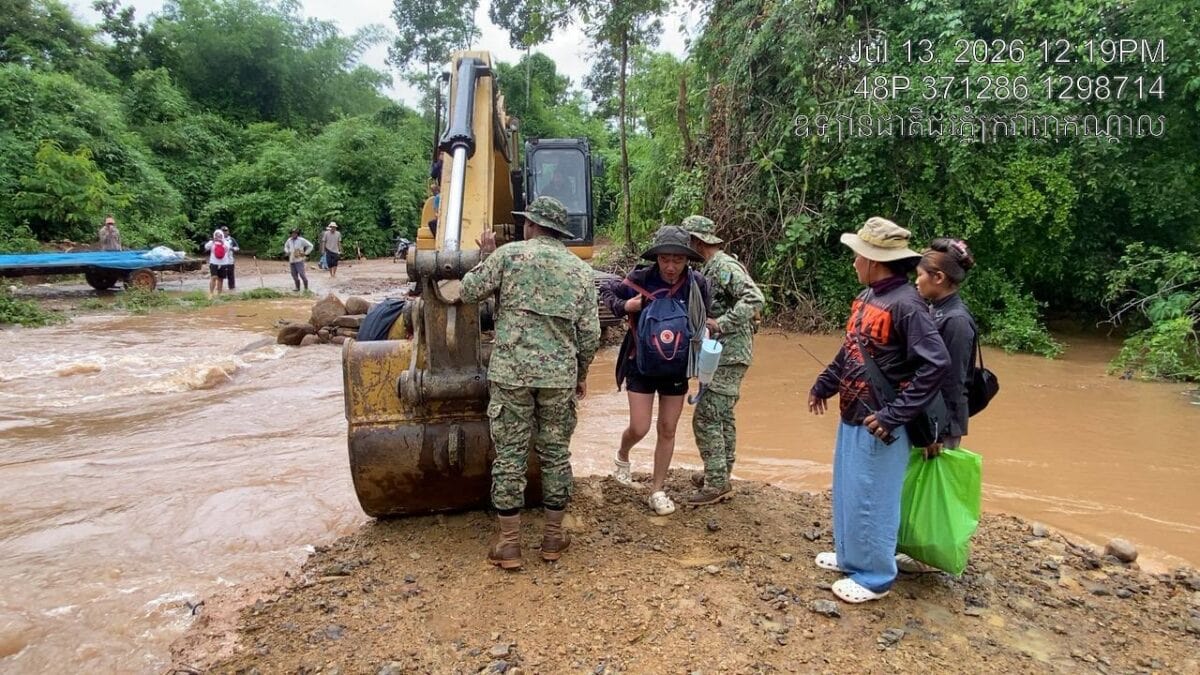
Over 500 Tourists Rescued After Flash Floods Isolate Khnang Phsar Mountain
More than 500 tourists were stranded and subsequently rescued in Kampong Speu province after flash floods cut off access roads to Khnang Phsar Mountain. Ministry of Environment rangers, local authorities, and volunteers collaborated to evacuate all visitors to safety. Authorities are enhancing emergency response capacities in protected areas.
This article requires PRO
This article is outside the free access window or is a special report. PRO unlocks it and the full archive.
Related articles
- Cambodia Cracks Down on Illegal Logging and Timber Transport in Phnom Oral Wildlife Sanctuary
Cambodian environmental officials have arrested a poacher involved in transporting illegally sawn timber within the Phnom Oral Wildlife Sanctuary in Kampong Speu province, seizing evidence including a vehicle and logs. This action is part of ongoing efforts to protect the country's natural resources.
- Cambodia Conducts Large-Scale Reforestation Efforts
A large-scale reforestation effort has been undertaken in the Chom Prech Natural Protected Community in Kampong Thom province, Cambodia, aiming to restore forest cover on illegally encroached land. 5,700 rosewood saplings were planted across nine hectares, part of over 4,300 hectares of forest land recovered by the provincial Natural Resources Crime Prevention and Suppression Committee over the past 28 months.
- Cambodia Flood: Village Chief Missing After Boat Capsizes During Relief Efforts
A village chief in Cambodia's Battambang province is missing after his boat capsized while en route to assess flood damage. Rescue efforts are underway involving authorities and residents.
- Over 1,000 Trees Planted and Distributed in Phnom Penh to Promote Environmental Protection and Greening
A tree planting and seedling distribution event, involving over 1,000 trees, was led by government officials in Phnom Penh's Tuol Kork district. Under the theme "Let's Plant Trees Together, Let's Protect the Environment Together," the initiative aims to raise awareness for national greening policies and environmental protection. Seedlings were also distributed to citizens and students, fostering expectations for improved green spaces and living environments across the district.