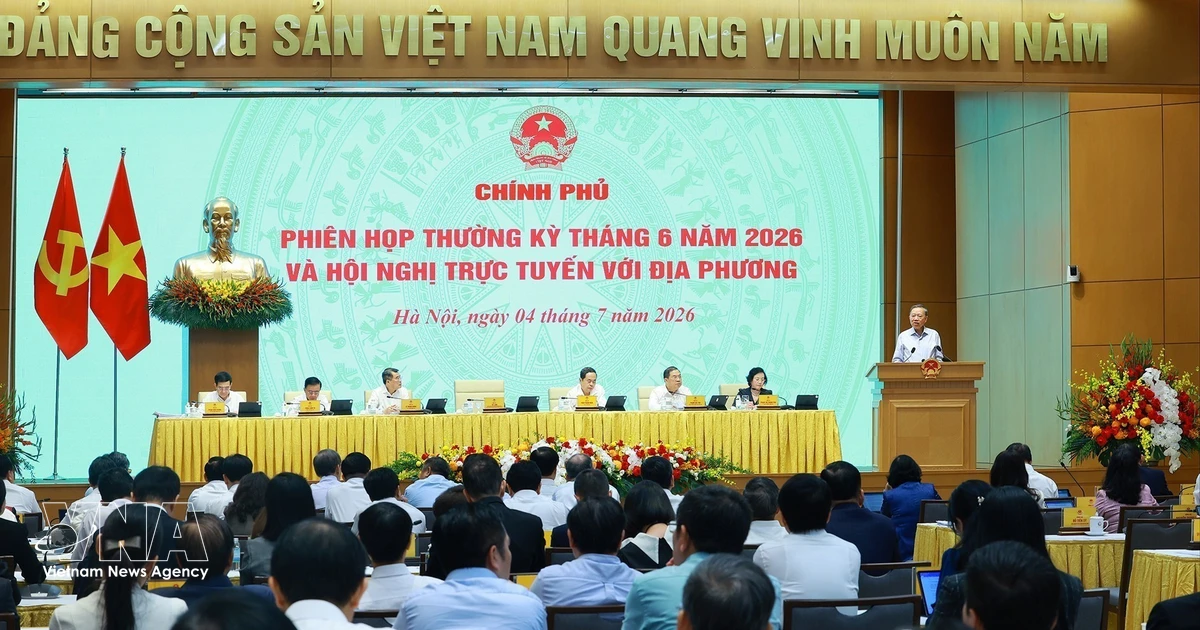
Vietnam's Mid-2026 Economic Growth Accelerates Amidst Challenges and Strategies
Vietnam is accelerating its economic growth with a target of double-digit expansion in the first half of 2026. However, challenges such as implementation capacity gaps and issues with smuggling and counterfeits are emerging. Expanding investments in the marine economy, aviation, and EV sectors, along with strengthening international cooperation, are key to sustained growth.
Vietnam is making all-out efforts to achieve double-digit growth in the first half of 2026, a crucial period that will not only determine the country's growth performance for the year but also lay the cornerstone for strong economic restructuring and a new development model. Prime Minister Le Minh Hung stressed the importance of successfully implementing key tasks to achieve this goal. Party General Secretary and State President To Lam identified "implementation capacity," rather than institutional frameworks, as the greatest obstacle to development. Officials are set to discuss the socio-economic situation in June and the second quarter of 2026, the allocation and disbursement of public investment capital, the implementation of national target programs, and state budget-related tasks for the first six months. While the domestic market has remained generally stable, issues such as smuggling, commercial fraud, and counterfeits continue to be complex across many sectors and localities. In this context, Vietnam is advancing its Sustainable Marine Economic Development Strategy until 2030, with a vision to 2045, identifying offshore wind as a strategic sector capable of creating new growth momentum. In the aviation sector, the planned restoration of 91 weekly return flights by Vietnam Airlines and Vietjet Air is expected to meet growing travel demand and enhance air connectivity with the country's major economic and tourism centers. The elevation of Vietnam-EU relations to a comprehensive strategic partnership in early 2026 is anticipated to provide fresh momentum for cooperation in trade, investment, digital transformation, the green transition, energy, climate action, and supply chain resilience. Trade turnover in the first six months of 2026 reached $549.69 billion, up 27.1% year-on-year, with exports rising 21% and imports increasing 33.4%. Foreign direct investment (FDI), including newly registered capital, additional capital, and capital contributions, rose 61% year-on-year to $34.65 billion, indicating Vietnam's growing economic attractiveness. Domestic consumption also showed strength, with total retail sales and consumer service revenue amounting to an estimated VND 3,889.5 trillion in the first half, up 12.9% year-on-year. Real growth, after excluding price factors, stood at 7.3%, reflecting a solid recovery in domestic purchasing power and consumer demand. Samsung plans to invest an additional $1 billion in Vietnam this year as it advances expansion plans across electronics, display manufacturing, and electro-mechanics, underscoring Vietnam's role as a key hub in global supply chains. The electric vehicle (EV) sector is also gaining traction, with 369,849 battery electric passenger cars, 3,396 electric trucks, and 1,571 electric buses in operation, reflecting Vietnam's commitment to sustainable and environmentally friendly development. To support this growth, the Trade Promotion Agency (Vietrade) under the Ministry of Industry and Trade is shifting its focus from broad-based support to more in-depth assistance, emphasizing enhanced business competitiveness. Programs now concentrate on brand building, market intelligence, access to new technologies, and compliance with international standards. Source: VietnamPlus English
多角的分析
ベトナム経済は、輸出入の顕著な伸びとFDIの急増に支えられ、堅調な成長軌道に乗っている。特に、インフラ投資、海洋経済、EVシフトへの注力は、新たな成長エンジンを育成する意図を示唆している。しかし、国内市場の安定は保たれているものの、物価上昇(CPI 3.21%増)と実質購買力の上昇率(7.3%)との乖離は、消費者の実質的な購買力への影響を注視する必要があることを示唆している。また、サービス業、特に運輸・貿易・金融セクターの強さが目立つ一方、不動産セクターの困難は、経済全体の健全性におけるセクター間の不均衡を示している。
ベトナムへのFDIが61%増と大幅に増加していることは、投資家が同国の成長ポテンシャルと安定したビジネス環境を高く評価していることを示している。サムスンの追加投資計画は、製造業におけるベトナムの重要性を再確認させる。洋上風力発電やEVインフラへの投資拡大は、グリーン経済への移行という世界的なトレンドに乗る機会を提供し、長期的なリターンを求める投資家にとって魅力的である。しかし、実行能力の不足や密輸・偽造品の問題は、事業運営におけるリスク要因となりうるため、デューデリジェンスが不可欠である。
ベトナム政府は、経済成長と並行して、海洋経済の持続可能な開発やEVシフトといった環境配慮型の開発を推進している。これは、国民の生活の質向上や将来世代への配慮という社会的な要請に応えようとする姿勢の表れである。一方で、密輸や偽造品の問題は、消費者の安全や公正な市場競争といった、市民生活に直接関わる課題として依然として存在する。また、サービス業の成長は雇用機会の創出に寄与するが、不動産セクターの停滞は、関連産業や雇用への影響も懸念される。
ベトナム市民にとって、経済成長は購買力の向上と生活水準の改善に直結する。上半期の小売売上高の増加は、多くの家庭で消費活動が活発化していることを示唆している。しかし、CPIの上昇率が実質賃金の上昇率を上回る場合、実質的な購買力への影響は限定的になる可能性がある。また、EVの普及や洋上風力発電への投資は、将来的な環境改善への期待をもたらすが、現時点ではその恩恵が市民生活に具体的にどのように波及するかは不透明である。密輸や偽造品の問題は、日々の買い物における不安材料となる。
背景・歴史的文脈
ベトナムはドイモイ政策以来、市場経済化と国際社会への開放を進め、目覚ましい経済成長を遂げてきた。特に製造業の発展と輸出拡大は、中国に代わる生産拠点としての地位を確立した。近年は、米中貿易摩擦や地政学的な不確実性を背景に、サプライチェーンの多様化を目指す動きが加速。これにより、ベトナムへのFDIが急増し、経済成長を後押ししている。また、国内市場の拡大と消費者の購買力向上も、経済成長の重要な要素となっている。海洋経済やグリーン経済への投資は、持続可能な開発を目指すベトナムの長期的な戦略の一環である。
原文ソース
VietnamPlus English