General articles are free for 24 hours after publish.
South Kalimantan Forest Fires Threaten Proboscis Monkey Habitats, 12 Deaths Reported
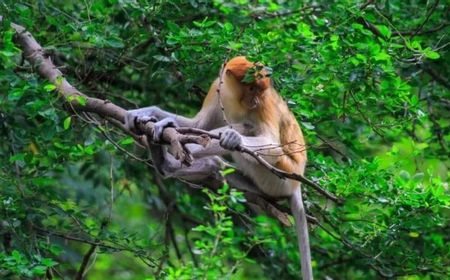
Forest fires in South Kalimantan are increasingly threatening the habitat of the proboscis monkey. The smoke from the fires degrades air quality, potentially affecting the respiratory systems of animals. Damage to vegetation also reduces food sources and shelter, forcing the monkeys to relocate. Reports indicate at least 12 proboscis monkeys have died.
Forest and land fires in South Kalimantan are increasingly threatening the habitat of the proboscis monkey, an endangered species. The smoke from these fires degrades air quality, potentially impacting the respiratory systems of wildlife, including proboscis monkeys. The fires also destroy the riparian vegetation and wetlands that the monkeys depend on for food and shelter, forcing them to relocate. This relocation increases their risk of encountering lower-quality environments or human activity. Amalia Rezeki, founder of Indonesian Bekantan Friends and an academic of Conservation Biology at Lambung Mangkurat University, explained that proboscis monkeys are highly dependent on riverbank vegetation and wetlands. "Smoke can reduce air quality and potentially disrupt the human and animal respiratory system. We also need to pay attention to the possibility of behavioral changes, for example eating, resting, or group movement when the environmental conditions are disturbed," said Amalia, quoted from Antara. According to Amalia, forest fires can impact proboscis monkeys in several ways. Besides deteriorating air quality, fires can damage vegetation along riverbanks and reduce tree cover, which is an important part of the animals' habitat. Amalia emphasized that the extent of health disorders in proboscis monkeys at each location must still be proven through field examinations and monitoring. Vegetation damage can also reduce feed sources, shelters, resting locations, and orangutan migration routes. In certain conditions, the animal group may move to find habitats that still provide food and protection. "This migration or movement must be monitored, because they may enter habitats with poor quality or face disturbances from human activities," she said. The impact on the habitat is not automatically resolved when the fire is extinguished. Burnt vegetation takes time to grow back, while proboscis monkeys still need food and shelter every day. Therefore, post-karhutla (forest and land fire) recovery is considered to include vegetation monitoring, availability of natural feed, habitat quality, and the presence of proboscis monkey groups in the affected areas. Amalia gave an example of the Curiak Island Orangutan Research Station, which is constantly monitored to observe habitat conditions, natural feed availability, and environmental changes. "In conservation, we should not only measure success from whether or not we can put out a fire. We also have to see if the habitat is still able to support the life of the proboscis monkey after the fire occurs," she said. Previously, the South Kalimantan Natural Resources Conservation Agency (BKSDA) received reports of 12 banteng (wild cattle) deaths affected by the forest fire in Balimau Village, Kalumpang District, South Hulu Sungai Regency. The BKSDA South Kalimantan recorded the population of proboscis monkeys in the province in 2025 is estimated at around 3,700 individuals. About a third of them are in conservation areas, while the other two-thirds live outside conservation areas, including production forests, protected forests, and other areas of use. A total of 12 orangutans affected by the forest fire in Balimau are in the area of other use areas which are village-owned land. BKSDA South Kalimantan stated that it would continue to inventory areas outside the conservation which are the habitat of wildlife. Source: VOI English
Original source
VOI English