General articles are free for 24 hours after publish.
Uzbekistan Prioritizes Social Stability Over Democratic Reforms in New Development Programs
Uzbekistan announced seven national development programs on its independence anniversary, sidelining democratic reforms in favor of socio-economic priorities. The programs focus on education, healthcare, high-tech economy transition, judicial independence, neighborhood empowerment, and peaceful diplomacy, aiming to maintain public support and consolidate the current government's power.
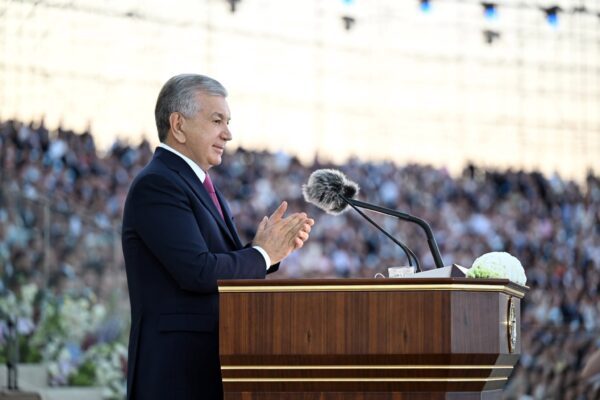
Uzbekistan's President Shavkat Mirziyoyev announced seven national development programs for the coming years on the occasion of the country's 35th independence anniversary. These programs prioritize socio-economic development and conspicuously omit any reforms related to political pluralism, press freedom, or freedom of conscience, indicating a strategic focus on areas deemed critical for maintaining popular support. Leading the agenda is the improvement of public education, with specific goals including extending compulsory education to age six, supporting private kindergartens, and increasing the number of universities ranked among the world's top 1,000. Uzbekistan has one of the highest student populations in the region, with 6.8 million students and 600,000 teachers in public mandatory schools alone. Further programs aim to enhance public health and longevity, transition to a high-technology economy, boost labor productivity, and foster environmental awareness and action. Concerns have been raised regarding the fifth program, which pledges to ensure judicial independence and the rule of law. Recent reports highlight a new law allowing the president's daughter, who heads the presidential administration, to be directly involved in shaping the judicial system with lifetime legal immunity, bypassing accountability. While areas like cybercrime, drug trafficking, and human trafficking are singled out, concrete steps remain unspecified. The sixth program identifies mahallas, unique neighborhood-level self-governing institutions, as the "main customer (or commissioner) of development." This initiative aims to empower mahallas further and slightly alter the district budgeting system. Historically, mahallas have served to disseminate government policies, but President Mirziyoyev's framing suggests a move towards greater citizen participation in decision-making, albeit without full fiscal independence. Mahallas will report upward on social and financial needs, with district budgets and infrastructure projects developed accordingly, but ultimate budget allocation decisions will remain with the central government. "The mood of our people, the well-being of families, the dreams and aspirations of young people, and the initiative of entrepreneurs are first and foremost reflected in the neighborhood," Mirziyoyev said in his speech. "Mood" is an odd word to pick – not financial stability, safety, employment or other aspects of socio-economic life. It reflects mahallas' role as an observer of citizens' sentiment (and hopefully their needs too). Historically, mahalla institutions have played a distributing role rather than a commissioning one, carrying government policies down and out to the people rather than gathering and feeding social sentiments upward into the system. Mirziyoyev is now saying that mahallas ought to be "the main customer (commissioner) of social development." While this is, in one sense, a form of decentralization where citizens might participate in some degree of decision-making, it is not a genuine political decentralization. It appears that mahallas will report upward the social and financial needs on the ground and the budget allocation will be made accordingly. The president’s announcement noted, “District budgets, investment programs, and infrastructure projects are developed based on the needs of neighborhoods.” But mahallas still will not have a final say in anything. They will not receive full control over their own budgets. Ultimate decisions on budget allocations will remain at the hands of the central government. The proposed change, if implemented, will result in participatory or needs-based local governance, but does not grant fiscal independence. The final area of development focuses on peaceful foreign policy and economic diplomacy. These national development programs emphasize socio-economic spheres, which are considered safe areas where changes will not threaten the political regime. Increased attention to these areas is expected to boost President Mirziyoyev's popularity and further consolidate the current government's power. Areas initially promised for reform, particularly freedom of expression, have seen a clear backslide. Past reports document arrests of bloggers and religious figures, prosecutions for sharing unapproved religious views or criticizing the president and his family. A recent law expanding the authority of the presidential administration also prohibits "insulting the honor and dignity" of its officials, blurring the line between healthy criticism and insult. The Mirziyoyev administration's priorities appear to be centered on ensuring the basic needs of the average citizen are met, thereby maintaining their satisfaction. Other matters, especially those related to freedom of speech, mobilization, or independent religious practice that could challenge the status quo, have seemingly been set aside. Source: The Diplomat Indonesia
Original source
The Diplomat Indonesia