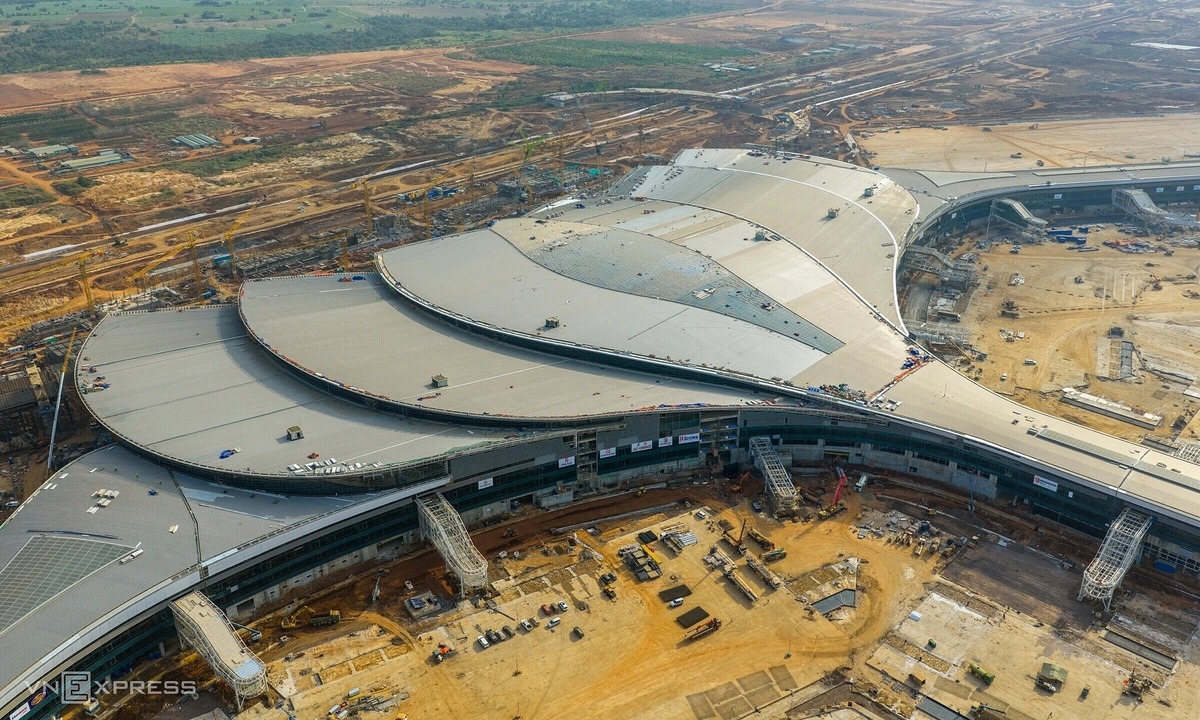
Vietnam's Mega-Airport Long Thanh to Open Dec 1, Aims to Rival Changi
Infrastructure
2026年7月15日
5
VnExpress International
Relations
🇻🇳Vietnam🇨🇳China🇸🇬Singapore

Vietnam's Mega-Airport Long Thanh to Open Dec 1, Aims to Rival Changi

AI サマリー

Vietnam's most ambitious airport project, Long Thanh International Airport, is set to partially open on December 1, with an initial capacity of 25 million passengers annually. The airport aims to eventually surpass Singapore's Changi, alleviating congestion at Tan Son Nhat and establishing itself as a regional transit hub.

Vietnam's most ambitious airport project, Long Thanh International Airport, is set to partially open on December 1, with a total investment of VND336.63 trillion (US$12.8 billion). Located about 40 km east of Ho Chi Minh City, the airport is being built to relieve the chronically overcrowded Tan Son Nhat International Airport, which has operated beyond its designed capacity for years. Airports Corporation of Vietnam (ACV), the state operator, hopes Long Thanh will evolve into a regional transit hub capable of challenging established gateways in Singapore, Bangkok, and Kuala Lumpur, and reclaiming long-haul connecting traffic. Long Thanh will initially handle 25 million passengers annually. Its full design capacity of 100 million passengers per year, to be reached in later phases, would surpass Singapore's Changi Airport, which handled a record 69.98 million passengers in 2025 and is expanding towards 140 million. ACV has proposed a plan to divide flights between Long Thanh and Tan Son Nhat by region and route distance. All international routes longer than 1,000 km and all cargo flights will move to Long Thanh. Tan Son Nhat will retain shorter international routes flown by Code C jets like the Airbus A320 and Boeing 737, along with some domestic operations. Routes to East Asia, West Asia, Oceania, and Europe will all shift to Long Thanh, while Southeast Asian routes will be split roughly 55% to the new airport and 45% to Tan Son Nhat. The handover will occur in three phases, aligned with airline seasonal schedules. From December 1, 2026, to March 27, 2027, Long Thanh will accommodate all long-haul international and cargo flights, along with new routes and increased frequencies from the HCMC area, accounting for about 19% of the area's international passenger volume. Tan Son Nhat will maintain its existing routes and will not open any new international ones. From March 28 to October 30, 2027, all flights to Europe, the Americas, Oceania, Africa, the Middle East, South Asia, and Central Asia will transfer to Long Thanh, leaving Tan Son Nhat with its remaining Northeast and Southeast Asian routes. From October 31, 2027, to March 25, 2028, Long Thanh will handle nearly all international flights, retaining only scheduled sub-1,000 km routes flown by Vietnamese carriers at Tan Son Nhat. ACV aims to transfer more than 90% of the area's international passenger traffic to the new airport by 2027. Domestic flights will largely remain at Tan Son Nhat, though carriers can choose either airport based on demand across all three phases. To meet the timeline, ACV has urged the Ministry of Construction and the Civil Aviation Authority of Vietnam to expedite approval of the operating plan and passenger fees. It has also called on the government to accelerate the development of connecting infrastructure, including the widening of the HCMC-Long Thanh Expressway, completion of the Bien Hoa-Vung Tau Expressway, and HCMC Ring Road 3.

多角的分析

経済的影響

ロンタン国際空港の開港は、ベトナムの経済成長戦略における重要な一歩である。総工費128億ドルという巨額の投資は、インフラ整備への意欲を示すと同時に、その回収と収益化が今後の課題となる。周辺国との競争力を高め、地域ハブとしての地位を確立することは、観光収入の増加、物流コストの削減、そして外国直接投資(FDI)のさらなる誘致につながる可能性がある。特に、長距離国際線と貨物便の集約は、ベトナムをサプライチェーンの要衝として位置づけるための戦略的な動きと言える。ただし、空港運営の効率性、接続インフラの整備状況、そして国際的な航空需要の動向が、その経済的成果を左右する主要因となるだろう。

投資家心理

ロンタン国際空港プロジェクトへの投資は、ベトナムの長期的な経済成長ポテンシャルと、インフラ開発への強いコミットメントを示すものとして、投資家にとって魅力的なシグナルとなる。特に、空港運営会社であるACVの将来的な収益性、そして空港周辺の不動産開発や関連産業への波及効果に期待が集まるだろう。しかし、プロジェクトの規模と複雑さから、建設期間中のコスト超過リスクや、計画通りの旅客数・貨物量の達成、そして国際的な競合空港との差別化戦略の成否などが、投資リスクとして考慮されるべき点である。ベトナム政府によるインフラ整備の加速や、国際的な航空会社の誘致策が、投資家の信頼をさらに高める鍵となる。

社会的影響

ロンタン国際空港の開港は、ホーチミン市とその周辺地域における雇用創出と経済活動の活性化に大きく貢献すると期待される。一方で、空港建設に伴う土地収用や住民移転が、地域社会に与える影響は無視できない。特に、空港周辺のインフラ整備の遅れは、地域住民の生活や通勤に不便をもたらす可能性がある。また、将来的にチャンギ国際空港を凌駕する規模を目指すという野心は、ベトナム国民の国家的な誇りを高める一方で、その実現に向けた継続的な努力と、国際的な基準を満たすサービス提供能力の維持が求められる。交通網の整備は、地方と都市部の連携を強化し、全国的な経済格差の是正にも寄与する可能性を秘めている。

市民の声

ロンタン国際空港の開港は、ホーチミン市に住む多くの市民にとって、タンソンニャット国際空港の混雑緩和という恩恵をもたらすだろう。これにより、国内外への旅行がより快適になることが期待される。しかし、空港へのアクセスを改善するための高速道路や環状道路の建設が遅れる場合、新空港への移動が逆に不便になる可能性も指摘されている。また、空港の規模拡大に伴い、周辺地域の開発が進むことで、地価の上昇や生活コストへの影響も懸念される。ベトナム国民としては、この巨大プロジェクトが、国の発展に貢献し、国際的な地位を高めることを期待する一方で、その恩恵が公平に分配されることを望んでいる。

背景・歴史的文脈

ベトナムは、1986年のドイモイ(刷新)政策以降、市場経済化を推進し、目覚ましい経済成長を遂げてきた。特に、製造業の発展と輸出拡大は、同国を「世界の工場」の一つへと押し上げた。しかし、急速な経済成長に伴い、インフラ、特に交通網の整備が追いついていないという課題が長年指摘されてきた。ホーチミン市のタンソンニャット国際空港は、その代表例であり、慢性的な混雑が経済活動のボトルネックとなっていた。ロンタン国際空港プロジェクトは、このインフラ問題の解消と、ベトナムを東南アジアの主要な物流・旅客ハブとして確立しようとする、政府の長期的な国家戦略の一環である。これは、中国が主導する一帯一路構想とは異なる、ベトナム独自の経済圏構築への意志表示とも解釈できる。

原文ソース

VnExpress International

原文を読む