General articles are free for 24 hours after publish.
Behind Forest Loss, Marbled Cats Face Life on the Edge
Forest destruction in Indonesia is threatening the survival of the 'marbled cat,' a species that lives both on the ground and in trees. Latest research reveals they cannot adapt to plantations, and forest fragmentation is having severe impacts.
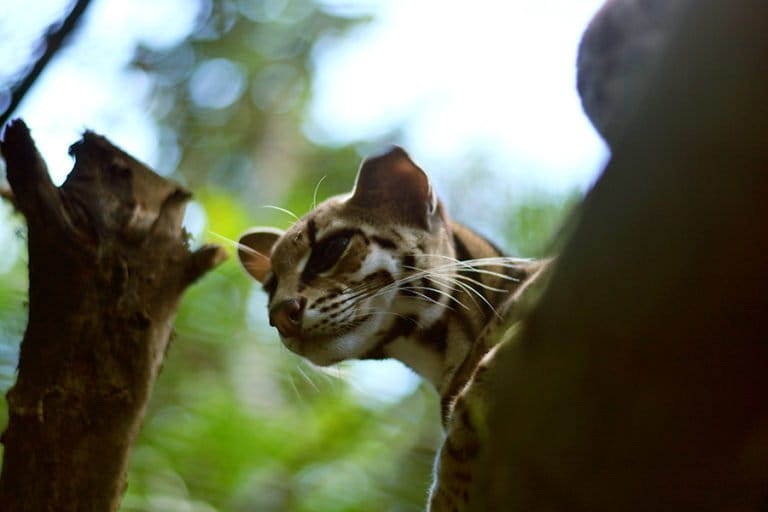
When tropical rainforests in Indonesia are transformed into oil palm plantations, orangutans might be the first animals that come to mind. However, in the lush greenery of Southeast Asia, there lives another wild cat species that is also highly dependent on the integrity of the forest: the marbled cat (Pardofelis marmorata). This semi-arboreal species can move on the ground as well as climb trees, a capability that research now shows makes it more vulnerable to forest degradation. Researchers analyzed camera trap photos from various regions in Southeast Asia, comparing the habitat use of the marbled cat with the leopard cat (Prionailurus bengalensis), a wild cat species that is more terrestrial. The results revealed a striking difference. While leopard cats can still utilize oil palm plantations to hunt rodents, marbled cats showed a poor response to forest clearing and oil palm plantations. Camera trap footage indicates that marbled cats are interior forest specialists, more frequently found in large, connected tracts of intact forest. Oil palm plantations, even though filled with trees, cannot replace the function of such habitats. Environmental changes also affect their behavior. Marbled cats are typically diurnal, but in areas close to human activity, they have been recorded active at dusk multiple times. This shift in activity time may be a way for marbled cats to avoid humans. However, this strategy has consequences, leading to shorter hunting and exploration periods. Marbled cats also risk encountering new competitors or predators active at different times. The threat intensifies when forests are fragmented into small patches, which can cut off movement corridors, hinder food and mate searching, and isolate populations. This situation highlights the reality of rapid development in Indonesia and the accompanying forest loss. Not only orangutans, but also lesser-known species like the marbled cat, are facing the wave of development and their survival is at risk. The loss and fragmentation of their habitats are not just about the decline of wildlife, but also a warning sign for the health of the entire ecosystem. Source: Mongabay Indonesia
Original source
Mongabay Indonesia