EFTA Deal Unlocks New Opportunities for Vietnam's Seafood Exports
Economy
2026年7月16日
6
VietnamPlus English
Relations
🇻🇳Vietnam🇪🇺European Union

EFTA Deal Unlocks New Opportunities for Vietnam's Seafood Exports

AI サマリー

Vietnam is poised to leverage new opportunities for seafood exports through its agreement with the European Free Trade Association (EFTA). Amid rising sustainability demands, the country is enhancing data collection and transitioning to low-emission farming to boost its competitiveness in international markets.

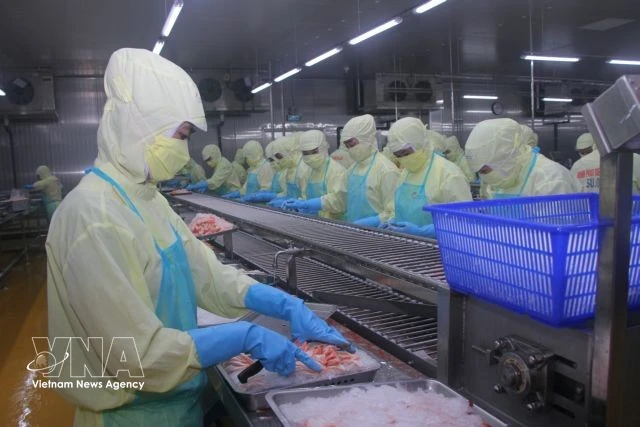
Vietnam is poised to unlock new opportunities in its seafood exports through a free trade agreement (FTA) with the European Free Trade Association (EFTA). This accord represents a significant step towards achieving Vietnam's agricultural, forestry, and fishery export targets. Particularly as key markets such as the US, EU, and Japan tighten sustainability requirements for agricultural products, Vietnam must accelerate its transition to low-emission farming. In terms of seafood exports, the outcome of the European Commission's (EC) "yellow card" against illegal, unreported, and unregulated (IUU) fishing remains a critical point of attention. An inspection delegation from the EC is expected to visit Vietnam in early March, with its findings being decisive in whether the card is lifted or escalated to a "red card." Vietnam has been urged by the National Fisheries Institute (NFI) to strengthen its data collection efforts, including fishermen's logbook systems, observer programs, and measures to reduce bycatch. These initiatives place fishermen at the center of enforcement efforts, promoting community self-management while strengthening coordination between local authorities and relevant agencies in managing offshore fishing activities. Vietnam's competitive advantages are evolving. Rather than relying primarily on low labor costs and tax incentives, the country's future competitiveness will increasingly depend on structural and long-term factors, including transparent institutions, policy predictability, and an investment environment capable of supporting long-term strategic investors. This shift is particularly evident as calls grow for a more comprehensive approach to supporting Small and Medium-sized Enterprises (SMEs). With the private sector taking on a more central role under Politburo Resolution No. 68-NQ/TW, there is a need for improving institutions, making financial support tools more effective, and reshaping the financial system to better suit the characteristics of SMEs. Economically, the government aims to achieve its annual growth target while keeping inflation around 4.5%. Amid mounting external risks from the Middle East conflict and increasingly unpredictable natural disasters, the government will focus on implementing eight key priorities. Factors such as international oil prices, the extension of domestic fuel tax incentives, and stable electricity prices, healthcare fees, and exchange rates will be crucial for controlling inflation. Currently, the Vietnamese Dong (VND) to US Dollar (USD) exchange rate operates within a trading band of +/- 5%, with the ceiling rate for commercial banks at 26,495 VND/USD and the floor rate at 23,971 VND/USD. In the energy sector, the transition from fossil fuels to renewable energy is being positioned as a driving force for "green growth." Rooftop solar power, when integrated with energy storage systems and direct power purchase mechanisms, contributes to supplementing distributed energy sources and reducing pressure on the national power system. This also enhances economic competitiveness and ensures energy security. The energy transition requires building a sustainable energy ecosystem where clean power generation, energy storage, smart grids, and material recycling chains develop in parallel, not just replacing fossil fuels. Ho Chi Minh City remains Vietnam's leading recipient of foreign investment, with 21,351 valid FDI projects worth a combined 146.8 billion USD. The southern economic hub recorded nearly 7.5 billion USD in registered FDI in the first half of 2026, fulfilling over 68% of its annual target. Hanoi also disbursed 64 trillion VND (2.4 billion USD) in public investment in the first half of 2026, equivalent to more than 53% of its annual plan – the highest mid-year disbursement rate recorded in many years. Regarding relations with Japan, experience was exchanged in securities market development, financial regulation, and innovation with representatives from Japan's Financial Services Agency (JFSA) and Securities and Exchange Surveillance Commission (SESC). This indicates the maturation of Vietnam's financial market and strengthened international cooperation. Source: VietnamPlus English

多角的分析

経済的影響

ベトナム経済は、輸出主導型成長を維持しつつ、持続可能性と高付加価値化への転換を模索している。EFTA協定は水産物輸出に新たな機会をもたらすが、EUDR(欧州連合森林破壊規制)のような国際的な規制強化への対応が、農産物輸出全体の競争力を左右する。インフレ抑制目標(4.5%)達成のため、政府は財政・金融政策のバランスを取り、外部リスクを管理する必要がある。特に、エネルギー転換はグリーン成長の鍵であり、投資環境の整備と技術革新が不可欠である。中小企業支援の強化は、国内経済の底上げと雇用創出に貢献するだろう。

投資家心理

EFTA協定は、欧州市場へのアクセスを改善し、特に水産物セクターへの投資を促進する可能性がある。しかし、EUDRのような持続可能性基準への対応は、投資家にとって新たなリスク要因となり得る。ベトナムの競争力シフトは、低コスト労働力から、透明性、政策予測可能性、長期的な戦略を支援する投資環境へと移っている。これは、より質の高い、長期的な視点を持つ投資家を引きつける一方で、短期的な投機的資金の流入には慎重な姿勢が求められることを示唆する。ホーチミン市やハノイ市へのFDI集中は、インフラ投資や地域開発の不均衡という課題も内包している。

社会的影響

持続可能性への要求の高まりは、漁業コミュニティや農家に対し、データ収集の強化や低排出農業への移行を求めている。これは、小規模生産者にとっては新たな負担となる可能性がある一方、EUDR対応済みのベトナムコーヒーがプレミアム価格で取引されている例は、適応した者には経済的恩恵をもたらすことを示唆している。中小企業支援の強化は、国内経済の活性化と雇用機会の創出に不可欠であり、地方経済の発展にも寄与することが期待される。エネルギー転換の推進は、国民生活への影響(電力料金、環境負荷)を考慮しつつ、持続可能な社会基盤の構築を目指す動きである。

市民の声

ベトナム市民、特に漁業や農業に従事する人々は、国際市場の要求、特に持続可能性に関する基準の厳格化に直面している。これは、漁師の日誌システム導入や低排出農業への転換といった具体的な行動を求めるものであり、適応には訓練や追加投資が必要となる場合がある。一方で、これらの変化に適応し、高品質な製品を提供できる生産者は、より高い収入を得る機会を得られる。例えば、EUDR基準を満たしたコーヒーがプレミアム価格で取引されていることは、その一例である。また、エネルギー転換は、将来的な電力料金の安定化や環境改善に繋がる可能性があり、市民生活への長期的な恩恵が期待される。

背景・歴史的文脈

ベトナムは、ドイモイ政策以降、輸出主導型の経済成長を追求してきた。特に農林水産物は、長らく同国の主要輸出品目であり、国際市場の要求への対応は経済成長の持続可能性に直結する。近年、EUの森林破壊規制(EUDR)や、水産物に対する違法・無報告・無規制(IUU)漁業対策など、環境・持続可能性に関する国際的な要求が厳格化している。これらは、ベトナムの伝統的な生産・輸出モデルに構造的な変革を迫るものであり、単なる貿易協定締結にとどまらない、国内の制度改革や生産プロセスの見直しを促す要因となっている。また、エネルギー転換は、2050年までのネットゼロ目標達成に向けた喫緊の課題であり、経済成長と環境保護の両立という、ベトナムが直面する複雑な政策課題を象徴している。

原文ソース

VietnamPlus English

原文を読む