General articles are free for 24 hours after publish.
China's Lunar Mission Postponed, But Potential for Space Race Gains Remains
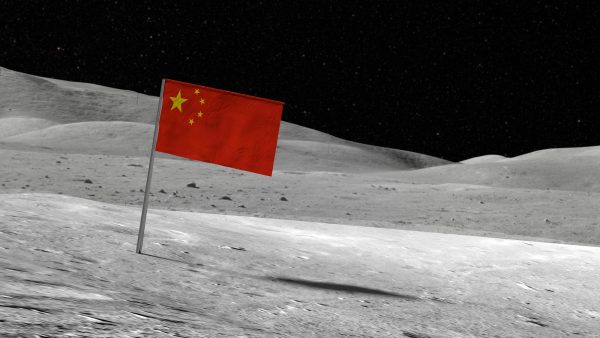
China's Chang'e 7 lunar mission launch has been postponed, but it could still be a significant step for water ice exploration and future lunar base construction. Success in resource exploration on the Moon ahead of the US could give China an advantage in the space race.
China's planned Chang'e 7 lunar mission, originally scheduled for August 24, has been postponed. While official details remain limited, the reason cited is that the mission "failed to meet launch criteria." This delay introduces uncertainty into China's plans to return to the lunar surface ahead of the United States. The Chang'e 7 mission's primary objective is to search for water ice on the lunar surface. The mission includes an orbiter, lander, a small hopping probe, and a rover, slated for a landing near the southeast ridge of the Shackleton crater on the lunar south pole, launched by a Long March 5 rocket. It will also assess the area's suitability for a future lunar research base. In 2021, China announced a joint initiative with Russia to establish a crewed lunar base called the International Lunar Research Station (ILRS), and this mission is a crucial step towards its realization. The ILRS aims to facilitate further lunar exploration, including resource utilization. The mission involves several international partners, including Russia and Egypt, as well as Bahrain, Italy, Thailand, and Switzerland. This participation is seen as an effort by China to conduct space diplomacy and enhance its soft power. It could also lend legitimacy to Chinese lunar projects, particularly if they venture into areas like lunar mining. If Chang'e 7 confirms the presence of water ice, it could be converted into drinking water and oxygen to support human habitation. Furthermore, splitting the ice into hydrogen and oxygen could provide rocket fuel, potentially transforming the ILRS into a hub for interplanetary missions. These advancements would significantly benefit China in its space race with the United States. Meanwhile, NASA's Viper program, with similar objectives, has been delayed until at least 2027, potentially giving China an edge. China is also preparing for the Chang'e 8 mission in 2028, aiming for steady progress in establishing its lunar base. Achieving first-mover advantage in this phase of the space race offers benefits in resource mapping and studying the lunar environment. If China reaches the Moon first, it could influence the framing of norms and standards for lunar exploration in a manner favorable to Beijing. While the 1967 Outer Space Treaty prohibits sovereignty claims, it does not explicitly cover resource mining. China might seek to establish new rules with support from other nations. Despite NASA's Artemis IV and V crewed lunar landing missions planned for early and late 2028, China appears to have a head start. The article points to a perceived lack of determination in the U.S. approach to lunar development compared to China's focused efforts.
Original source
The Diplomat Indonesia